Xiaomi 15 review
Introduction
Xiaomi introduced the 15 and 15 Pro in China back in October, and as per recent reports, the pair has been doing really well on domestic markets. Now, now, the smaller one of the two phones is making its way to international markets. The Xiaomi 15 Pro will likely not be released outside of China. At least we get to enjoy the just announced the Xiaomi 15 Ultra.
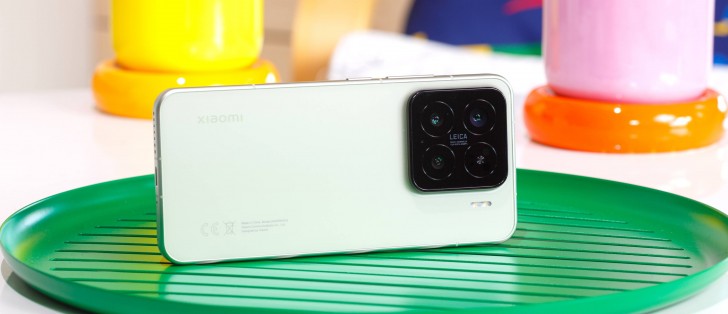
Despite being the smallest and cheapest of the lineup, the Xiaomi 15 is still a full-featured modern flagship. This includes features like the new Snapdragon 8 Elite chipset and a pretty big 5,240 mAh battery for the phone's size.
 512GB 12GB RAM$ 900.00
Xiaomi 15 specs at a glance:
- Body: 152.3x71.2x8.1mm, 189g; Glass front, aluminum alloy frame (6M42); IP68 dust tight and water resistant (immersible up to 1.5m for 30 min).
- Display: 6.36" LTPO OLED, 68B colors, 120Hz, Dolby Vision, HDR10+, 3200 nits (peak), 1200x2670px resolution, 20.03:9 aspect ratio, 460ppi.
- Chipset: Qualcomm SM8750-AB Snapdragon 8 Elite (3 nm): Octa-core (2x4.32 GHz Oryon V2 Phoenix L + 6x3.53 GHz Oryon V2 Phoenix M); Adreno 830.
- Memory: 256GB 12GB RAM, 512GB 12GB RAM, 512GB 16GB RAM, 1TB 16GB RAM; UFS 4.0.
- OS/Software: Android 15, HyperOS 2.
- Rear camera: Wide (main): 50 MP, f/1.6, 23mm, 1/1.31", 1.2µm, dual pixel PDAF, OIS; Telephoto: 50 MP, f/2.0, 60mm, PDAF (10cm - ∞), OIS, 2.6x optical zoom; Ultra wide angle: 50 MP, f/2.2, 14mm, 115-degree.
- Front camera: 32 MP, f/2.0, 22mm (wide), 0.7µm.
- Video capture: Rear camera: 8K@24/30fps (HDR), 4K@24/30/60fps (HDR10+, 10-bit Dolby Vision HDR, 10-bit LOG), 1080p@30/60/120/240/960fps, 720p@1920fps, gyro-EIS; Front camera: 4K@30/60fps, 1080p@30/60fps, gyro-EIS.
- Battery: 5,240mAh; 90W wired, PD3.0, QC3+, 50W wireless, 10W reverse wireless.
- Connectivity: 5G; Wi-Fi 7; BT 5.4, aptX HD, aptX Adaptive, LHDC 5; NFC; Infrared port.
- Misc: Fingerprint reader (under display, ultrasonic); stereo speakers.
With a 6.36-inch diagonal, the Xiaomi 15 is on the smaller end of modern smartphones, though it can't exactly be considered a "compact". Despite its fairly diminutive size, the Xiaomi 15 still packs a rather large battery and a full-fat eight-core Snapdragon 8 Elite flagship chipset. It also doesn't skimp in the camera department with a versatile triple-camera system, including a 50MP selfie, 50MP 3x telephoto and 50MP ultrawide. Sure, unlike the Xiaomi 15 Pro, there is no periscope tech on the telephoto and no autofocus on the ultrawide, but these are fairly small tradeoffs to get to this reduced footprint.
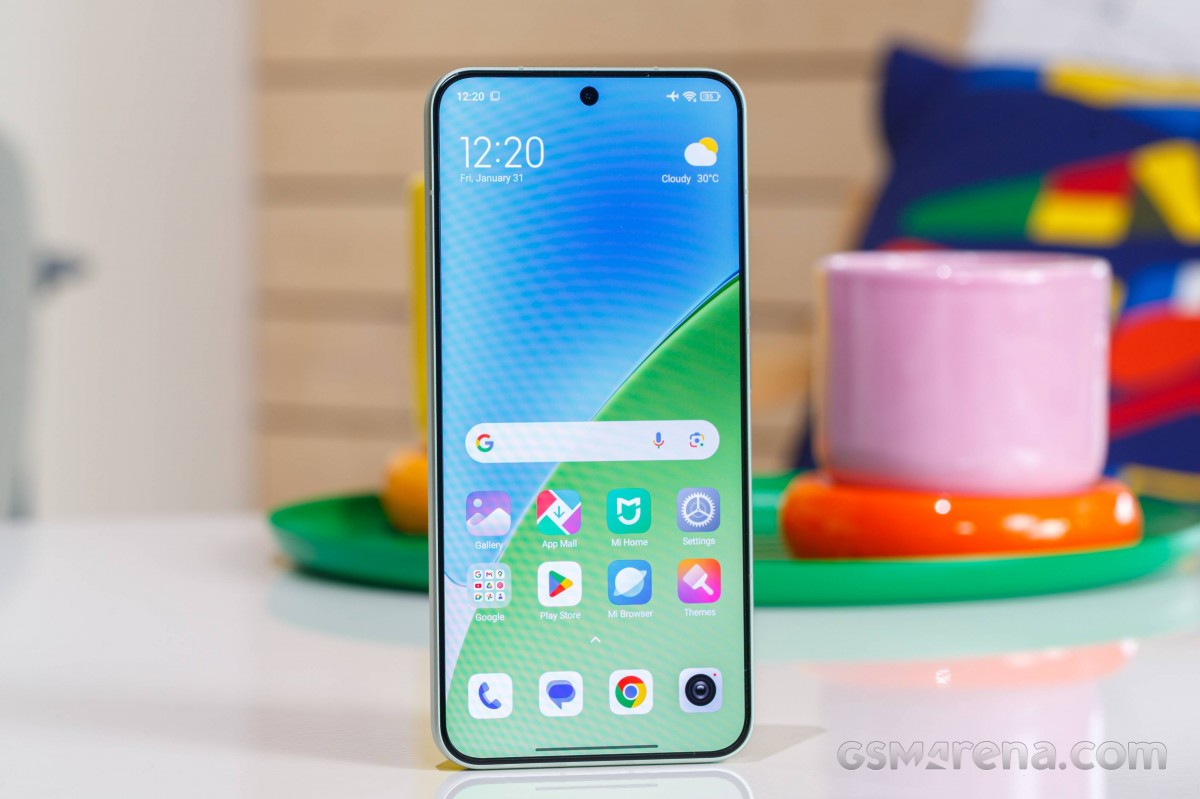
The 6.36-inch OLED display uses LTPO tech and can refresh at up to 120Hz. There is also a stereo speaker system. All of this is crammed inside a premium body with an aluminum alloy frame, shatterproof glass on both sides and an IP68 ingress protection rating.
Unboxing
The Xiaomi 15 ships in a pretty inconspicuous two-piece white cardboard box. It is quite sturdy and protects the phone well enough during shipping.
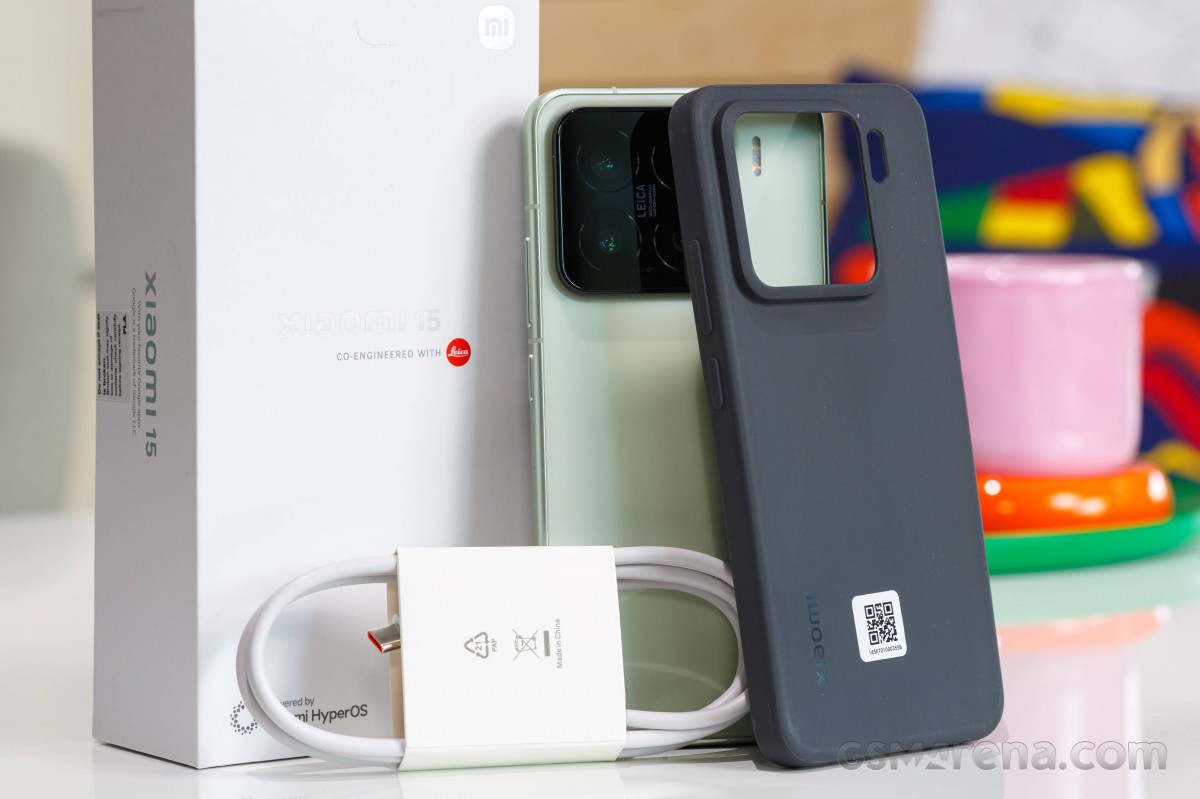
The retail package for the Xiaomi 15, which we received (an EU unit), does not bundle a charger. Make sure to check with your local retailer what is offered in your own particular market.
What is present in the box, however, is a nice, thick, soft TPU case for the phone, so you can start using it right away without worrying about scratches. Though it kinda hides the phone's beautiful design.
Design, build quality, handling
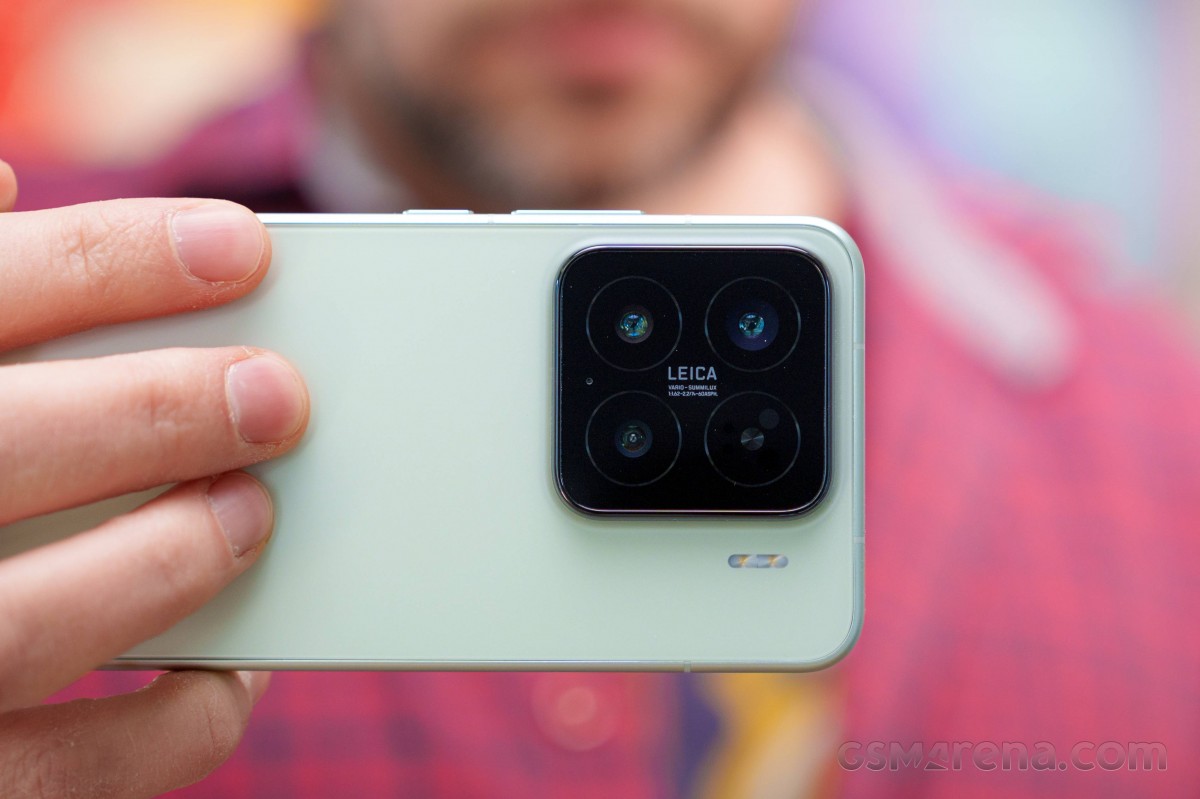
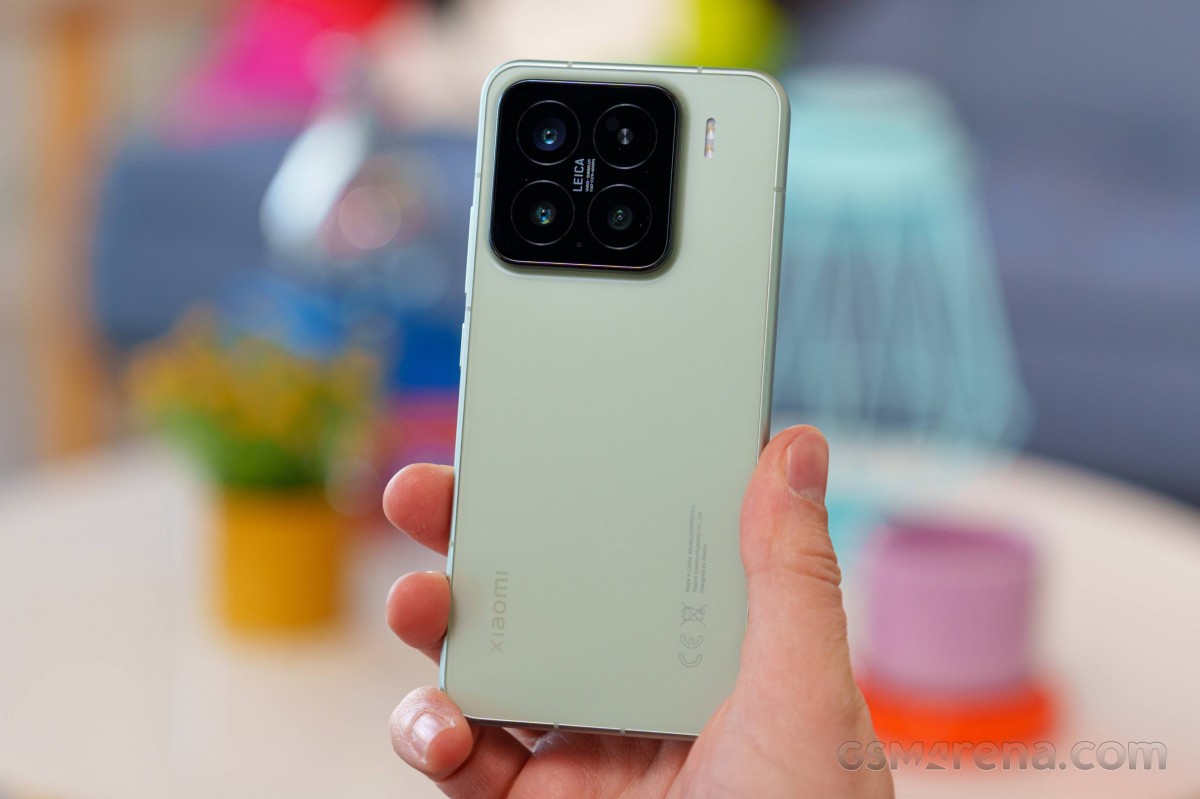
The Xiaomi 15 has a pretty "classic-looking" design without any real standout features. An argument can be made about the relatively large square and black camera island providing some recognizability, but other than that, it's your regular "slab" phone.
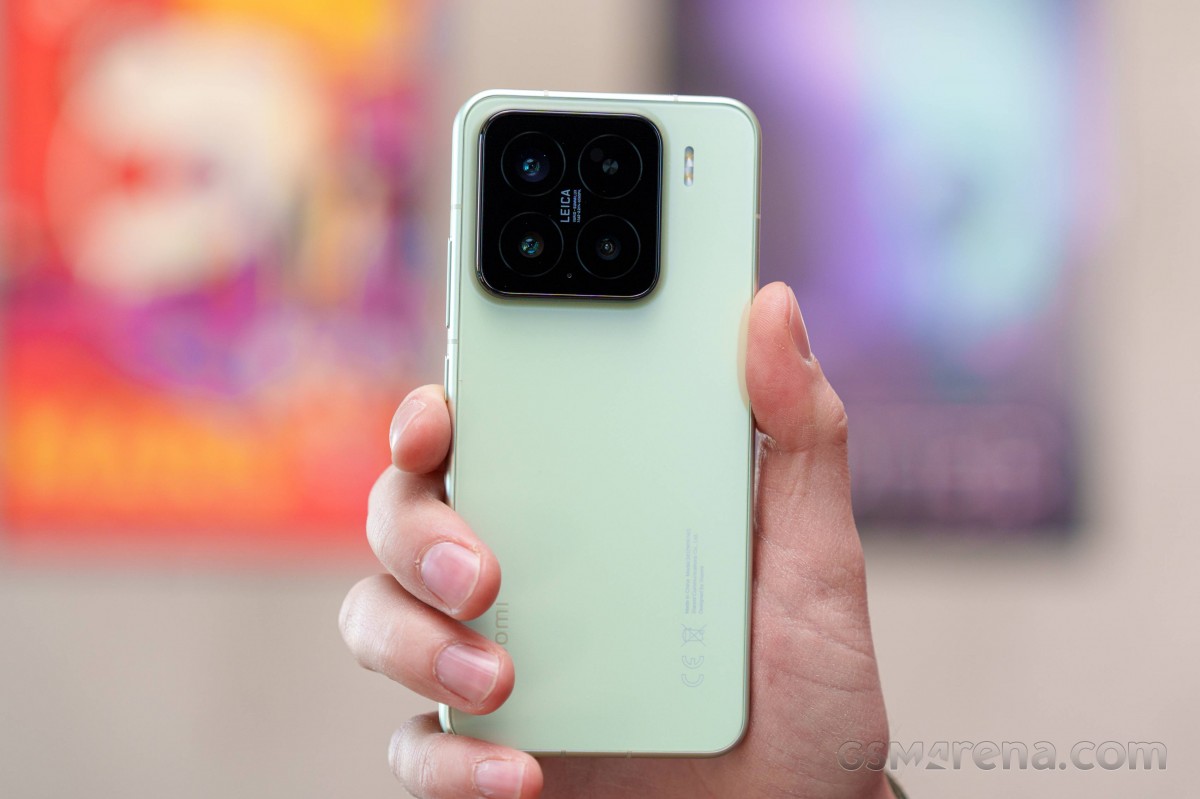
This year, the middle frame has been rounded towards the glass instead of the other way around. This creates a more comfortable in-hand feel. The Xiaomi 15 offers a very confident and pleasant grip with its relatively compact size. No excessive thumb stretching is required here.
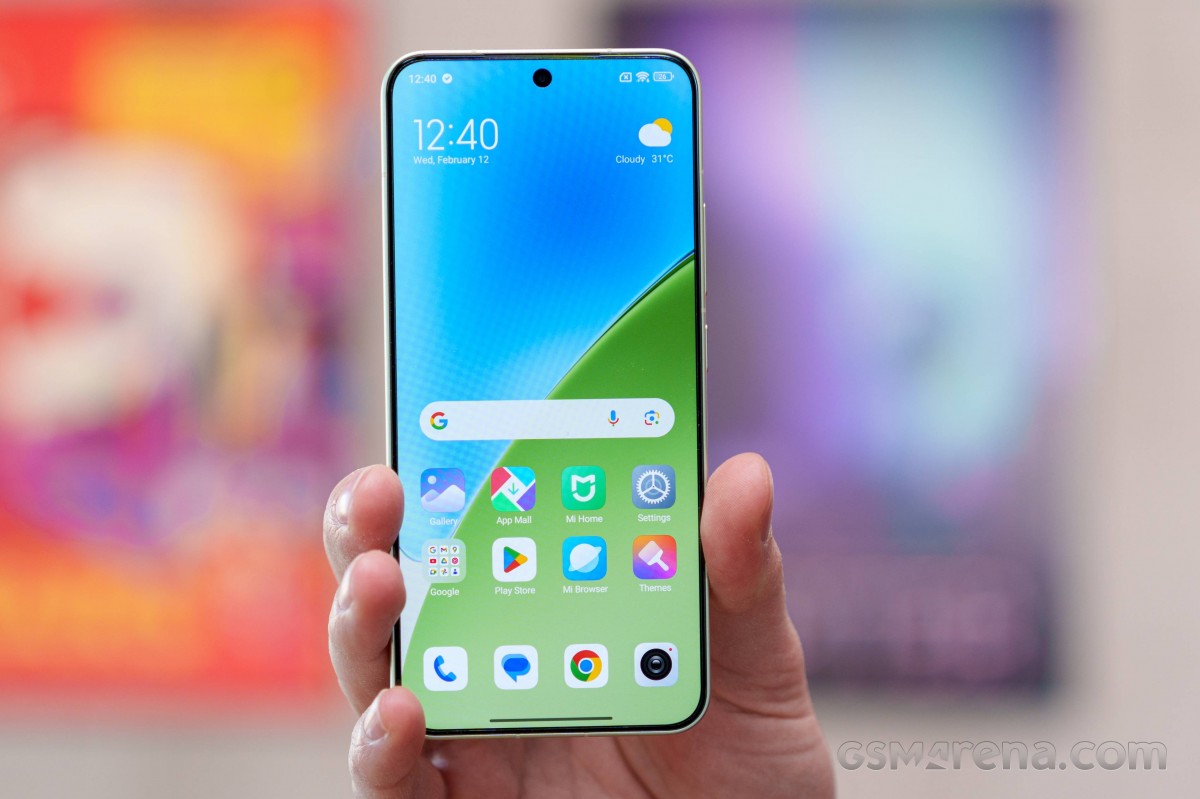
The phone looks even more inconspicuous and even a bit "mundane" from the front with an almost all-display design, thin bezels and practically no visible other hardware. Both the earpiece and the front-facing sensors are hidden away. The selfie camera cutout is fairly small as well, which is nice.
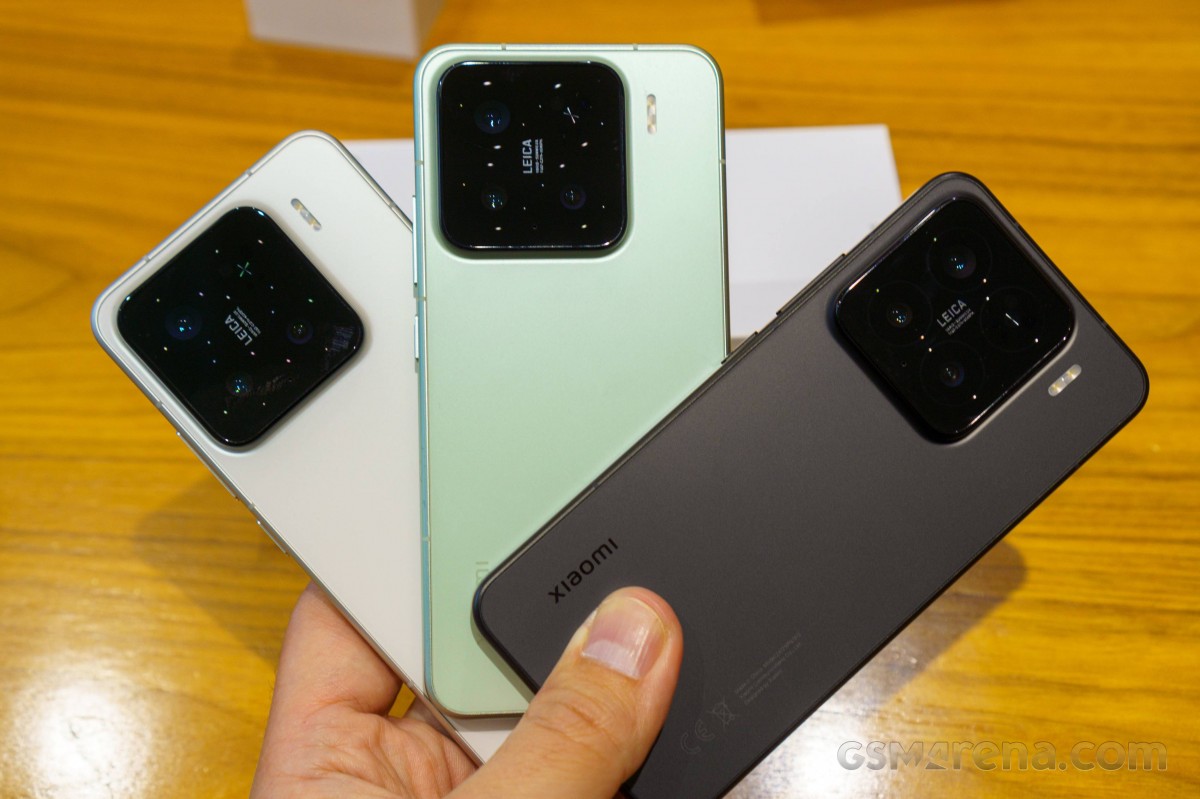
The Xiaomi 15 can be had in black, white, green and silver. Lilac seems to be staying in China for now along with a rather strikingly-looking red variant.
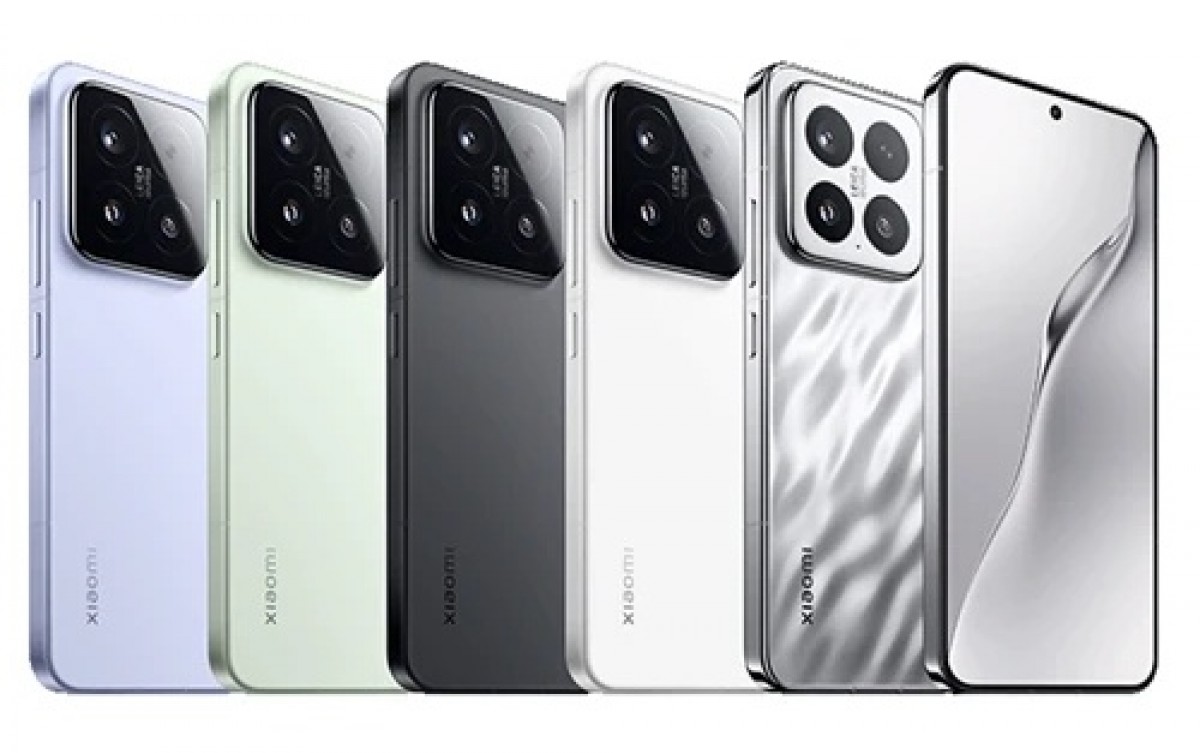
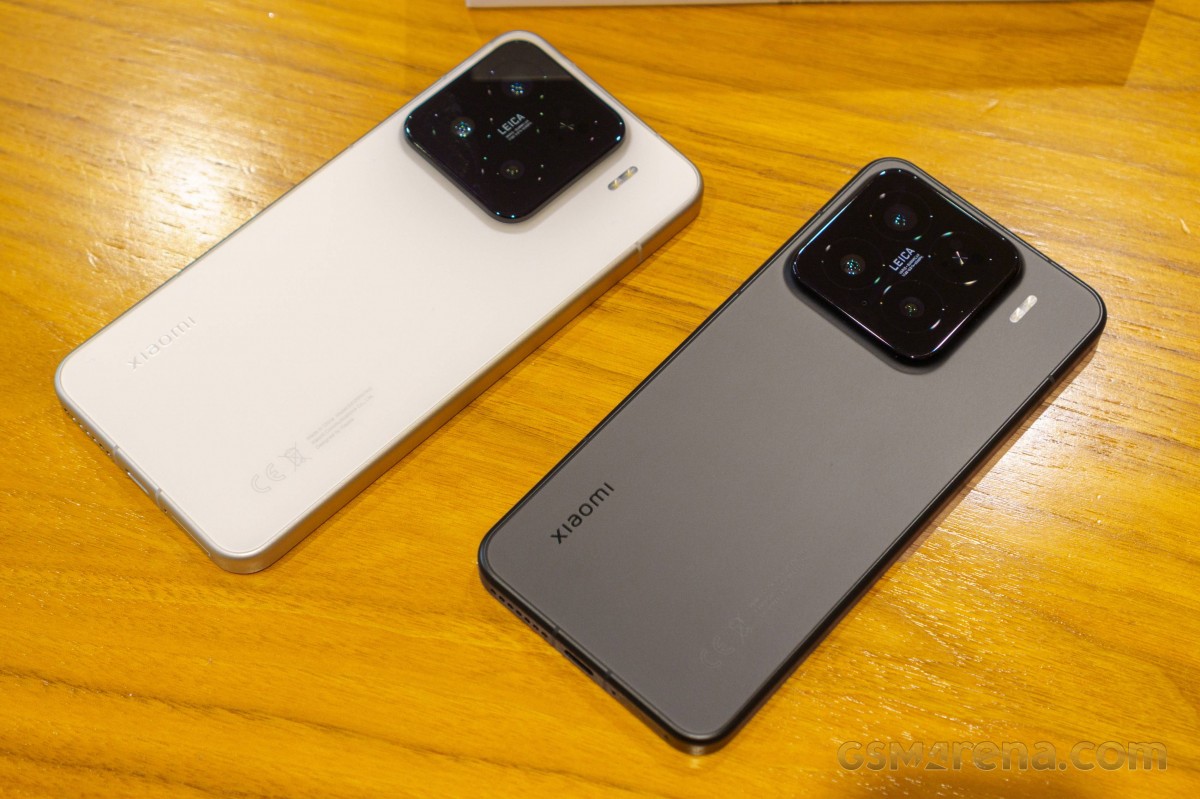
The back glass surface is matte and slightly textured to the touch. It doesn't easily gather fingerprints or grease, which is nice to see. Most of the color options are very subdued and would fit perfectly in any environment, even a boardroom.
There is nothing standout about the button and control layout on the Xiaomi 15 either. You get a volume rocker and power button on the right-hand side. Both are well-positioned height-wise and nice and "clicky".
Nothing is on the frame's opposite side except for some antenna lines. The top side is empty as well. The bottom side is a lot busier with the Type-C port in the middle, the SIM tray and the bottom-firing speaker.
As mentioned, there are no visible controls on the front of the phone. The light and proximity sensors are hidden underneath the display.
The Xiaomi 15 uses an in-display fingerprint reader. It is an ultrasonic rather than the usual optical one, which is theoretically "fancier". In practice, we found it to be both speedy and accurate. No complaints there.
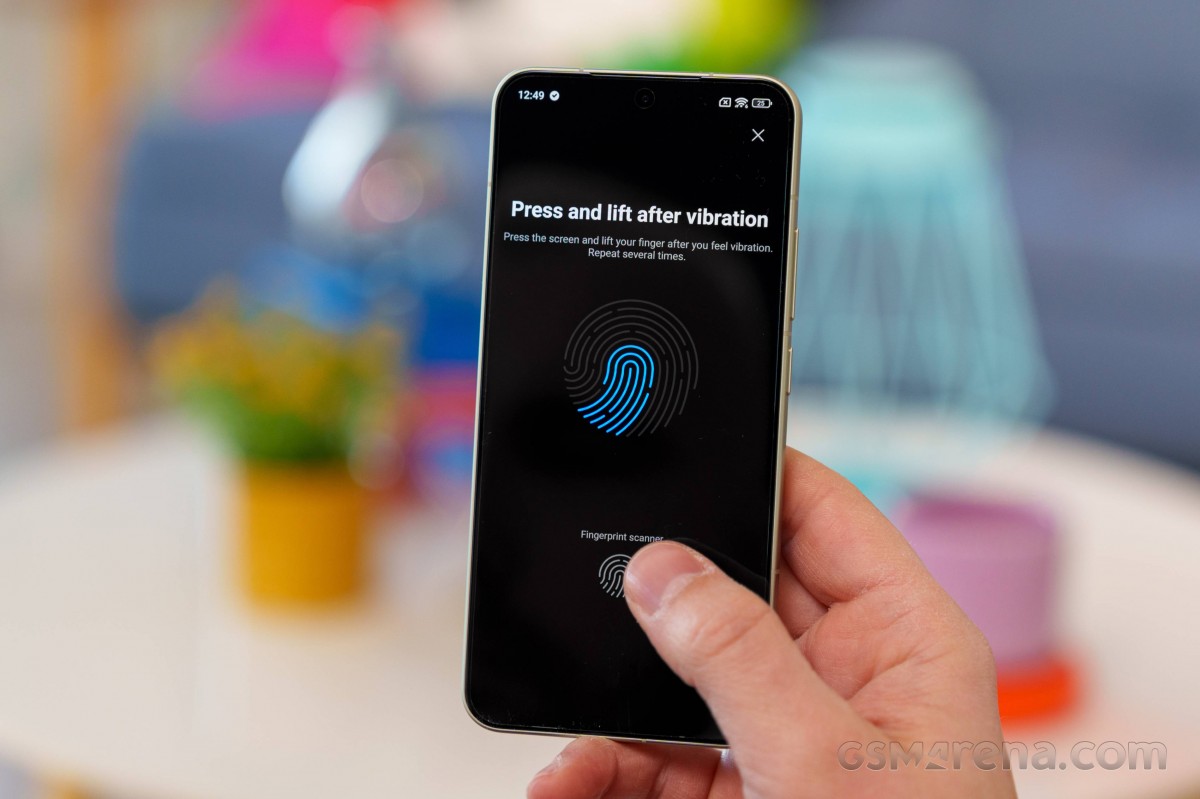
The Xiaomi 15 is a premium phone both in terms of specs and build. It feels solid with practically no flex or hollowness. The middle frame is made from aluminum alloy (6M42). There is something Xiaomi calls Xiaomi Shield Glass on the front. Apparently, the Xiaomi 15 Ultra gets an updated "2.0" version of the protective material this year, while the vanilla Xiaomi 15 is stuck with a last-gen version for better or worse. The back is made of some kind of glass fiber for enhanced resilience.
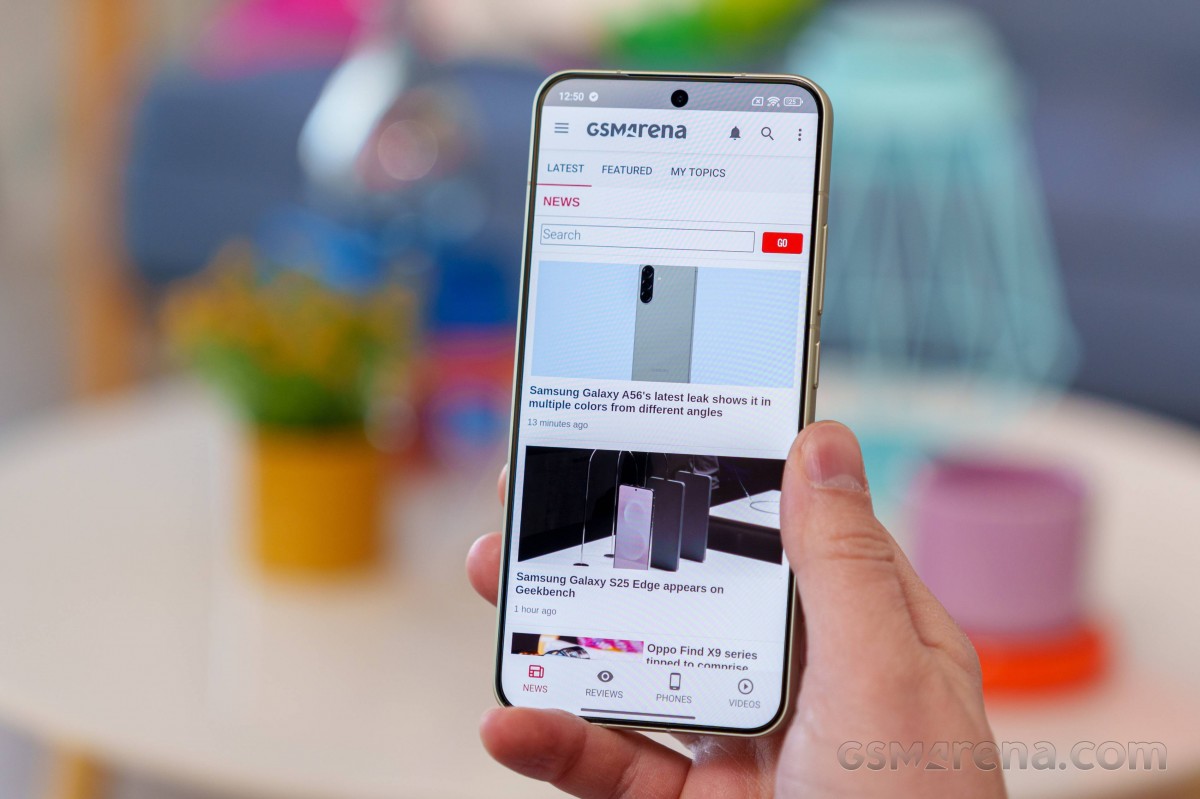
The phone has excellent IP68 ingress protection, which allows it to survive for up to 30 minutes in up to 1.5 meters of fresh water.
Display
The Xiaomi 15 has a fairly compact, by today's standards, 6.36-inch display. It is an OLED with a 120Hz refresh rate, 12-bit colors and Dolby Vision support. Quite premium stuff specs-wise.
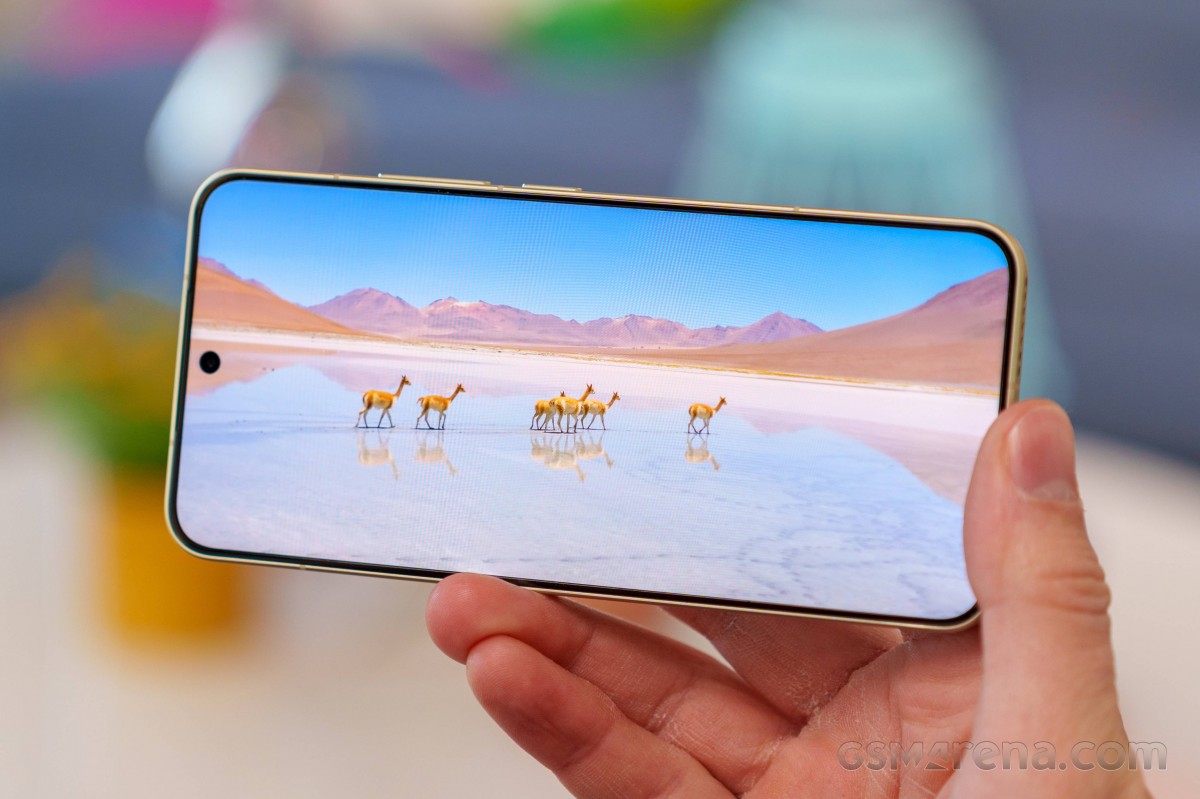
In terms of brightness, Xiaomi says the panel can reach a peak of 3,200 nits. We did our standardized testing and managed to get 549 nits by maxing out the slider. We achieved the max auto brightness figure 1,517 nits. That's more than plenty to be perfectly comfortable outdoors, even in sunlight. Additionally, the Xiaomi 15 automatically supports DC dimming at every brightness level.
The Xiaomi 15 has an LTPO OLED panel, which means a more granular refresh rate and better power efficiency in certain tasks. For instance, the software dials down to 10Hz when you are not interacting with the display. It does so very quickly and ramps up to 120Hz when you touch it.
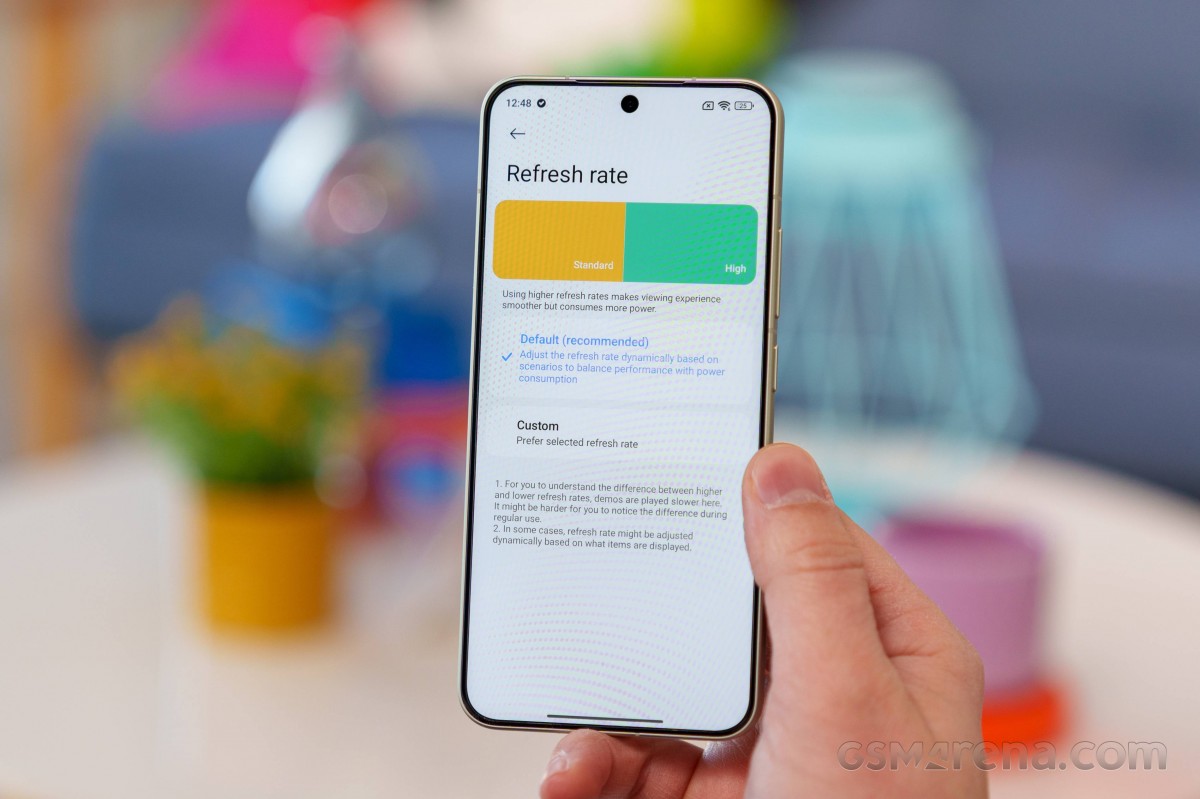
The modes available are Default (read Auto), 60Hz and 120Hz. However, while the 60Hz mode keeps the screen's refresh rate static at 60Hz, the 120Hz mode acts exactly like the Default mode.
In any case, we recommend using the Default mode as the software is pretty smart at detecting the content on the screen. It seems to favor 120Hz in all apps we tried, except YouTube, for example, where it will choose the appropriate refresh rate depending on the type of video. It can do 24Hz, 30Hz and 60Hz to match 24fps, 30fps and 60fps videos, respectively.
High refresh rate gaming works pretty well on the Xiaomi 15, with almost every supported title we tried managing to break through the 60Hz barrier.
Battery life
The global version of the Xiaomi 15, which we have for review, is equipped with a 5,240 mAh battery pack, as opposed to the 5,400 mAh that the Chinese version advertises. The difference is relatively small and might come down to "advertised" vs. "rated" capacity, but we can't say for sure. Maybe Xiaomi really swapped the battery pack on the international model for a marginally smaller one.
The Snapdragon 8 Elite has already proven to be a pretty efficient chip and it does not disappoint in the Xiaomi 15. It scores excellent results all around in our standardized battery tests with a great total Active Use Score of 16:28 hours.
Speakers - loudness and quality
The Xiaomi 15 packs a hybrid stereo speakers setup - one bottom-facing speaker and one that doubles as an earpiece. The typical issue with this solution is that the main speaker located at the bottom is always considerably louder. However, this isn't the case here. Both speakers are quite loud and almost perfectly balanced.

We feel that the setup hasn't changed noticeably since the Xiaomi 14, which isn't a complaint. On the contrary, the Xiaomi 15 managed a "Very Good" loudness rating, which is pretty much in line with its predecessor. It is about as loud as the iPhone 16 while also louder than the Samsung Galaxy S25.
As for tuning, the Xiaomi 15 isn't big on bass, at least not as big as the iPhone 16. However, it delivers very crisp mids and vocals and has little distortion in highs, even at max volume.
Use the Playback controls to listen to the phone sample recordings (best use headphones). We measure the average loudness of the speakers in LUFS. A lower absolute value means a louder sound. A look at the frequency response chart will tell you how far off the ideal "0db" flat line is the reproduction of the bass, treble, and mid frequencies. You can add more phones to compare how they differ. The scores and ratings are not comparable with our older loudspeaker test. Learn more about how we test here.
Connectivity
The Xiaomi 15 is a dual-SIM SA/NSA, Sub-6 5G device with simultaneous 5G connectivity on both of its nano-SIM slots. It has eSIM support as well.
For location, the phone supports GPS (L1+L5), GLONASS (G1), BDS (B1I+B1c+B2a), GALILEO (E1+E5a) and QZSS (L1+L5).
Local connectivity is handled by tri-band Wi-Fi 7 and Bluetooth 5.4 with LE, aptX HD, aptX Adaptive and LHDC 5 support. There is NFC on board and even an IR blaster. No FM radio or 3.5mm audio jack, though.

The Type-C port on the Xiaomi 15 is backed up by a speedy USB 3.2 Gen 2 data connection, which tops out at 10 Gbps. Furthermore, the phone also offers wired Display Port (DP) video output and has Host/OTG support.
You get a hefty set of sensors with the Xiaomi 15. These include an STMicro LSM6DVS accelerometer and gyroscope combo, an AKM AK0991X magnetometer and magnetometer combo, a Xiaomi TCS3720ALSPRX ambient light sensor, a Xiaomi-branded hardware proximity sensor and a Goertek SPL07 barometer.
Android 15-based HyperOS 2
The Xiaomi 15 comes pre-loaded with Xiaomi's still relatively new HyperOS 2 (2.0.7.0 on our review unit), running on top of the latest Android 15. This is not the case with many recent Redmi devices, which are still stuck on HyperOS 1 and Android 14, so credit where credit is due.
The Xiaomi 15 has a four-year major OS update and six-year security update promise. This is a solid support window and much better than what your typical Redmi offers (2-3 Android updates and 3-4 years of security patches on average).
If you come from an older MIUI-powered Xiaomi, you will feel right at home with HyperOS. The software isn't very different from the last few MIUI iterations, but it appears to be more polished. It features some neat AI tricks, and Xiaomi claims some under-the-hood optimizations as well.
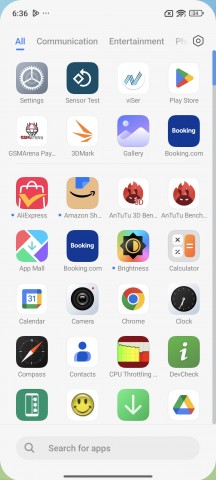
The Xiaomi 15 has an app drawer enabled by default, but you can disable it from the come screen settings menu. There is also a third "light" UX option that makes icons bigger and things a bit more accessible.


HyperOS UI
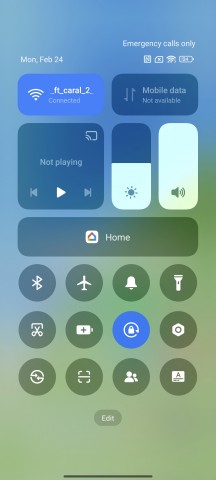
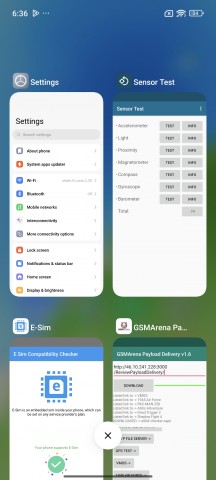
HyperOS 2 is quite familiar - it has different Notifications and Control pages, the homescreens support apps and widgets, the -1 homescreen can only be Google Discover. App Vault by Xiaomi seems to be gone in this version of the OS.
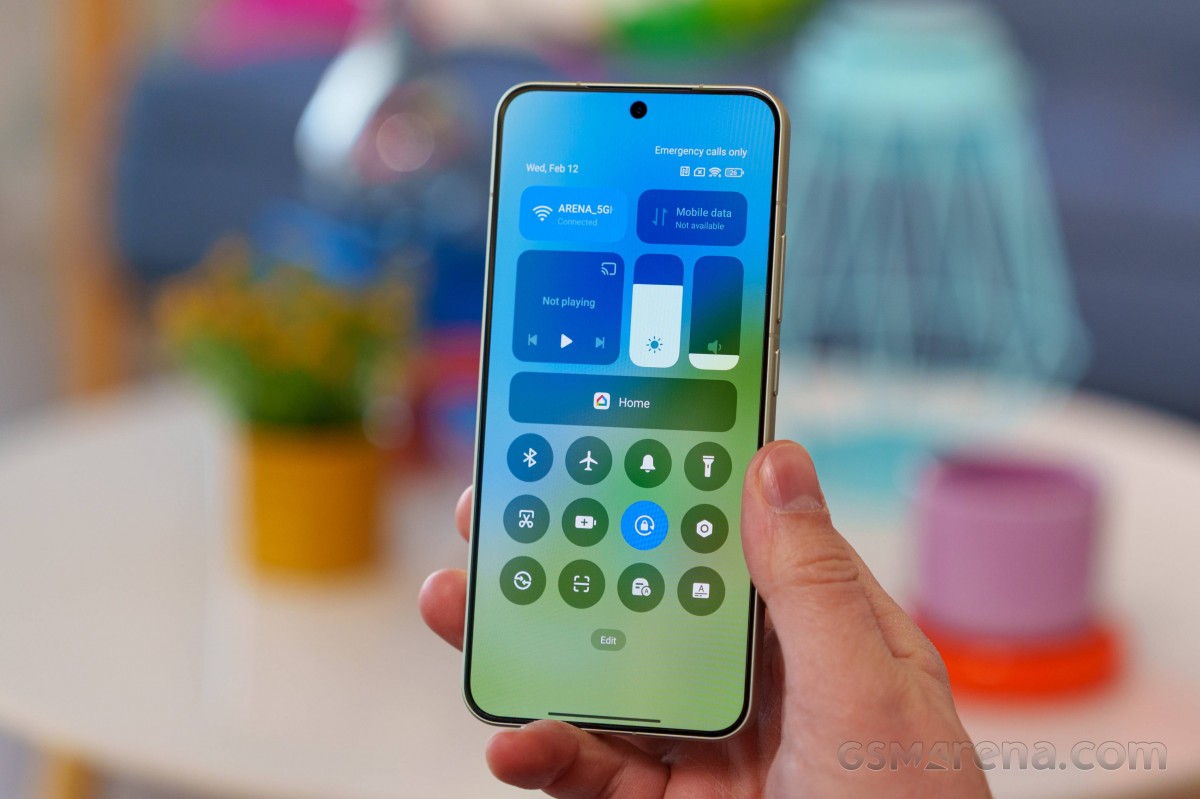
The multi-tasking options include split-screen apps and pop-up windows.
The AI functionality is quite rich on the Xiaomi 15.
It all starts with Google Gemini. You can ask Gemini a lot of stuff to do, even make entire conversations. It can give you ideas on what to cook based on a photo of your fridge contents, or you can ask for book or painting ideas.
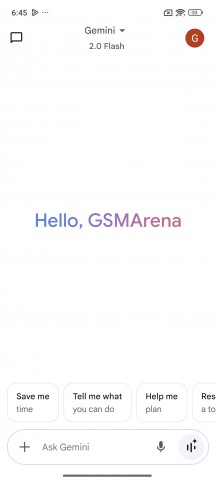


Google Gemini
Gemini can also create images for you, which is neat. Circle to Search is available system-wide as well.
Beyond Gemini, there are plenty of AI features. Xiaomi does a good job of organizing these in a menu in Settings for explanation purposes. You still have to access the features themselves from their respective apps and locations, but it is very convenient to actually have a central location where everything is nicely laid out.
The Notes app can transform text in many ways. You can do translation, proofreading, summary and AI layout. The gallery app can do object deletion as well as generation for the sake of background expansion and similar tasks. You can even generate a short video from a static image. The Recorder app can do automatic transcription with speaker detection and separation, and you can translate the transcriptions. You can enable system-wide AI subtitles for multimedia consumption. There is also an AI interpreter that can do both face-to-face translation and call translation.
It is worth noting that despite the vast power available from the Snapdragon 8 Elite chipset, many of Xiaomi's AI features are still cloud-based. Xiaomi isn't charging for anything, at least for now.
Performance and benchmarks
The Xiaomi 15 runs Qualcomm's latest and greatest Snapdragon 8 Elite chipset. It is also the "full-featured" eight-core version, which is noteworthy since a variant with seven CPU cores also exists. Here, you get two "big" 4.32 GHz Oryon V2 Phoenix L cores and six "small" 3.53 GHz Oryon V2 Phoenix M ones. The onboard GPU is a powerful Adreno 830.
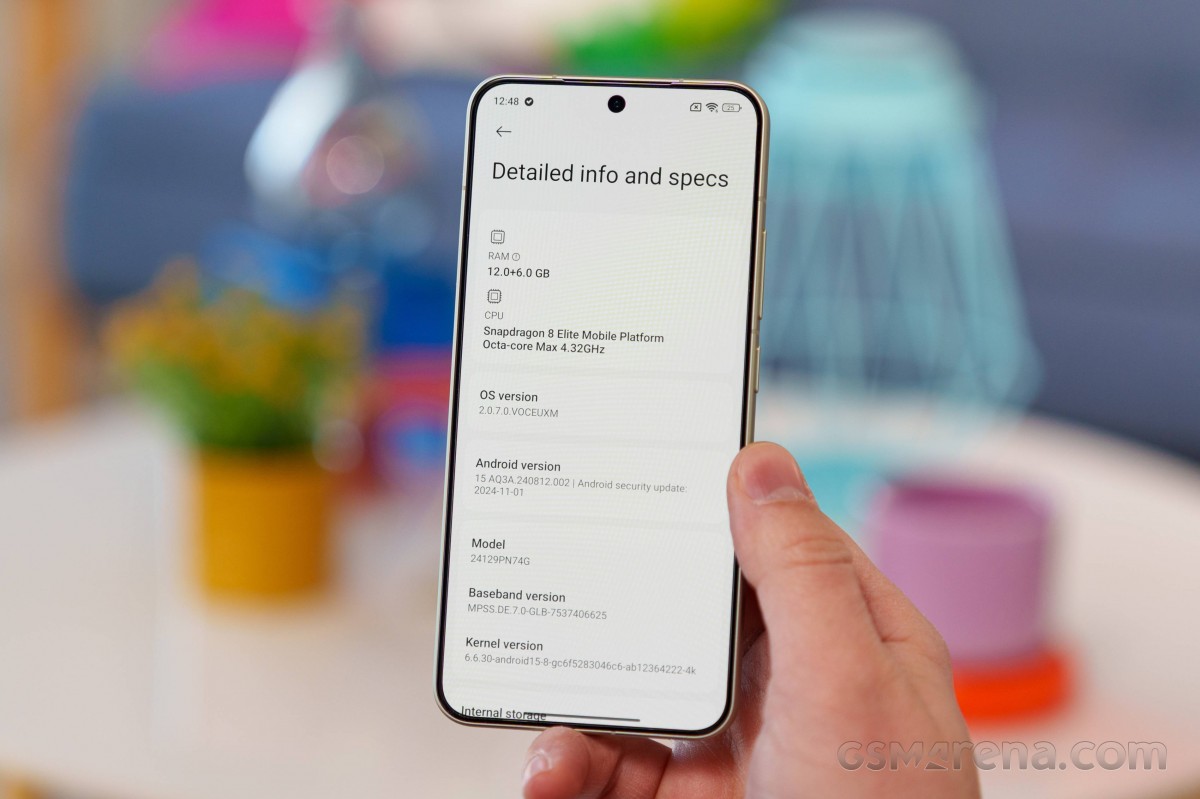
The Snapdragon 8 Elite is accompanied by 12GB of LPDDR5X RAM and 256GB or 512GB of non-expandable UFS 4.0 storage. Unfortunately, the global version of the phone doesn't get 16GB of RAM or a 1TB storage variant.
We expected nothing short of excellent burst performance from the Xiaomi 15 going into testing and were not disappointed.
However, that said, the relatively compact Xiaomi 15 does have some cooling difficulties. So much so, in fact, that our review unit consistently fails to go through a standard 20-iteration run of 3Dmark's stress testing and overheats at around iteration 18, popping up an error message in the process. We successfully ran an hour-long CPU stress test, which ended up very choppy with plenty of sudden dips in performance, which is not what you want to see.
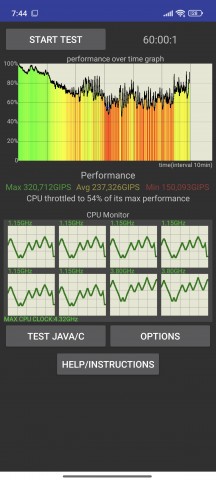
Thermal-throttling
Overall, the Xiaomi 15 throttles badly under prolonged loads. Its cooling is less than ideal.
A familiar triple camera with an upgraded telephoto
The Xiaomi 15 borrows almost its entire camera setup from the Xiaomi 14. This effectively makes it one of the best-equipped, relatively compact flagships around. What Xiaomi swapped this time is the telephoto sensor. Instead of the Samsung ISOCELL JN1, the telephoto now uses the upgraded ISOCELL JN5, plus a new lens offering 2.6x optical zoom instead of 3.2x.
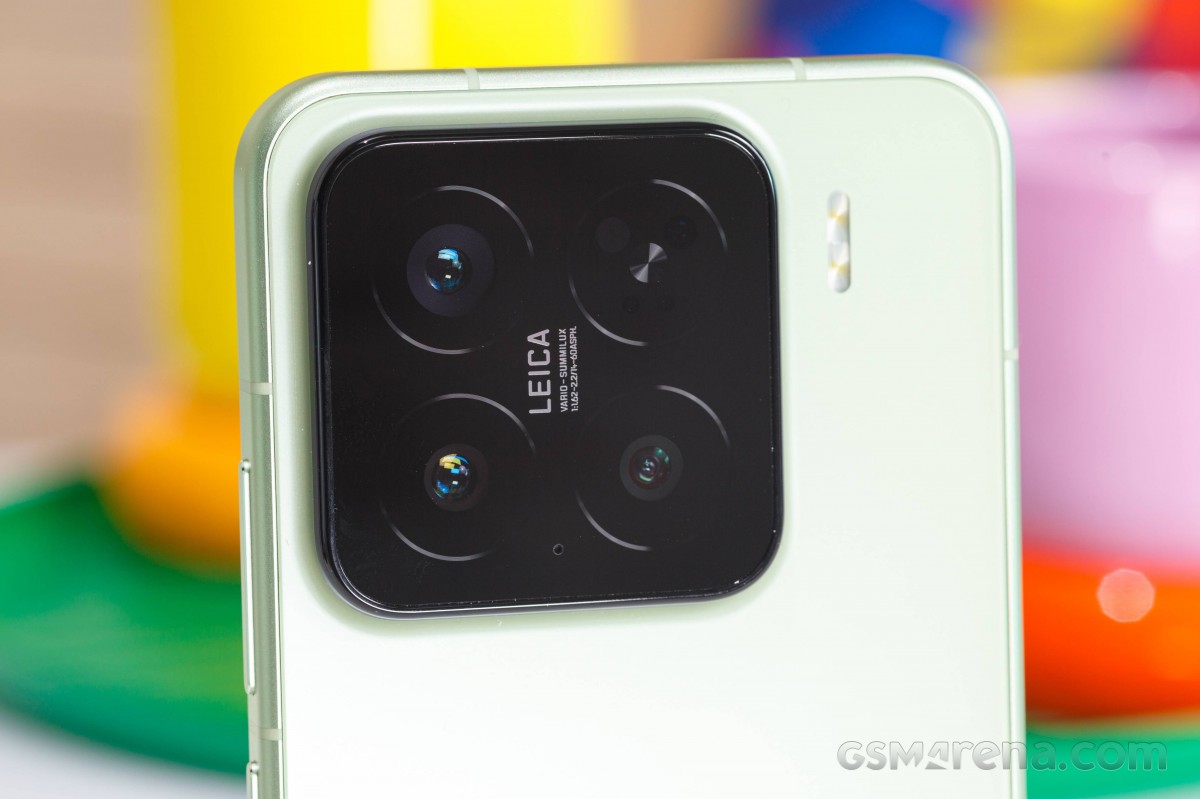
Besides that, the main camera is the same and still based on the OmniVision OVX9000 Light Fusion 900 sensor. The ultrawide hasn't changed either and uses the Samsung ISOCELL JN1 sensor. The selfie camera is familiar as well - the 32MP OmniVision OV32B.
- Wide (main): 50 MP OmniVision OVX9000 Light Fusion 900, f/1.6, 23mm (wide), 1/1.31", 1.2µm, dual pixel PDAF, Laser AF, OIS, OIS; 4320p@24fps, 2160p@60fps
- Telephoto: 50 MP Samsung ISOCELL JN5, f/2.0, 1/2.76", 0.64µm, 60mm (telephoto), PDAF (10cm - ∞), OIS, 2.6x optical zoom; 2160p@60fps
- Ultrawide: 50 MP Samsung ISOCELL JN1, f/2.2, 1/2.76", 0.64µm, 14mm, 115-degree (ultrawide); 2160p@60fps
- Front camera: 32MP OmniVision OV32B, f/2.0, 1/3.14", 0.7µm (wide); 2160p@30/60fps
Xiaomi is promising that the Xiaomi Imaging Engine (AISP 2.0) ensures a consistent tone across the cameras as white balance and exposure settings are derived from the always-on main camera.

Daylight photo quality
Main camera
The main camera delivers flagship-grade image quality during the day. It has everything nailed down - sharpness, fine detail, wide dynamic range, accurate color reproduction, and consistent outdoor and indoor performance.






















Xiaomi 15: 12.5MP main camera samples
Here are some full-resolution 50MP shots as well. These don't really differ all that much from the regular shots.


Xiaomi 15: 50MP main camera samples
2x zoom
Unlike last year's Xiaomi 14, the main camera sensor does particularly well with 2x digital zooms now. The photos have really good sharpness and contrast and no obvious artificial-looking processing.



















Xiaomi 15: 12.5MP main camera 2x zoom samples
Other than that, the rest of the quality characteristics are the same as 1x shots.
Telephoto camera
The new telephoto camera doesn't zoom nearly as much as last year's model and now has a 60mm equivalent lens. That's not necessarily a bad thing, though. On the plus side, the sensor has been upgraded from the Samsung ISOCELL JN1 to the JN5. The JN5 should be theoretically better, though it's not like we didn't love last year's telephoto already.
The telephoto in the Xiaomi 15 captures excellent stills with superb detail, great contrast and dynamic range. The colors also look great and match the main camera well.





















Xiaomi 15: 12.5MP telephoto camera 2.6x samples
5x is not a native zoom level for any of the cameras, but it is available a a quick toggle in the camera app. Shots are actually cropped and zoomed from the telephoto. Here are some samples.





















Xiaomi 15: 12.5MP telephoto camera 5x samples
The Xiaomi 15 lacks autofocus on its ultrawide, but it does have a dedicated macro mode that uses the telephoto. It can't really focus all that close to the subject with a minimum of around 10cm of distance, but it still does a great job of macros.








Xiaomi 15: 12.5MP telephoto camera macro samples
Portraits
The Xiaomi 15 can capture portraits with its main camera and telephoto. Xiaomi includes a total of four zoom presents in the UI. There is a 23mm one, which is the native zoom of the main camera. The other presets seem a bit arbitrary. These are 35mm, which is also shot with the main camera and then 60mm and 75mm, which come from the telephoto camera.
















Xiaomi 15: Portrait shots at 23mm, 35mm, 60mm and 75mm
Quality-wise, we can't find any major faults here. Subject detection and separation are nearly perfect, and the quality of the background blur is great.
Ultrawide camera
The stills from the ultrawide aren't bad in any particular way but aren't spectacular either. We always tend to expect more of these cameras, especially on flagships, but the reality is that most simply don't deliver for one reason or another.
There is visible softness in these images, especially near the corners. There is more to be desired in terms of detail as well as contrast. Dynamic range isn't stellar either, with frequently crushed shadows.















Xiaomi 15: 12.5MP ultrawide camera samples
Colors look nice but are not particularly well-matched to the other cameras, which becomes really apparent in indoor shots.
Selfie camera
The selfie camera on the Xiaomi 15 captures nice-looking stills. You get very pleasant skin tones and a good dynamic range. These are a bit excessive in size at 32MP, and despite the high resolution, they are soft if you pixel peep. They could have just turned them into very good 8MP images, but that is what it is.





Xiaomi 15: 32MP selfie camera samples
Detail is excellent, and so are the contrast and dynamic range. Colors look great, too.
Low-light camera quality
The Xiaomi 15 seems pretty generous with the Night mode, and often prefers to use it. Either way, the difference between the standard Photo and Night modes is almost non-existent. You will get clean, sharp and detailed photos in both cases. We are impressed with the level of detail in the shadows as well as the adequate handling of highlights and light sources.








Xiaomi 15: 12.5MP main camera low-light samples
Here are some forced night mode samples for comparison.








Xiaomi 15: 12.5MP main camera night mode samples
The 2x zoom mode produces somewhat usable images but with considerably lower detail, inferior sharpness and lower contrast compared to the standard 1x shots.








Xiaomi 15: 12.5MP main camera low-light 2x zoom samples
The dedicated telephoto camera shoots much better zoom shots by comparison, but these are still imperfect. Surfaces come out looking a bit soft and artificial thanks to noise reduction and sharpening.








Xiaomi 15: 12.5MP telephoto camera low-light 2.6x samples








Xiaomi 15: 12.5MP telephoto camera low-light 5x samples
There is plenty of detail on the plus side, and colors look great. The dynamic range is nice and wide, and contrast is good.
The ultrawide camera doesn't shine in low light, but it still does alright as far as ultrawides go.








Xiaomi 15: 12.5MP ultrawide camera low-light samples
Video recording
The handset supports recording 8K videos of up to 30fps with its main camera and 4K@60fps using its auxiliary cameras. The Xiaomi 14 could only do 8K@24fps. Steady Video mode with enhanced EIS and Steady Video PRO mode are also available. All these modes cap at 1080p@30fps. HDR/Dolby Vision recording and Pro mode are also on the list, while an array of 4 microphones enable directional audio recording. The microphones are placed on the front and back of the device. And although the Dolby Vision recording isn't a new feature, Xiaomi highlights that the built-in video editor supports Dolby Vision edits.
Videos get saved in h.265/HEVC by default to save on space with a stereo AAC audio stream inside an MP4 container. You can opt to use the older h.264/AVC format instead for better compatibility, but you need to specifically do that.
Regarding quality, there is no room to complain at all. The Xiaomi 15 is up there with the best of them, especially its main camera, which captures stellar 4K videos with abundant detail, great colors, dynamic range, and practically no noise.
The dedicated telephoto camera also captures great 4K videos. These are very detailed, with great colors and no noise. They are just a bit softer than videos from the regular camera, but that is to be expected.
Even the ultrawide has some formidable video recording chops. The quality is pretty great, with plenty of detail and no noise. There is slight fringing on smaller details, but that's all.
The low-light 4K video taken with the main camera is also very good - it has above-average dynamic range and level of detail, even in the darker parts of the scene.
Our verdict
The Xiaomi 15 is more of an iterative upgrade rather than a colossal jump forward. The notably larger battery is probably the most important change in our minds. The chipset swap to the new Snapdragon 8 Elite is nice and all, but just like last year, the Xiaomi 15 still struggles to keep it cool with prolonged loads. The camera changes are pretty minor. Last year, we did wish for autofocus on the ultrawide, but that didn't come to pass. Even so, this is one of the best and most capable camera setups you can currently get in a relatively compact phone.
Honestly, apart from the lackluster cooling performance, there are very few, if any, glaring issues we can point out with the Xiaomi 15. While it might not be a huge upgrade over its predecessor, we acknowledge that fitting so much premium hardware into such a small body is a really tough job and one that Xiaomi continues to excel at.
The bottom line here is that you can't realistically do much better than the Xiaomi 15 for a powerful, modern, compact flagship. If the price is right for you, you won't regret picking one up.
Pros
- One of the few compact flagship phones
- Very nice 120Hz, LTPO OLED display.
- Great battery life and a big battery.
- Pretty fast charging.
- Premium stereo speaker setup.
- Excellent connectivity, including tri-band Wi-Fi 7, eSIM support and a fast 10 Gbps USB port with DP output.
- HyperOS 2 is streamlined, efficient and full of interesting AI.
- Еxcellent camera experience all-around in both photos and videos.
Cons
- Generational upgrades are few and far between.
- Ultrawide cam has subpar photo quality and lacks autofocus.
- Battery capacity is large but smaller than the Chinese model.
- Throttles heavily under heavy load.
- No charger in certain markets like the EU.
512GB 12GB RAM$ 900.00

