Vivo X300 Pro Review
Introduction
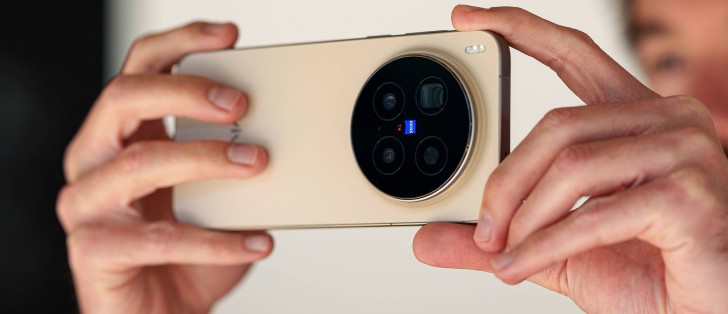
Subtle tweaks to an already great camera system, an updated design, latest-gen chipset, more battery - a more or less predictable list of changes is what you'll find in the vivo X300 Pro, compared to the 2024 model. Or is it less battery? Wait, what?
You see, the X300 Pro packs a 6,510mAh battery - a sensible upgrade over the previous generation's 6,000mAh capacity. Unless you're in the EU, where the new phone's capacity is limited to just 5,440mAh. Now, technically, that might still be an upgrade, considering that some countries got a 5,200mAh X200 Pro last year, but either way, we want the big battery.
We're not getting it here in Europe though, but we are getting a superbly capable camera system with an improved main unit, a refined telephoto, and a more versatile selfie shooter. On top of that, the X300 Pro gets support for the telephoto extender we saw on last year's Ultra - the thing's not cheap, but it could be worth it.
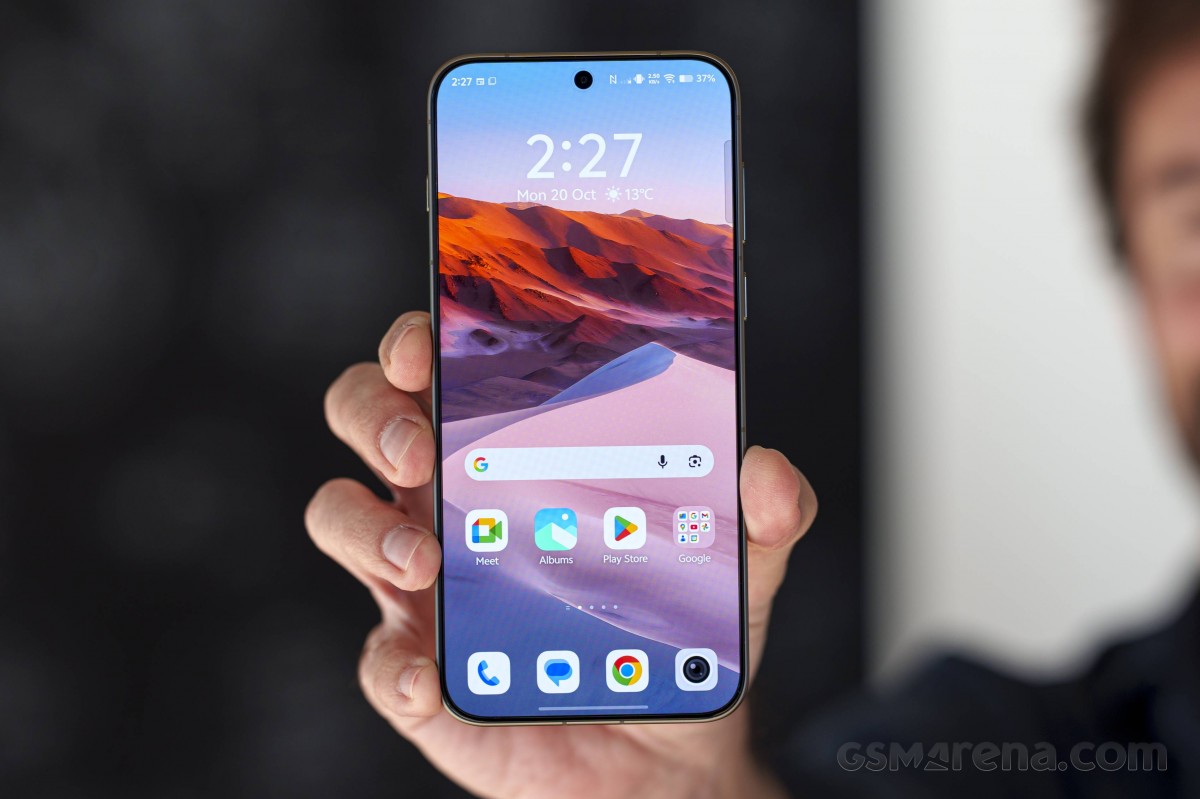
The more trivial upgrades include the Dimensity 9500 chipset - the Pro model remains on the Mediatek branch, while the Snapdragon is reserved for the Ultras. There's also another episode in the move away from curves and the X300 Pro is now entirely flat - front and back (well, minus the camera bump).
One development that definitely pleased us is the fact there will be no more FuntouchOS - vivo's OriginOS Android overlay will now come preinstalled not only on Chinese versions of the company's phones, but also on the global models like this one.
vivo X300 Pro specs at a glance:
- Body: 161.2x75.5x8.0mm, 226g; Glass front (Armor Glass), aluminum alloy frame, glass back; IP68/IP69 dust tight and water resistant (high pressure water jets; immersible up to 1.5m for 30 min).
- Display: 6.78" LTPO AMOLED, 1B colors, 120Hz, 2160Hz PWM, HDR10+, HDR Vivid, Dolby Vision, 4500 nits (peak), 1260x2800px resolution, 20:9 aspect ratio, 452ppi; Ultra HDR image support.
- Chipset: Mediatek Dimensity 9500 (3 nm): Octa-core (1x4.21 GHz C1-Ultra & 3x3.5 GHz C1-Premium & 4x2.7 GHz C1-Pro); Arm G1-Ultra.
- Memory: 256GB 12GB RAM, 512GB 16GB RAM, 1TB 16GB RAM; Dual UFS 4.1.
- OS/Software: Android 16, up to 5 major Android upgrades, OriginOS 6.
- Rear camera: Wide (main): 50 MP, f/1.6, 24mm, 1/1.28", 1.22µm, PDAF, OIS; Telephoto: 200 MP, f/2.7, 85mm, 1/1.4", 0.56µm, multi-directional PDAF, OIS, 3.7x optical zoom, macro 2.7:1; Ultra wide angle: 50 MP, f/2.0, 15mm, 119˚, 1/2.76", 0.64µm, AF.
- Front camera: 50 MP, f/2.0, 20mm (wide), 1/2.76", 0.64µm, AF.
- Video capture: Rear camera: 8K@30fps, 4K@30/60/120fps, 1080p@30/60/120/240fps, gyro-EIS, 4K@120fps 10-bit Log, Dolby Vision HDR; Front camera: 4K@30/60fps, 1080p@30/60fps.
- Battery: 5,440mAh (EU, as tested), 6,510mAh (RoW); 90W wired, 40W wireless, Reverse wireless, Reverse wired.
- Connectivity: 5G; eSIM; Wi-Fi 7; BT 5.4, aptX HD, LHDC 5; NFC; Infrared port.
- Misc: Fingerprint reader (under display, ultrasonic); stereo speakers; Satellite connectivity support (optional, market/region dependent).
vivo X300 Pro unboxing
The X300 Pro arrives in the usual box vivo uses for its high-end phones, a squarish off-black thick cardboard package. A protective case is included, color-matched to the phone. A USB-A-to-C cable is also found inside, but there's no charger in the box. Some early bird bundles do add a FlashCharge adapter, but that's not standard treatment.
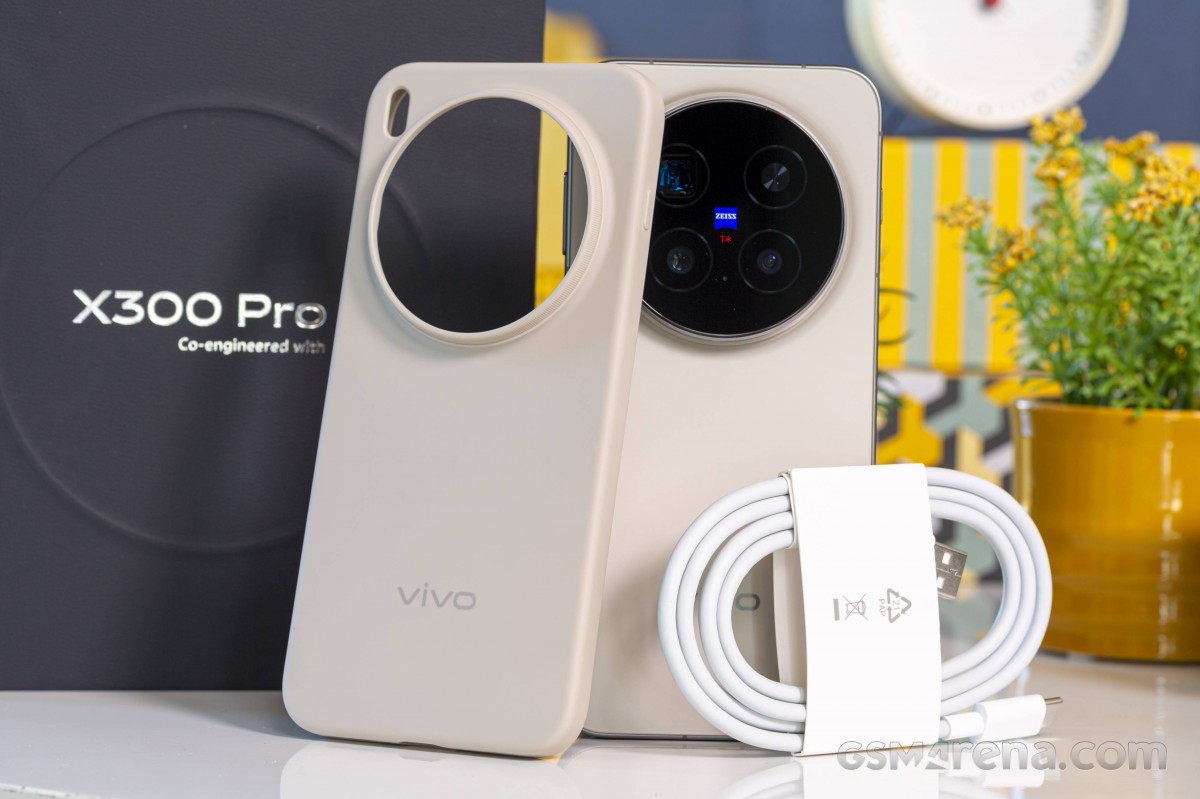
Speaking of bundles, in some markets you could score a deal on the Telephoto Extender Kit - normally an eye-watering €600 extra purchase. Maybe a trip to vivo's Spanish store is in order. Or you could get a gray-market import from one of the online stores that sell vivo gear from China.
Design, build quality, handling
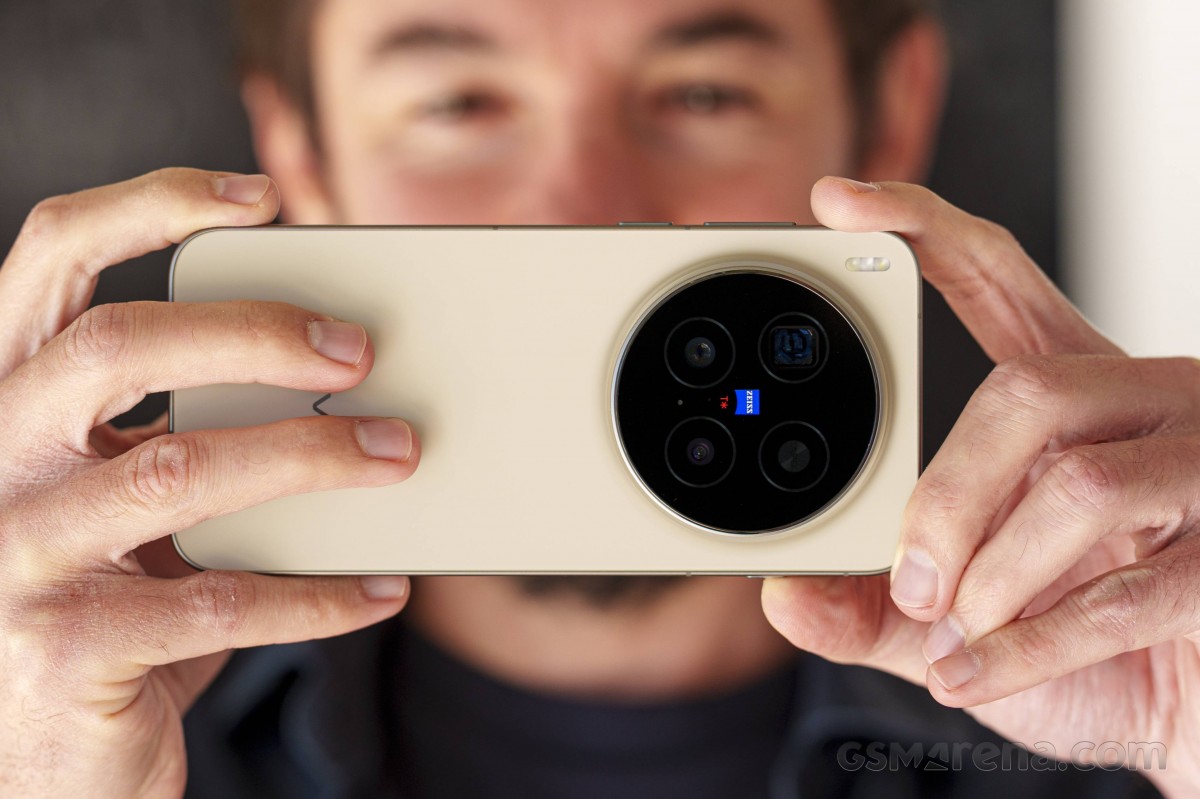
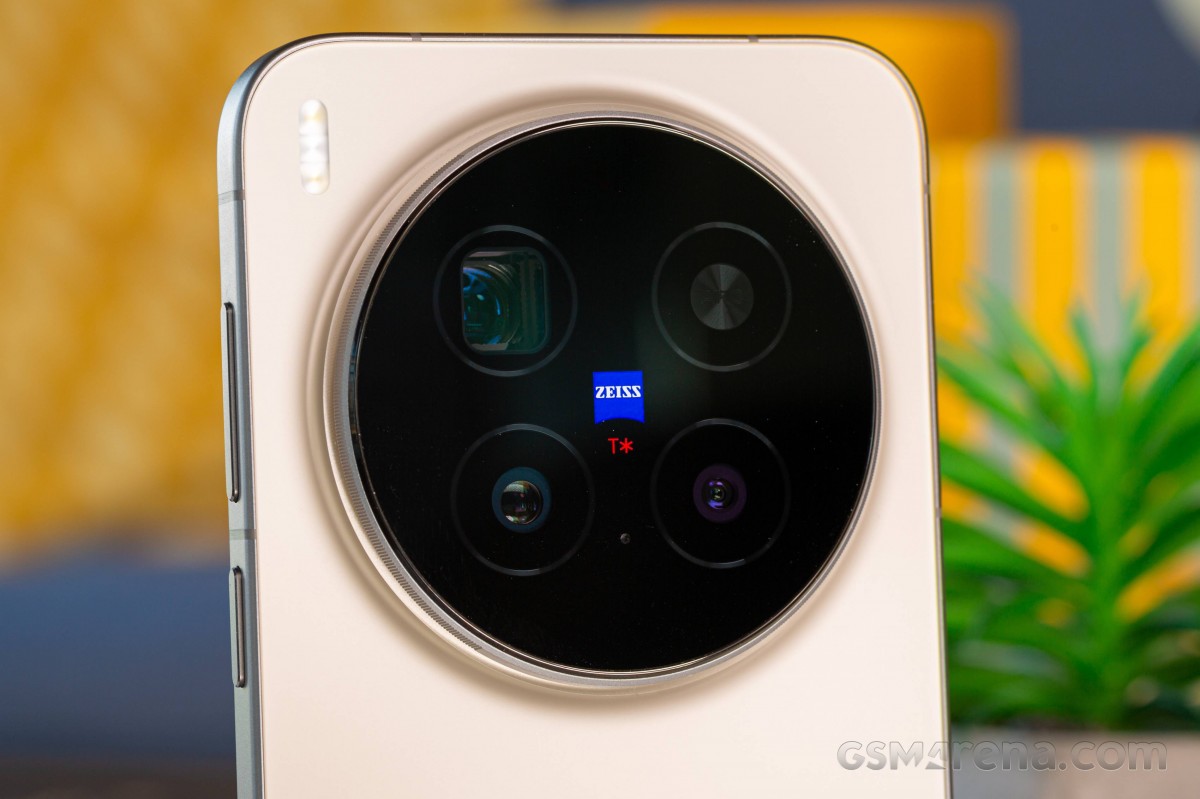
The vivo X300 Pro stays true to the model's lineage and its roots are immediately recognizable, though it's not without its share of changes. The large camera island is the centerpiece as before, a small but proud Zeiss badge in its middle, while both the front and the back have gotten entirely flat - a universal trend.
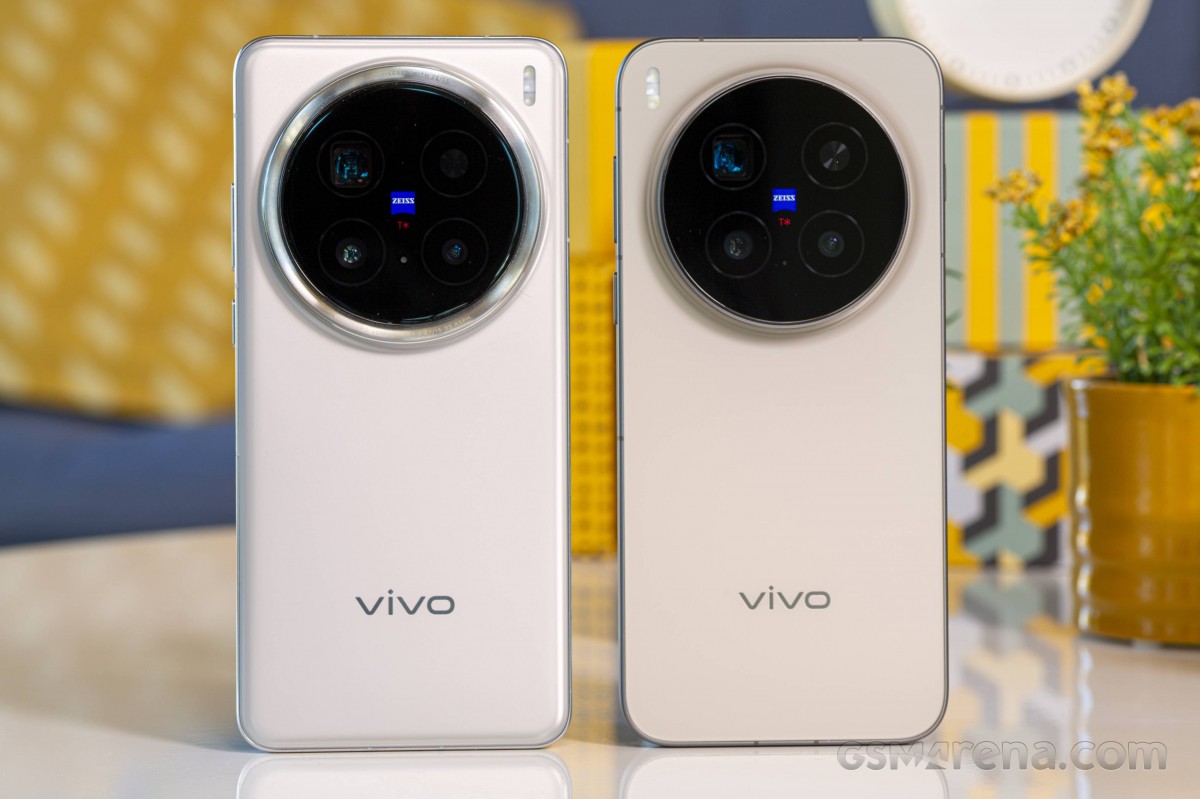
In fact the whole camera cluster looks nearly identical to last year's model, only the step-down ring around it has disappeared - perhaps a prerequisite for the telephoto extender kit's case. Or just a design choice - either way, the large black glass circle is here to stay.
Some may find it too obtrusive and in stark contrast with the lighter paintjobs, and for those folks vivo has a classic black option. That and our review unit's brown colorway are seemingly global, with the baby blue (also pictured below) and white variants limited to China - don't quote us on that though.
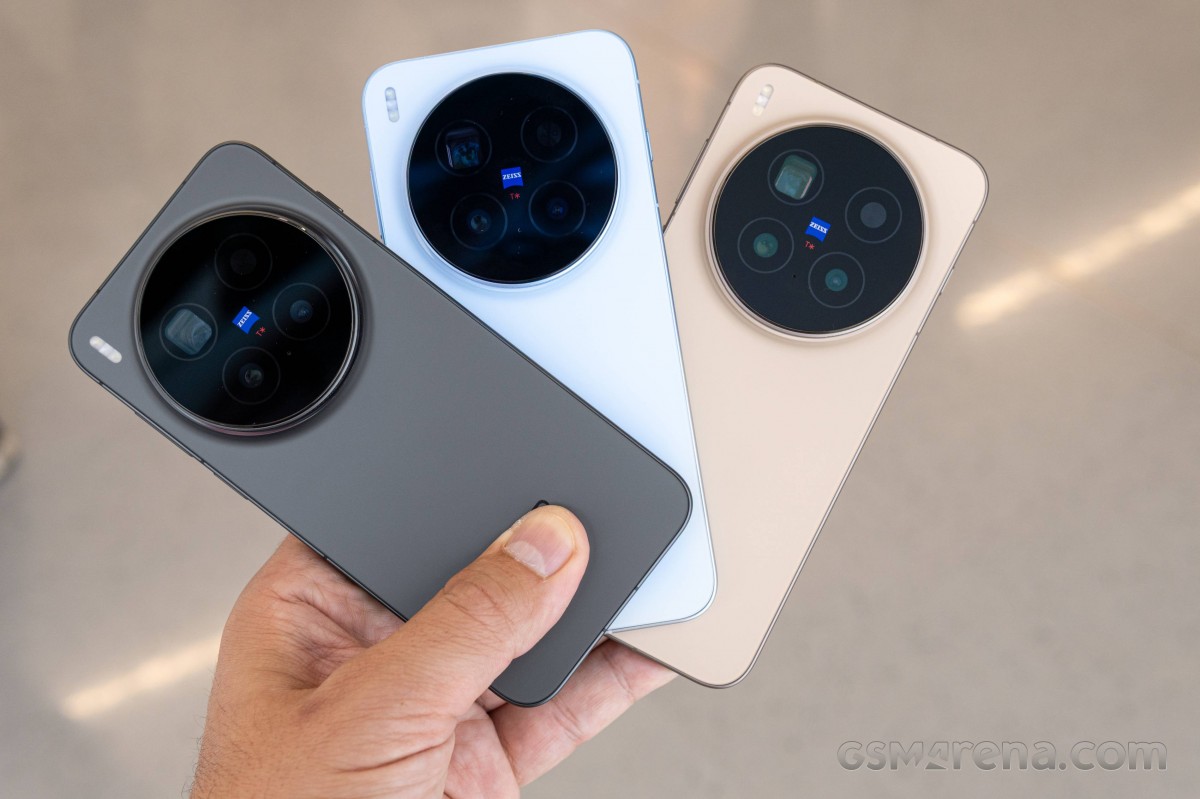
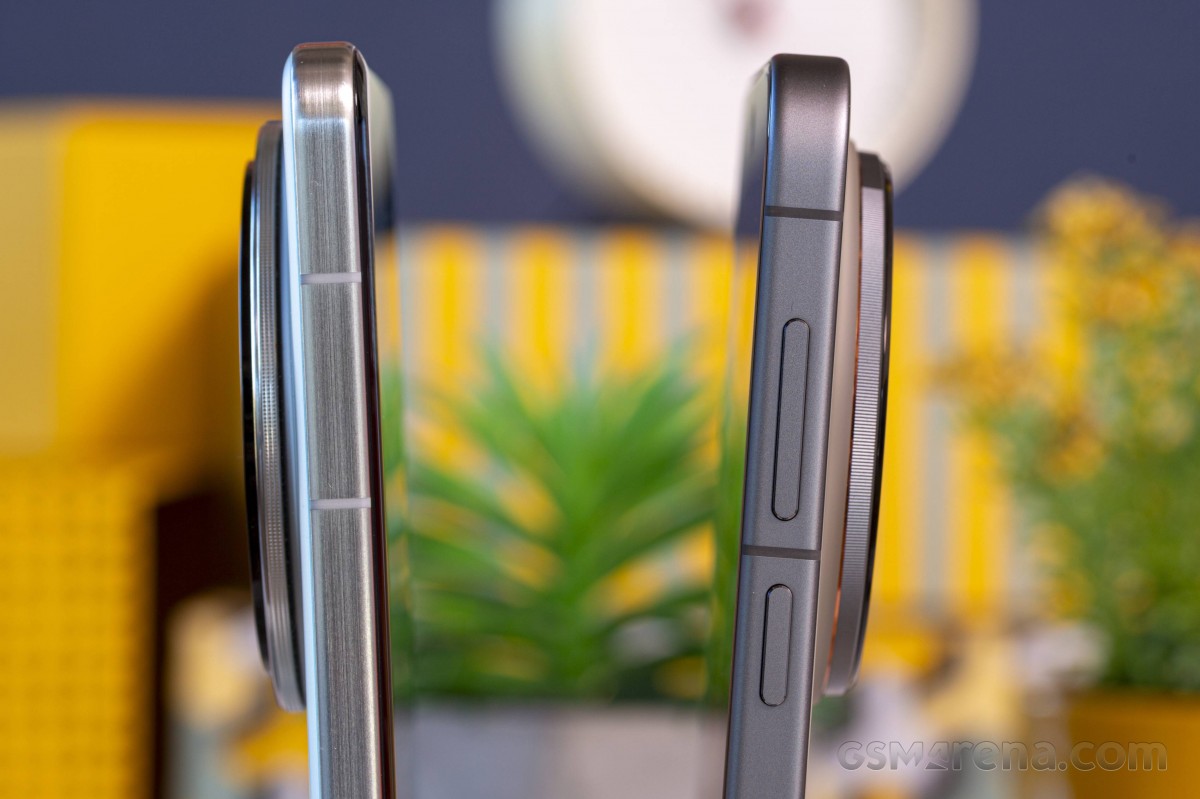
Regardless of color, the flat rear panel is frosted glass (unspecified make) and is quite slippery, but at least it doesn't pick up fingerprints. The aluminum frame is flat so it offers plenty of gripping area, but has just the right minimal radius fillet towards the glass that nothing feels scratchy.
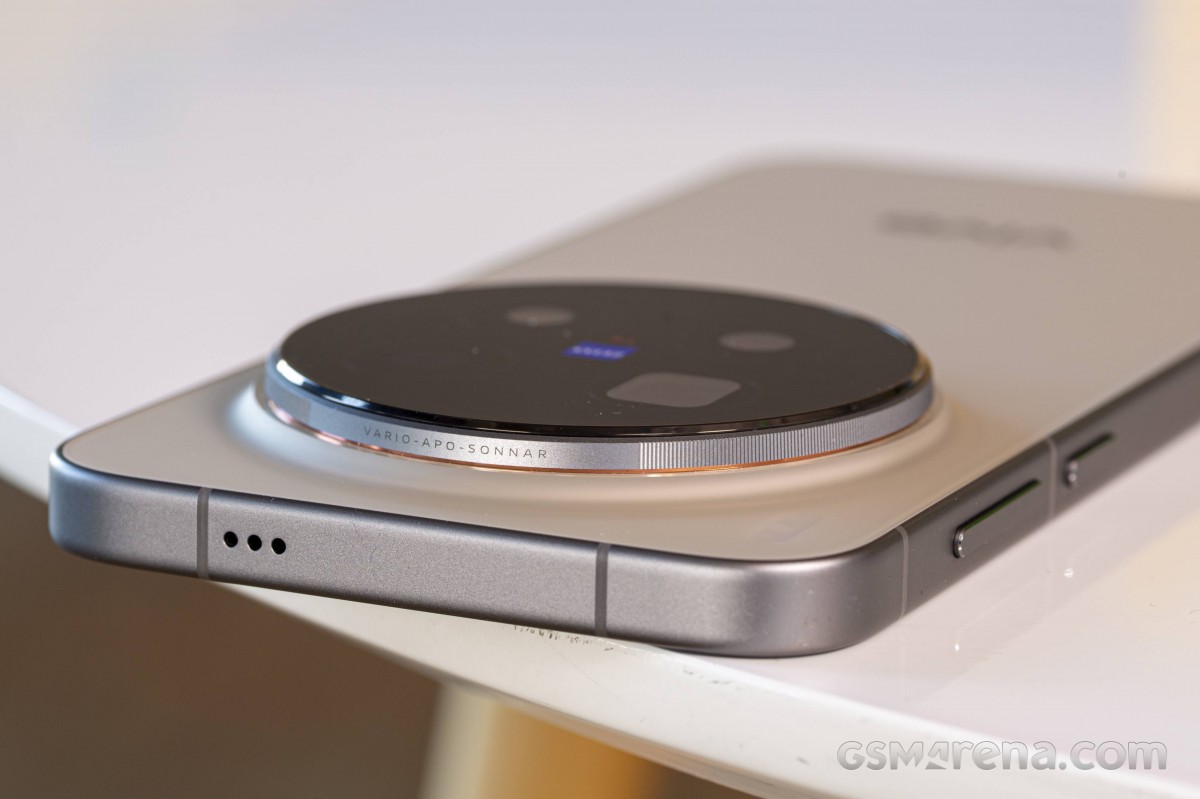
Alongside the frame, you'll find the usual controls and other bits, plus one extra button. vivo calls it a shortcut button (which is more like they're not calling it anything specific) and it can be used to run some tools and launch the camera, but there's no dedicated camera control area like the X200 Ultra has. Maybe on the next generation.
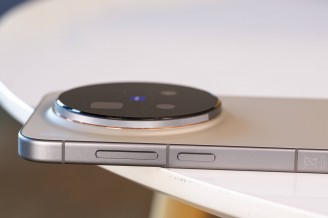
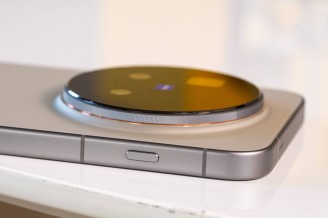
Volume rocker and power key on the right • Shortcut button on the left
The phone has a dual nano SIM slot on the bottom and also supports eSIM.
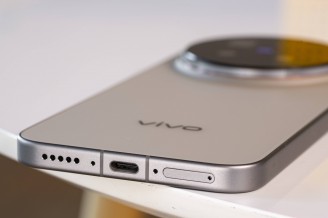
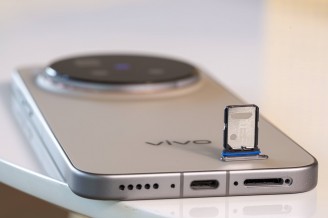
Bottom bits • Duul nano SIM slot
Over on the front, the display is surrounded by a nicely thin uniform bezel and the glass (Armor Glass) is all flat - the X200 Pro's faint curvature is the last we'll be seeing of this. The X300 Pro should then be okay to accept glass screen protectors, if you're into that.
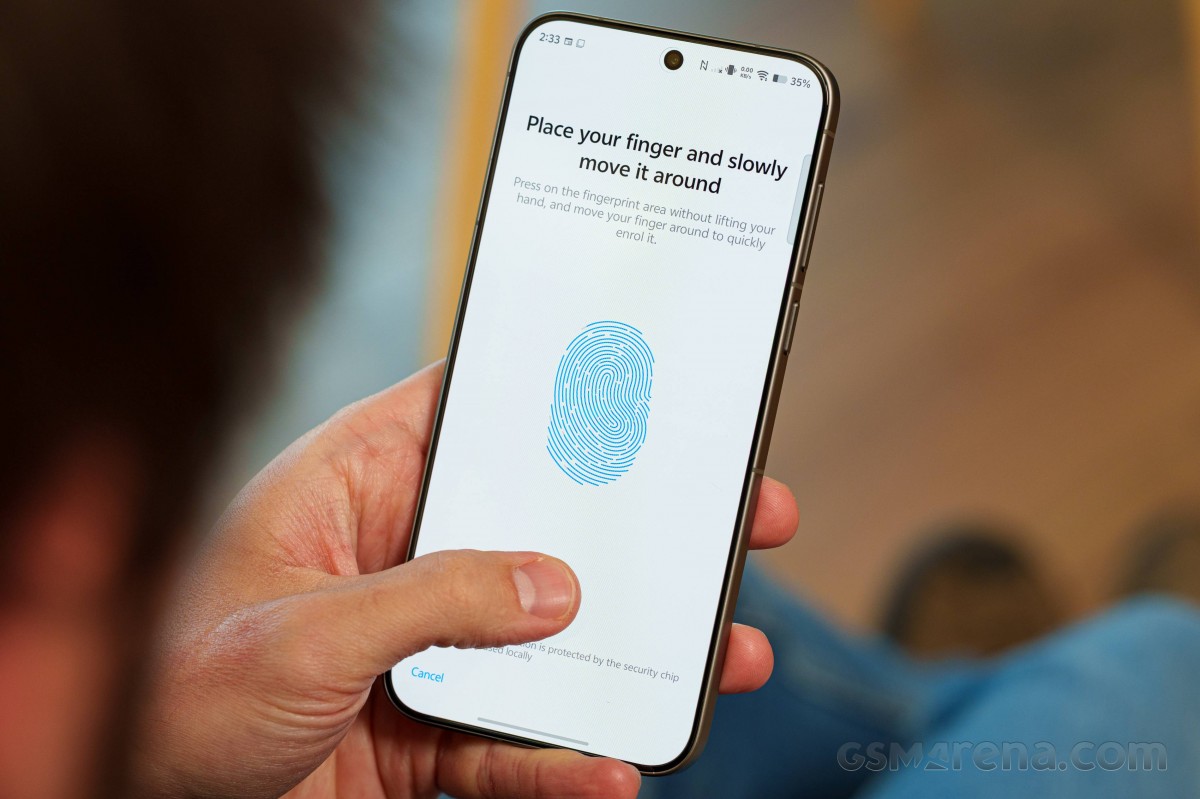
The ultrasonic fingerprint reader might not be entirely okay with added layers of this kind though. There is a factory applied plastic sheet and it doesn't interfere with the sensor's operation - unlocks are speedy and reliable. And the sensor's location is great too.
The X300 is IP68/IP69 rated for dust and water resistance and it should survive without incident if you dunk it in water as deep at 1.5m for up to 30 minutes or if you pressure wash it at up to 80C degrees, like everyone normally does their tech cleaning, right? Right?
Overall, it's a nicely feeling premium handset that handles well and doesn't fight you.
What we'd point out is that it weighs 226g - normally a non-issue for its class of smartphone, only in its particular case you're carrying dead weight in the form of a battery that's not fully utilized. Apparently that's how makers go about selling different capacity batteries in different markets and the EU gets all of the weight, only some of the capacity.
A 6.78-inch OLED display, that's easy to love
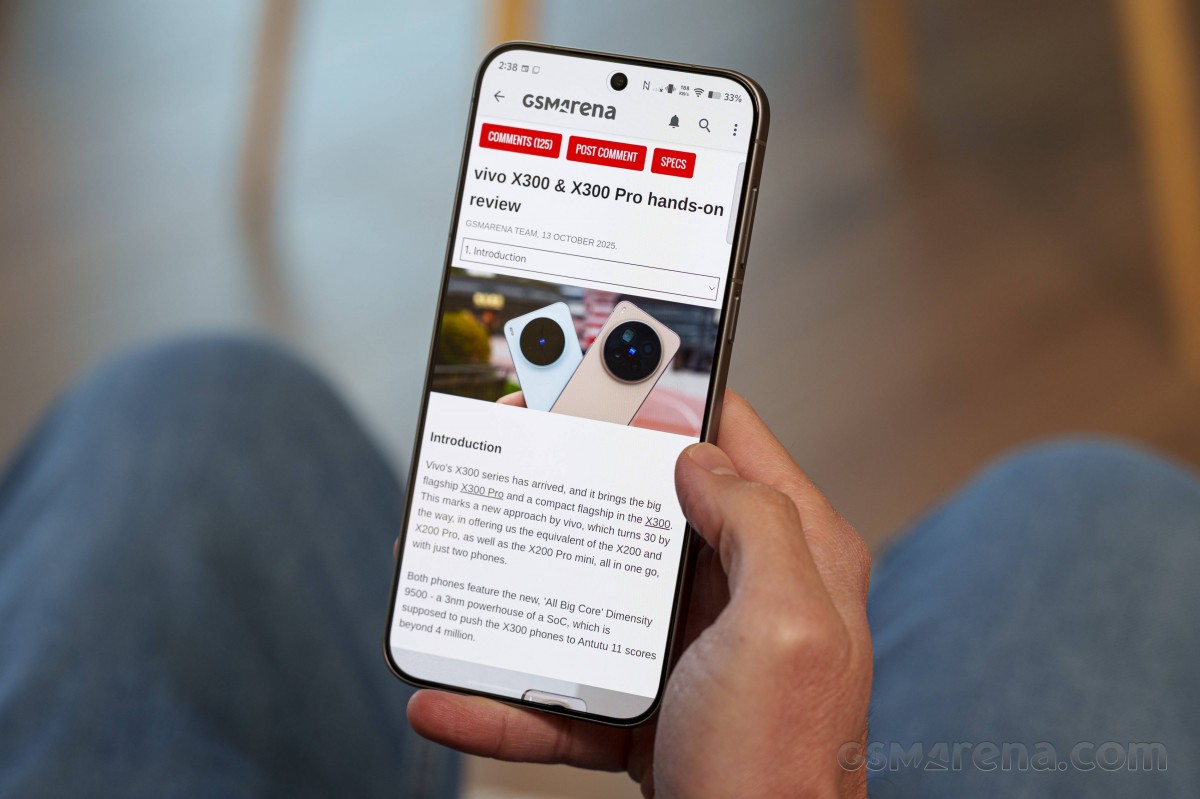
The X300 Pro's display is in most ways the same as that on the X200 Pro and that's no bad thing. At 6.78 inches in diagonal, the panel has a 1,260x2,800px resolution and a 452ppi pixel density in a 20:9 aspect ratio. It's an LTPO OLED display with a 120Hz maximum refresh rate, 2160Hz PWM and DC dimming, Dolby Vision support, and almost excessively high brightness capability.
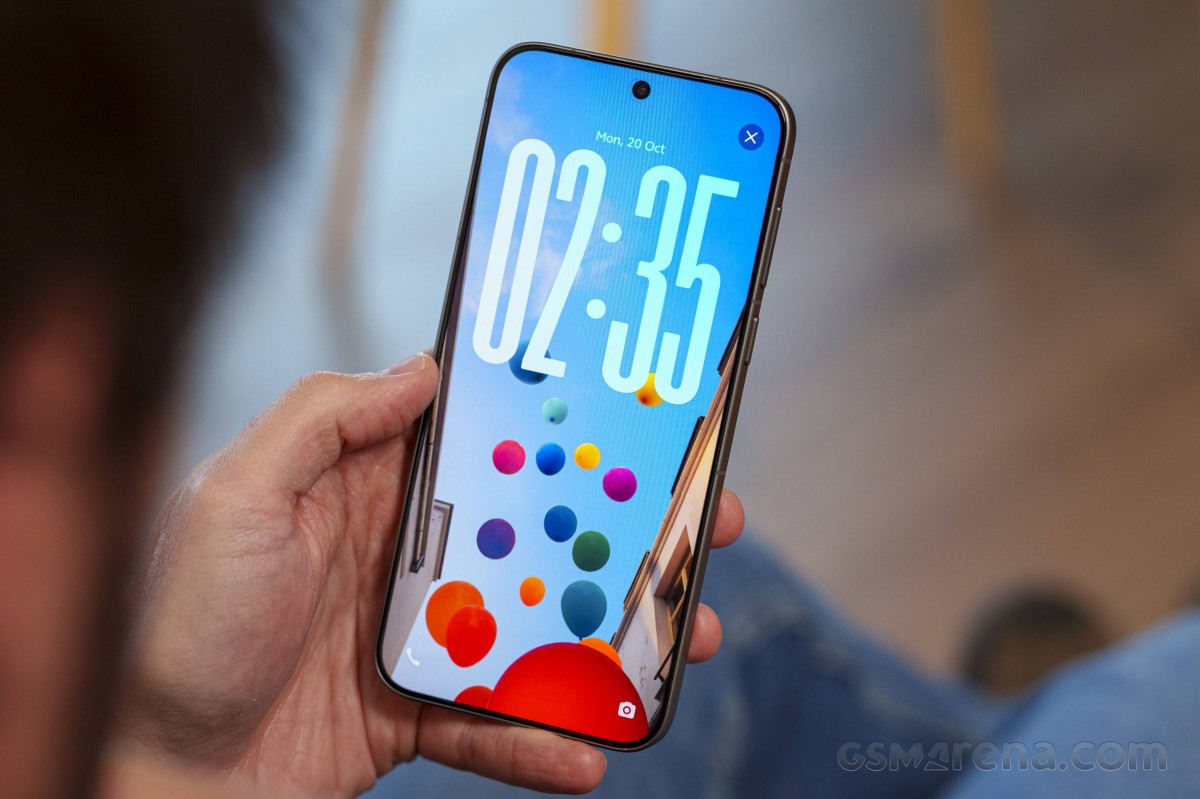
vivo promises 4,500nits of peak local brightness and 2000nits of full-screen brightness in ambient conditions that call for it. In our testing, we measured over 2,100nits for a 75% swatch of white with the adaptive brightness enabled (properly impressive), and a little over 2,600nits for a 10% white window (not too shabby either). The manually attainable result was a little under 600nits in some applications, but some 200nits higher in the phone's Albums gallery app (both for 75% swatches). Minimum brightness was just under 2 nits in our measurements.
Refresh rate
The X300 Pro gets a downgrade in its refresh rate capabilities, academically speaking - the old one was specced to be able to go as low as 0.1Hz (refreshes once every 10 seconds), the new one has a more standard 1Hz minimum. The maximum is still 120Hz and the phone will adjust refresh rate based on your interaction with it and the content being displayed - brightness doesn't appear to be a factor as even at the minimum setting the phone dials down to 1Hz.
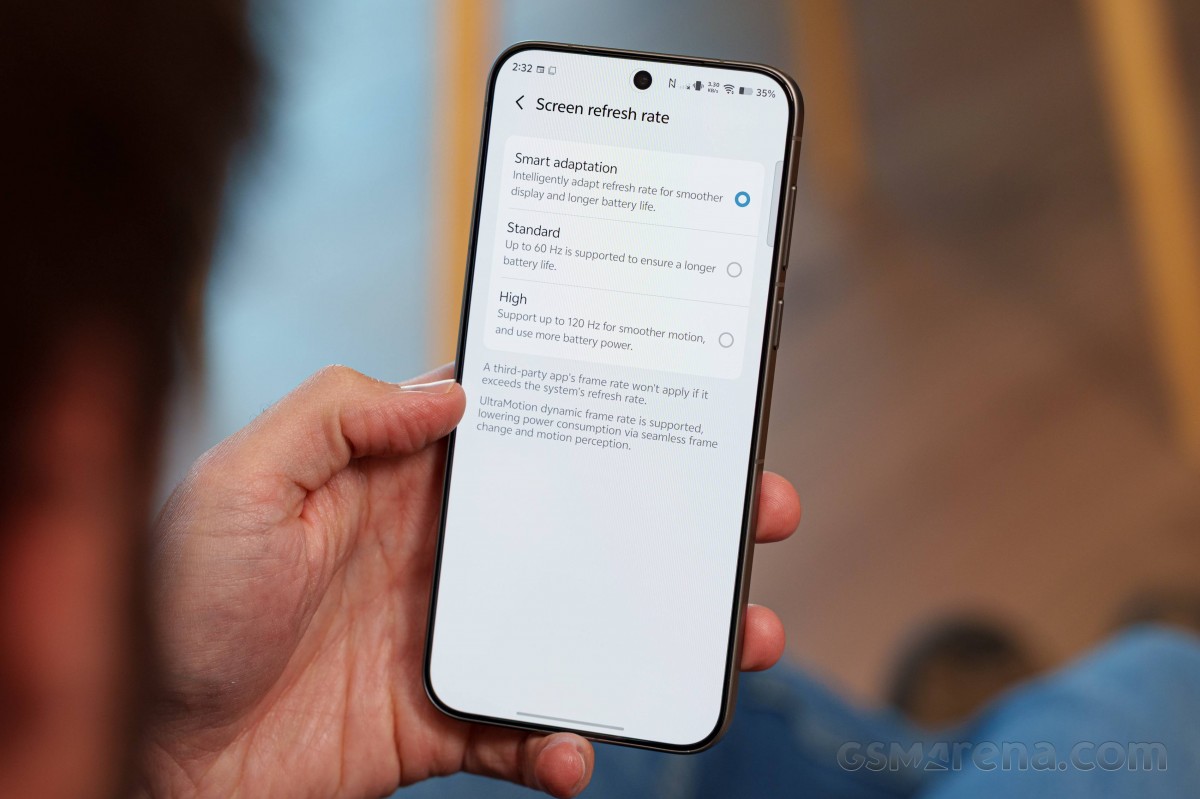
The phone probably knows what it does better than what it reports, because we were able to play all sorts of odd framerate videos smoothly (24fps/48fps) even though the Android refresh rate utility reported alternating 30Hz/90Hz/some-other-hertz values. We also got 120Hz in some 3D games and in some arcade titles, but it was more of a hit or miss affair (though, realistically, that's still usually the case with high framerate gaming on Android). The max refresh rate in Google Chrome, however, was only 90Hz.
Streaming and HDR
The X300 Pro supports all major HDR standards, including Dolby Vision. The Netflix app reports capability for HDR10, HDR10+, and Dolby Vision, and is happy to play HDR content in FullHD, thanks to the Widevine L1 clearance the phone has. YouTube also serves HDR streams.
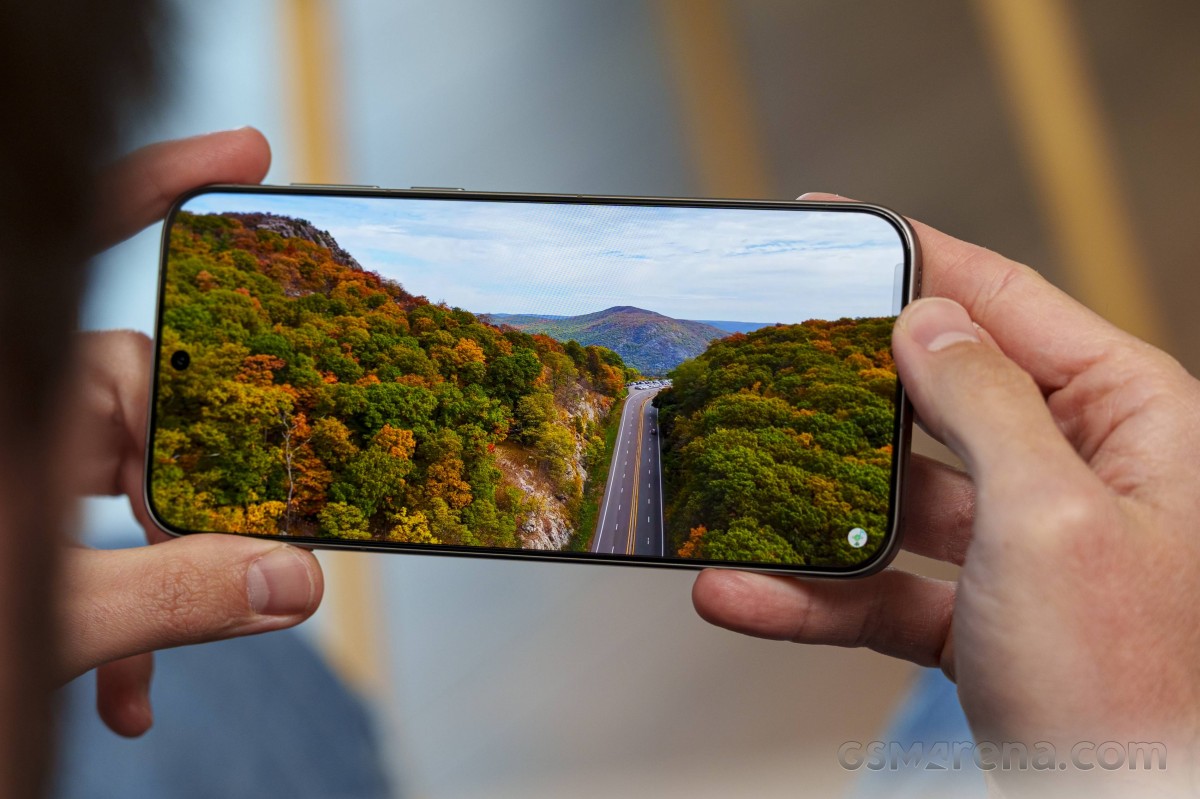
Android's Ultra HDR photo standard is supported - you get compatible HDR photos displayed with enhanced tone mapping and a brightness boost for highlights. It works in the in-house Albums gallery, but also in Google Photos, and in Chrome - for images from other compliant phones, too.
vivo X300 Pro battery life
The X300 Pro's battery capacity is a bit of a contentious topic. In China and many other markets, the phone comes with a 6,510mAh battery, but in the EU its capacity is just 5,440mAh, and that's the version we've tested.
The European models most likely use the same battery, but it's probably programmed for a lower charge voltage ceiling and a higher discharge voltage threshold, resulting in a narrower operating voltage range and a lower rated capacity overall. The silver lining in this case is that lowering the max cell voltage should improve cycle life and thermal headroom, which can be beneficial for smartphones. Still, we reckon that having a smaller battery with better preserved capacity throughout its life doesn't bring notable advantages over a battery that has a higher capacity to begin with.
In the case of the vivo X300 Pro in Europe, however, this also means it's left with a battery capacity that's even smaller than last year's X200 Pro, let alone the competition. Oppo was clearly more motivated than vivo to take the necessary steps to offer a truly large battery - the Find X9 Pro's capacity is 7,500 mAh, EU included.
With that in mind, we're not surprised that the phone's numbers in our Active Use Test aren't quite impressive. It's not really bad, strictly speaking, it's just a bit of a downgrade compared to last year's model, and below what we know is its full potential. Web browsing and gaming endurance have dropped by some 18-ish percent, and there's a marginal decrease in video playback. There's also an even more substantial (if not necessarily as important) drop in the voice call time.
The overall Active Use Score works out to 12:45h - not something we can rave about. It's a decrease by about 16% compared to last year's model, but more importantly, it's way behind this year's competition.
Charging speed
The X300 Pro's charging capability is listed at 90W when using proprietary FlashCharge peripherals or 55W when using standard USB Power Delivery (with PPS). Our review unit didn't have a charger bundled, but we did happen to have a 90W FlashCharge adapter, so we tested with that one, and we also tried a good aftermarket USB PD unit. Believe it or not, the results turned out practically identical.
Sure, the vivo adapter recorded a peak power value of 73W, while the USB Power Delivery one maxed at 45W, but 15 minutes into it, the phone had reached 55-ish percent with either one and the 1% to 100% time was 29 minutes with either one. Those are pretty fast results in 2025, but we'll have to keep in mind that the capacity is on the smaller side of the spectrum.
In addition to that, while it's common practice for phones to report 100% and then keep charging for a while, our experience with the vivo proved it to be among the worse offenders in this respect. As it reported 100%, with either of the two adapters/standards, it was drawing around 28W of power - that's some phones' peak rating.
From then on, it was a gradual decline ending 13 minutes later at 9W, at which point the phone switched to trickle charging (a bit of a high-powered trickle, but let's not get even deeper into a rabbit hole that's already taking up too much of our time - and yours too). During those 13 minutes, the phone racked up some significant charge, more than what we're used to under such circumstances. All this is to say that vivo's not too transparent with its battery charging practices, and we do not approve.
The X300 Pro supports wireless charging and it's now rated at 40W (up from the 30W on the X200 Pro) with vivo's proprietary 50W charging pads. Reverse wireless charging is also supported (as is reverse wired charging, for that matter).
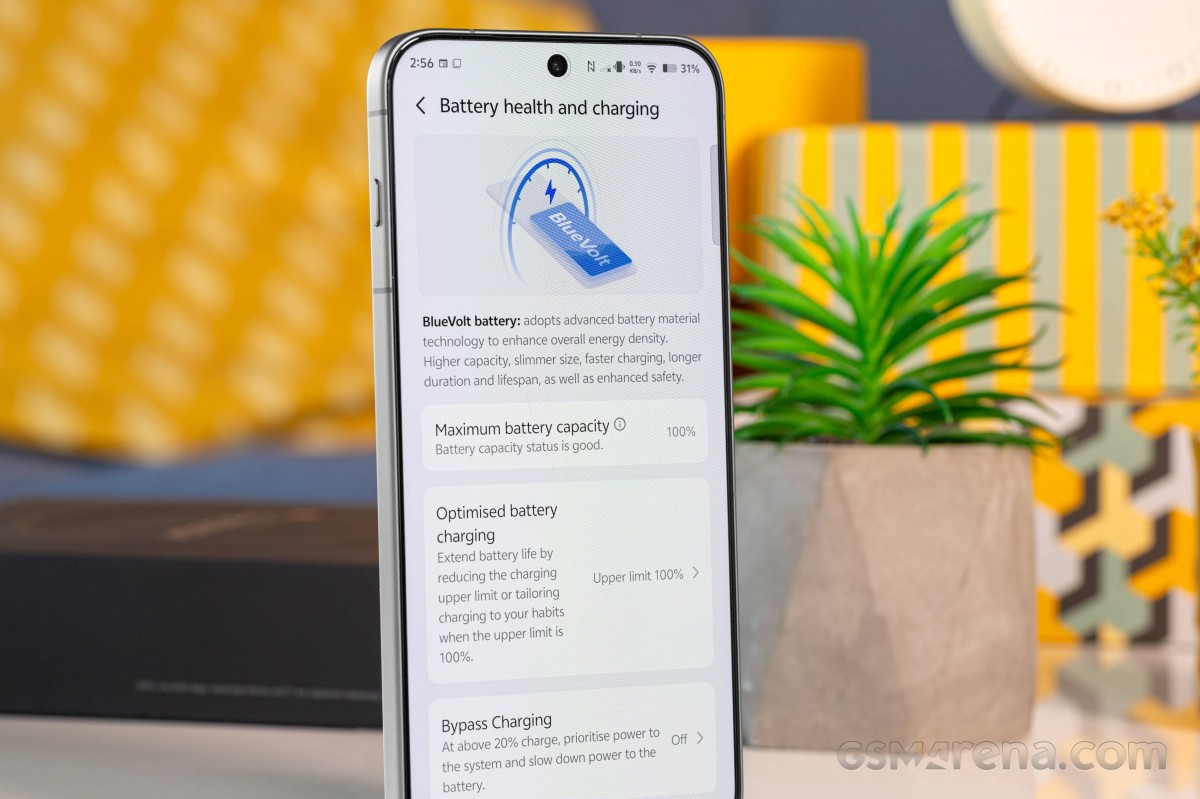
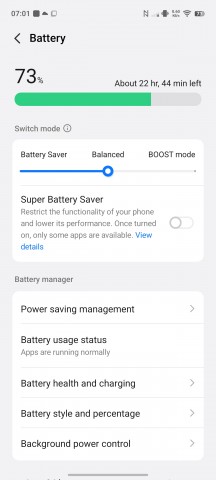
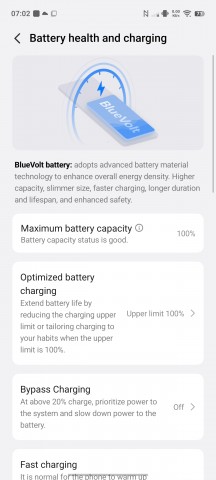
The latest OriginOS 6 packs a handful of battery health features for you to explore. You can set an upper limit to the charging - as low as 70%, as if vivo nerfing the capacity wasn't enough, you can have the phone optimize the process based on your nighttime habits, you can disable the fast charging, and you can do bypass charging (minimizing power sent to the battery to limit heat generation in instances where that would be detrimental - like competition-level gaming or some such).
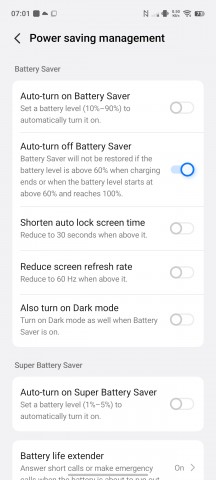
Battery features
A bunch of battery saver functions are also available, like automatically dialing down screen lock time and refresh rate and turning on Dark mode. A battery like extender is also there for you for the most dire of circumstances, saving enough power for an emergency voice call (up to 4 minutes).
Speaker test
The vivo X300 Pro has a stereo speaker setup with one unit on the bottom, and another one up top that fires forward and doubles as an earpiece. In vertical orientation, the top speaker gets the left channel, while in landscape, channels are assigned according to the handset's actual orientation. Each speaker only plays its own track.
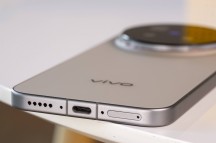
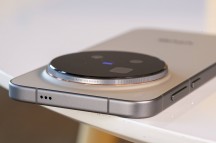
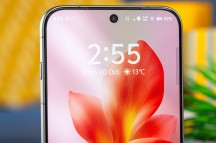
Bottom speaker • Top speaker • Earpiece
In our testing, the X300 Pro scored a 'Very Good' rating for loudness - on par with the previous generation and with a very similar numerical result too. Just like last year, though, it's not the nicest of sound quality you can have in the class - it's a bit bathroomy and lacking in low-end rumble. Essentially all competitors sound better, including the Find X9 Pro, which isn't setting any standards itself. The Galaxy and the iPhone sound significantly bigger and more composed.
OriginOS 6 goes global, Android 16 underneath
The X300 Pro runs Android 16 out of the box, now augmented by the company's OriginOS - it's a new development this year that leaves the other software branch, FuntouchOS, in the past. Formerly, only vivo handsets sold in China ran OriginOS, with the rest of the world getting the somewhat outdated FuntouchOS experience, but with OriginOS 6 now there'll be no such disparity anymore.
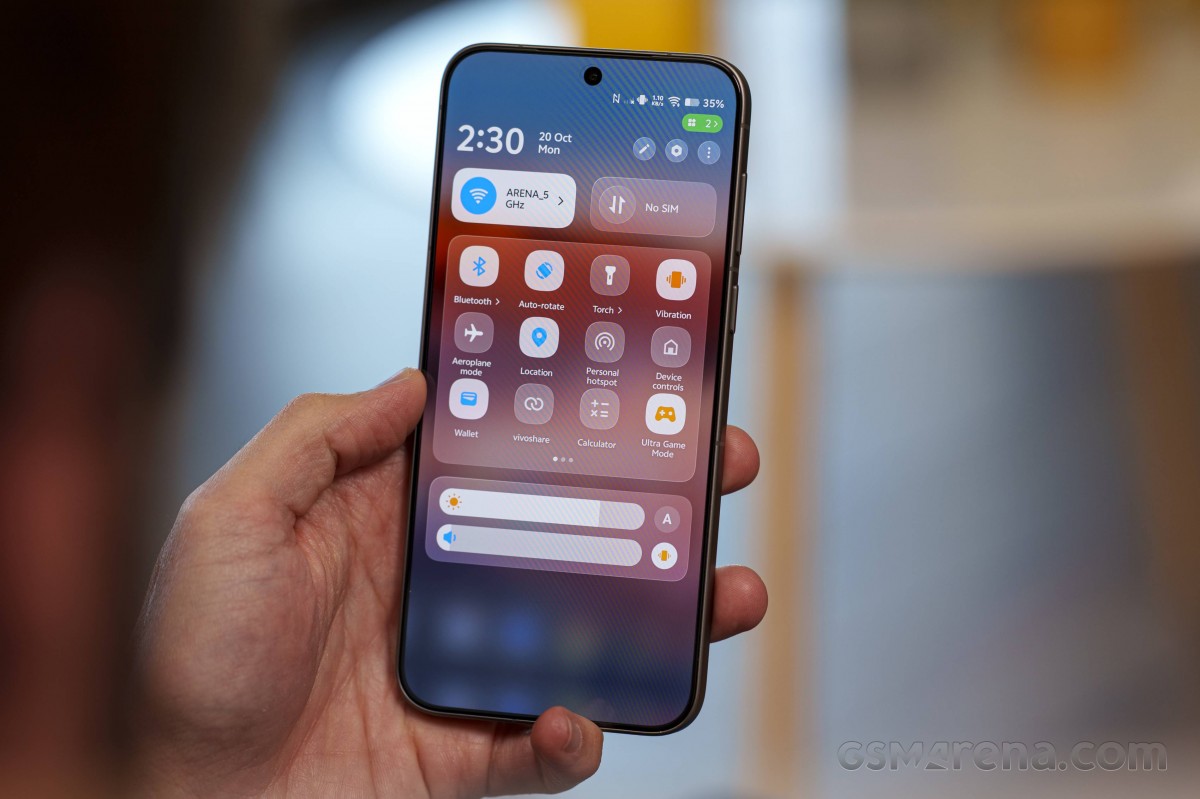
The vivo marketing materials promise that OriginOS is 'redefining the way people experience their digital world' and mentions esoteric concepts like balance, clarity, comfort, and whatnot. They also underscore how they've essentially reengineered Android to make better use of resources and improve speed and battery life. Okay.
vivo has put in extra effort into OriginOS's animations, making them feel more responsive, thanks to effects like bounciness, blur transitions, and mirroring user gesture velocity. vivo is also big on smoothness in this update and boasts a touch response speed increase as well as a "smooth-as-new" experience for flagship models for 5 years. Coincidentally, it's 5 Android OS releases that vivo is promising for the X300 Pro, alongside 7 years total of security fixes.
OriginOS 6 brings the way nicer Origin visuals to the international vivos, up until now forced to use a pretty dated Funtouch UI. That means a touched up settings menu, more contemporary notification shade/control center implementation, a customized font, and no less than 2800 redesigned symbols.

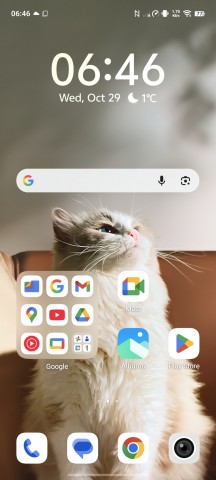
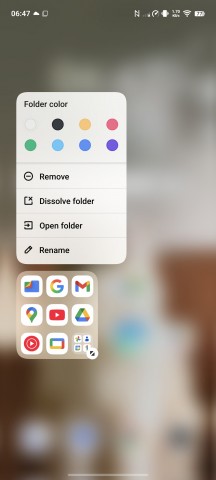
Lockscreen • Homescreen • Large folders
There's now a contemporary control center implementation that uses those new blur effects and transitions (Gradient Blur they call it), with a 'rim light' (the button border effect) that is a bit too much like the iOS 26 design, but we don't mind.
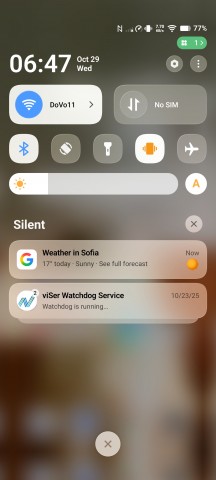
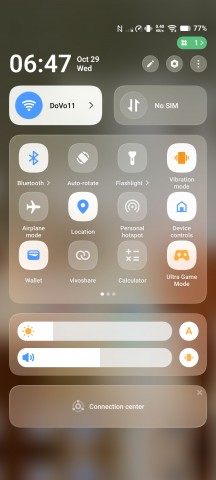
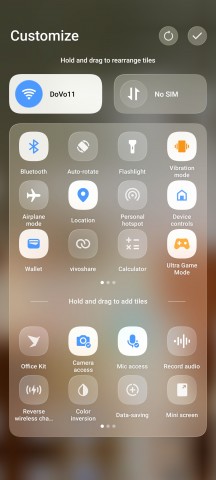
Notifications • Quick settings
Flip cards is an OriginOS 6 lockscreen feature where you can select up to 4 images from the gallery and have the phone alternate between them as you tilt it sideways - it's cooler than just one single lockscreen wallpaper, probably. It is, indeed, cool how the clock transitions smoothly back and forth between its AoD shape and position to that of the lockscreen.
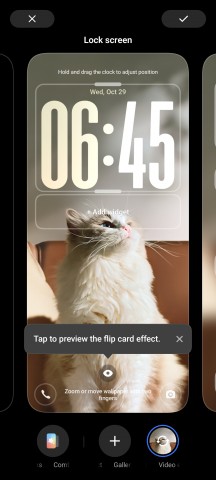
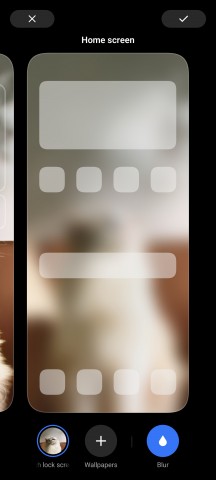
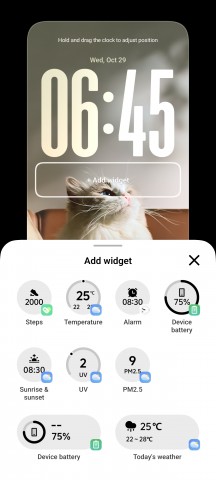
Flip cards
Familiar to those having seen recent OriginOS iterations, but entirely new to former FuntouchOS users is the Origin Island. The dynamic black cloud around your front camera shows contextual status information for clocks and music players and whatnot, and also transforms into an actionable area for you to drop stuff in some copy-and-paste scenarios.
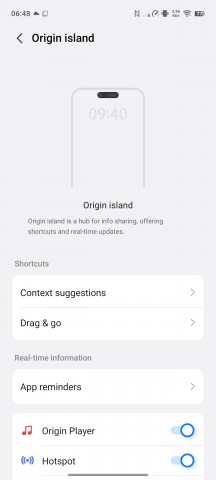
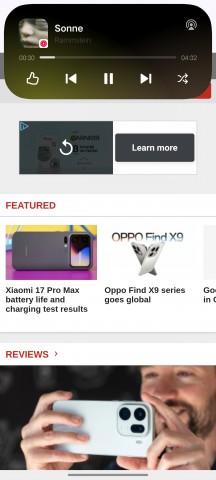
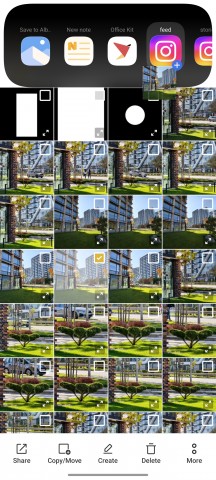
Origin Island
vivo has also added the Circle to search scrolling translation to the ColorOS 6 implementation of Gemini. Oddly enough, our X300 Pro build was missing a lot of the vivo in-house AI-based features we saw on the OriginOS 6 beta we have running on the X200 Pro - things like the AI Writing, AI Transcribe, and AI captions, as well as the AI image expansion in the gallery editor. There's still the AI color adjustment feature as well as an object remover.
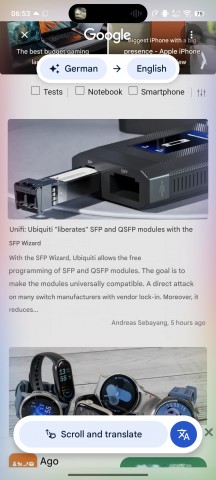
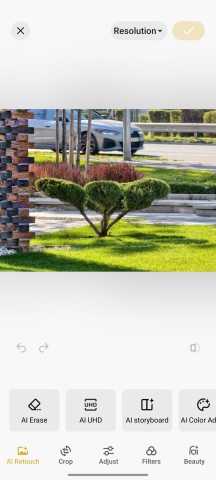
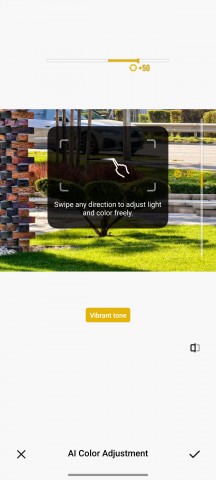
Scroll and translate • AI Color Adjustment • AI Image Expansion
There's now a vivo Connection Center, which is a sort of OriginOS 6 hub for enabling various connectivity options. Link to PC is available, with screen mirroring, file transfer, and task handoff. You can also do one-tap transfers with other vivos or even iPhones, though you'd need to install vivo's EasyShare on the other phone - it will take a few more taps the first time you do it.
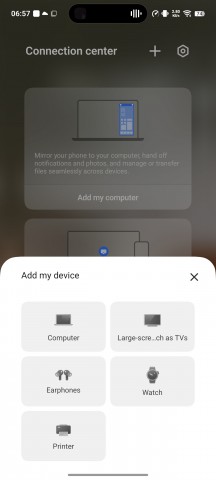
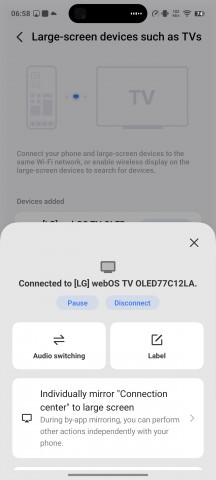
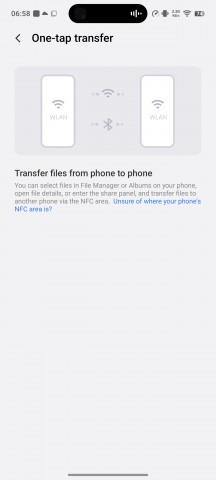
Connection Center
A Private Space functionality is also part of OriginOS 6 - we didn't get that on the latest Funtouch and it wasn't there on OriginOS 5 either. It's the usual separate area where you can keep sensitive data away from prying eyes. You can also have two instances of the same social app so you can separate business from personal use.
A feature we don't recall having seen on another vivo phone before is Motion prompts. It's meant to alleviate motion sickness by displaying a bunch of dots on the screen that will mirror the motion of the vehicle you're in, based on the phone's accelerometer data. We're not sure just how effective it is, but if you're one to suffer from dizziness when using your phone while riding in a moving vehicle (as a passenger, obviously), it could be worth trying it out.
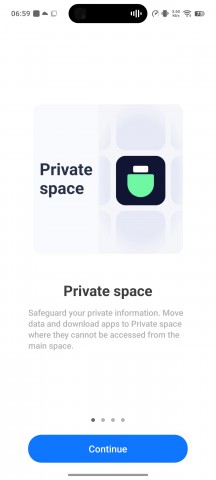
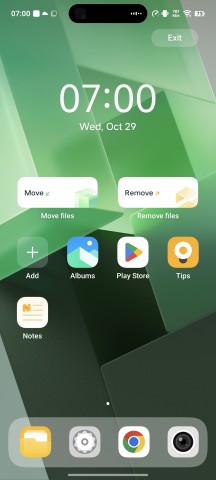
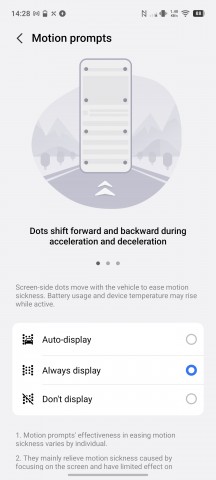
Private Space • Motion Prompts
All things considered, we're really excited about OriginOS replacing Funtouch OS for international variants of vivo smartphones. The previous UI was outdated and just too plain, while OriginOS 6 brings plenty of eye candy and fluidity at the same time, and the extra features are also likely to be appreciated by a wide user base.
Performance and benchmarks
Just like previous generations, the vivo X300 Pro is equipped with a Mediatek chipset - this time it's the Dimensity 9500. It's a 3nm chip with an All Big Core CPU in a 1+3+4 configuration (C1-Ultra, C1-Premium, and C1-Pro because nothing is ordinary anymore), the Arm G1-Ultra GPU, and Mediatek's ninth-gen NPU 990. The chipmaker's internal data claims 32% higher single-core CPU performance compared to the previous chip (17% multi-core), 33% improvement in peak GPU performance, better AI numbers, and efficiency improvements across the board. It's the same chipset as the one found in the Oppo Find X9 Pro.
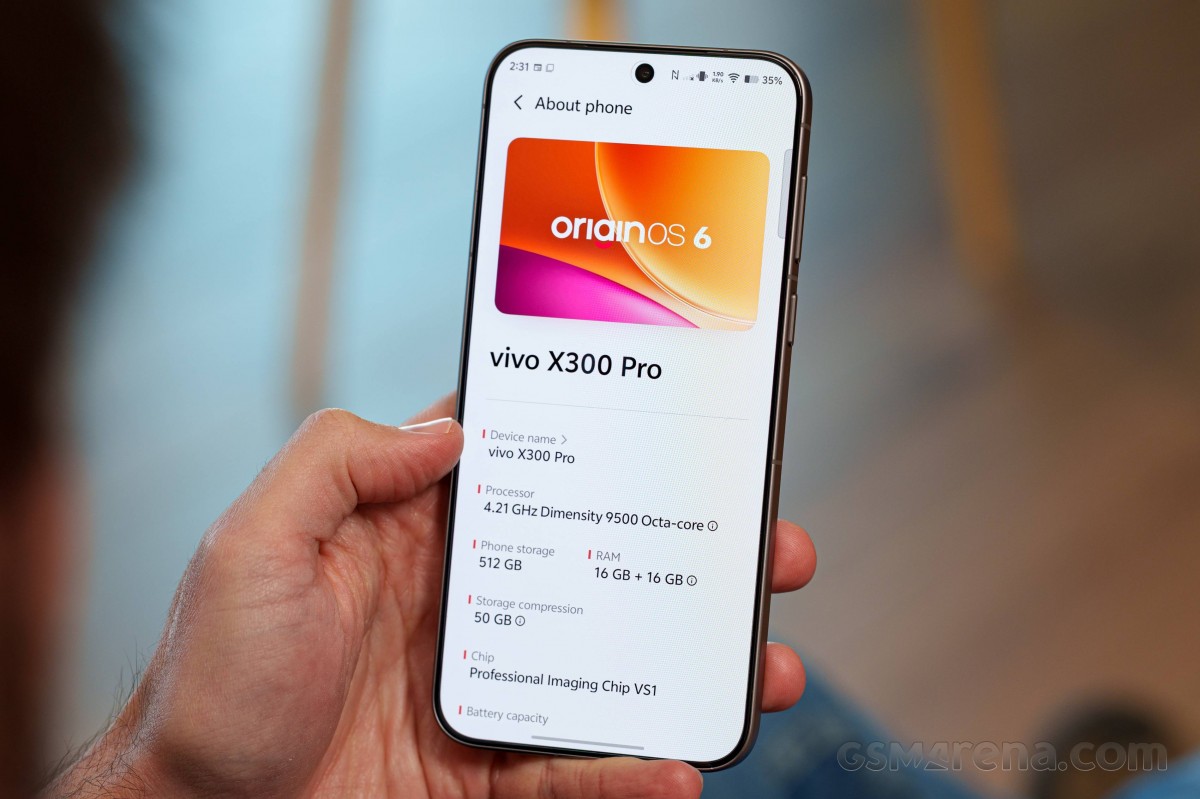
The global version (as is our review unit) comes with 16GB of LPDDR5X RAM and 512GB of UFS 4.1 storage. In China, there's also a 16GB/1TB option, as well as a 12GB/256GB one.
The X300 Pro proved to be a top-class performer in our usual benchmarks, posting slightly higher scores than the Find X9 Pro. The Xiaomi 17 Pro Max (Snapdragon 8 Elite Gen 5) had a minor advantage in CPU tests, but the vivo took the lead in the GPU department.
Under prolonged load, the X300 Pro wasn't much different from the bulk of high-end phones in recent time. We observed a steep decline in CPU performance, dropping to a little over 60% of the initial result in about 7 minutes and then going down further to half of the initial figures in the CPU Throttling test. The 3DMark Wild Life Extreme stress test returned a 59% stability rating - the level the phone settled at 7 minutes into the test. Overall, an ever so slightly better showing than what we got from the Oppo Find X9 Pro and about on par with the Xiaomi 17 Pro Max.
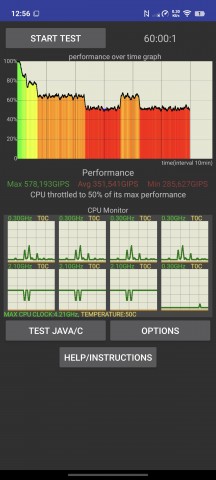
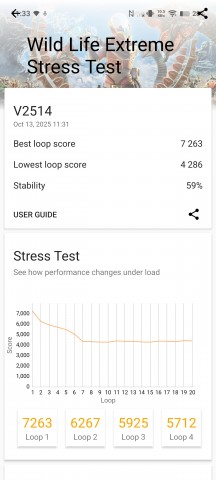
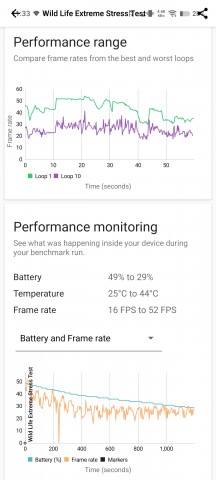
CPU Throttling test • Wild Life Extreme stress test
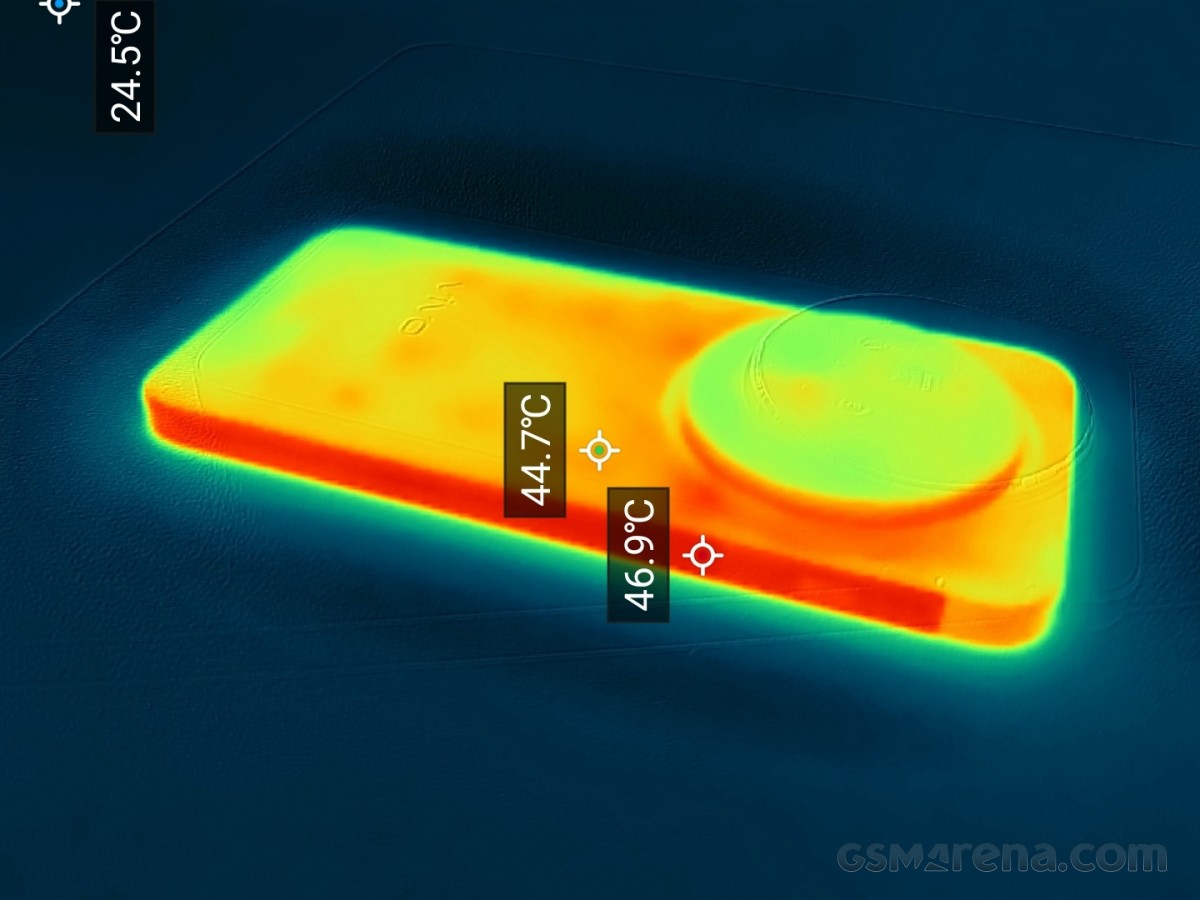
Surface temperatures were quite manageable on the X300 Pro, with the frame being the hottest, but remaining well below 50 degrees.
A couple of sensor tweaks on the back, new selfie camera
The X300 Pro's camera system isn't much different from the X200 Pro's, with the rear three modules looking the same at a passing glance, and the only obvious change being on the front. As it turns out, though, there are modifications on the back as well.
The main camera has gotten a new-generation sensor, the Sony Lytia LYT-828 replacing the 818 of the previous model. Still the same size, at 1/1.28", the new imager promises wider dynamic range and improved noise performance. The lens has gotten a little narrower, the focal length now being 24mm, as opposed to the 23mm of yesteryear (24.2mm vs. 22.7mm, according to some hardware apps, making the gap in coverage even wider). The aperture is still f/1.6 and the lens is stabilized (5.5 stops CIPA rating).
The telephoto swaps out the Samsung Isocell HP9 sensor of the previous generation for what vivo calls the HPB - it's an evolution of that design, albeit further customized to vivo's needs, we're being led to believe. With an optical format of 1/1.4", it's still one of the largest sensors used in a smartphone telephoto camera - larger than the Oppo Find X9 Pro's Isocell HP5 imager (also 200MP, but 1/1.56"). It's paired with an 85mm equivalent lens with OIS and close focusing capabilities (14cm minimum focusing distance).
The ultrawide is seemingly unchanged, at least looking at the specsheets. It's still the same Samsung JN1 sensor, coupled with a 15mm lens (with autofocus). The Find X9 Pro's ultrawide uses the JN5 sensor, which is theoretically a more advanced piece of kit.
Speaking of the Find, which has the same sensor on its selfie camera that it does on its ultrawide, the X300 Pro features the same JN1 on its front - with an AF-capable lens too, and a pretty wide one at that (20mm equivalent). It's a most welcome development, after years of fixed-focus vivo X Pros.
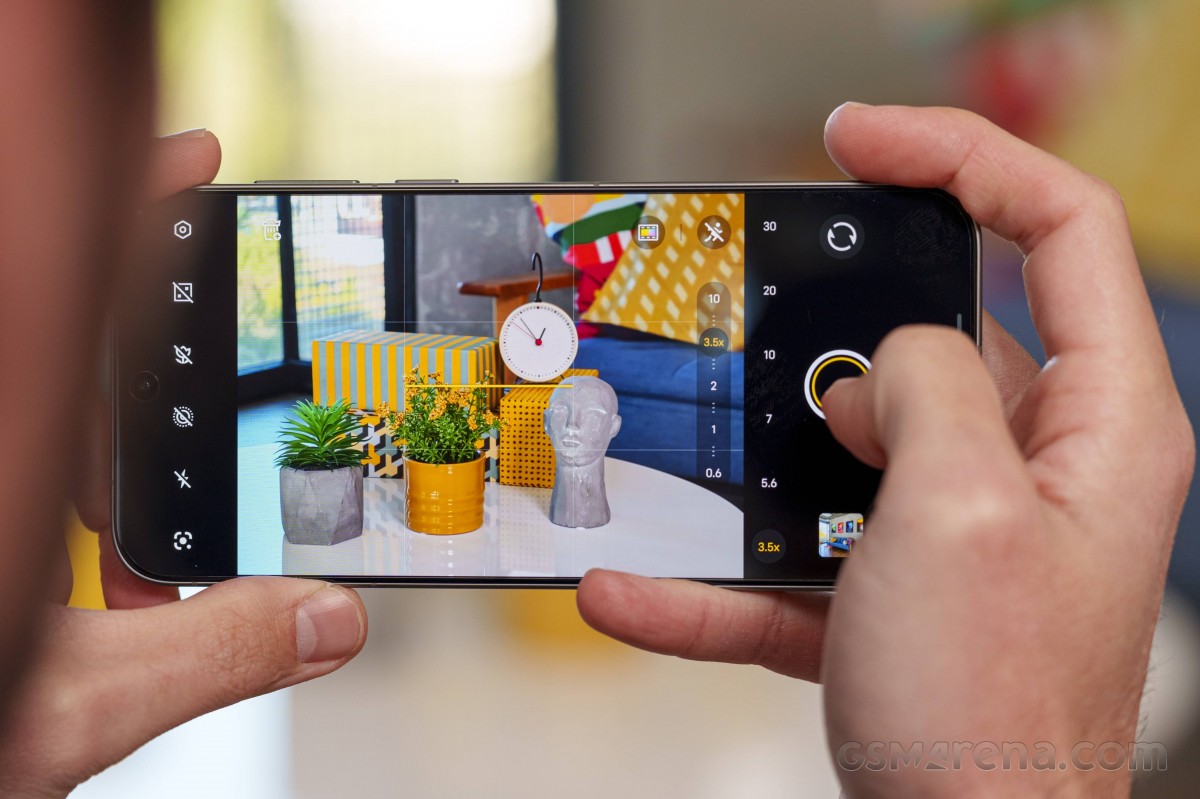
- Wide (main): 50MP Sony Lytia LYT-828 (1/1.28", 1.22µm-2.44µm), f/1.57, 24mm, multi-directional PDAF (13cm - ∞), OIS; 4K@120/8K30
- Telephoto 3.5x: 200MP Samsung ISOCELL HPB (S5KHPB, 1/1.4", 0.56µm-2.24µm), f/2.67, 85mm, multi-directional PDAF (14cm - ∞), OIS; 4K@120fps
- Ultrawide: 50MP Samsung ISOCELL JN1 (S5KJN1, 1/2.76", 0.64µm-1.28µm), f/2.0, 15mm, PDAF; 4K@60fps
- Front camera: 50MP Samsung ISOCELL JN1 (S5KJN1, 1/2.76", 0.64µm-1.28µm), f/2.0, 20mm, PDAF; 4K@60fps
The X300 Pro didn't get the X200 Ultra's pressure-sensitive camera control on the right, but it does have the clicky shortcut button on the left that can be used to launch the camera and take a photo once there. If you rotate the phone the other way around, it's where a shutter button would be, but this one lacks both the two-stage action of mechanical solutions and the capacity swiping functionality of the pretend-buttons. We're not necessarily advocating for dedicated camera buttons, but we'd have expected to find one here - last year's vivo Ultra has one, the Finds have one (Pros too).
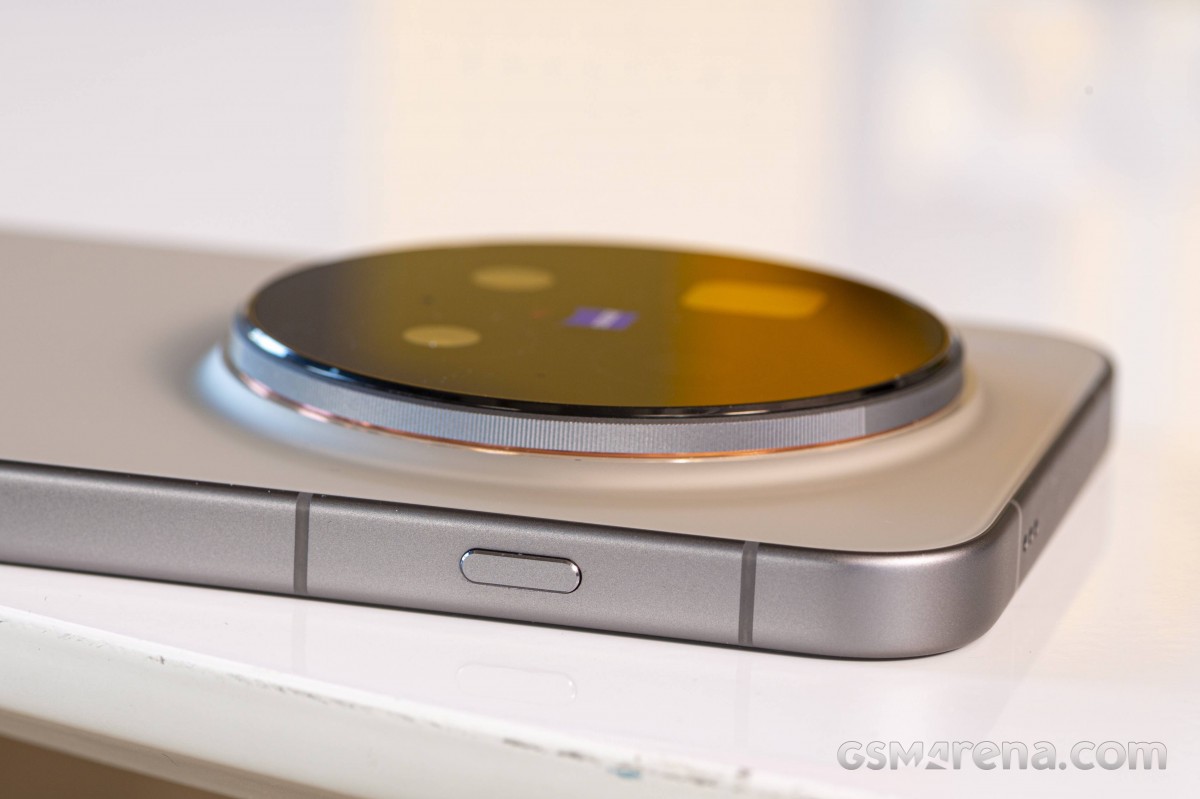
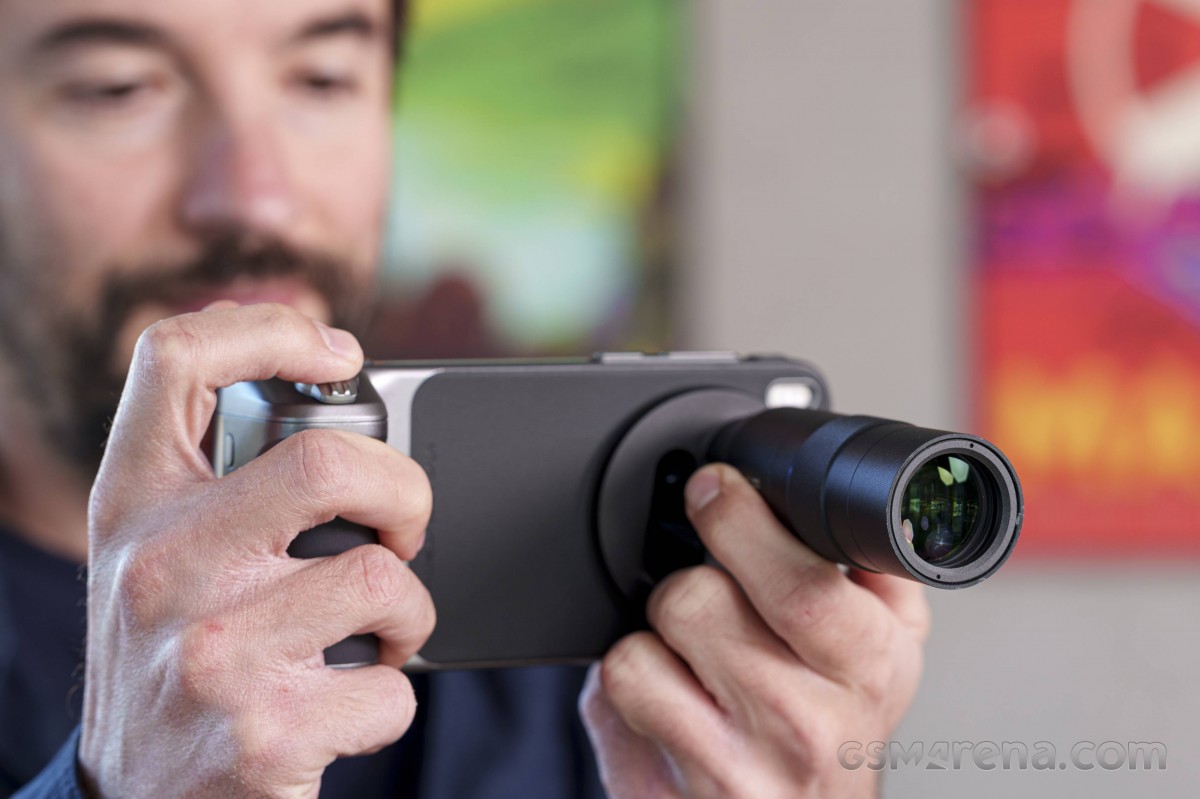
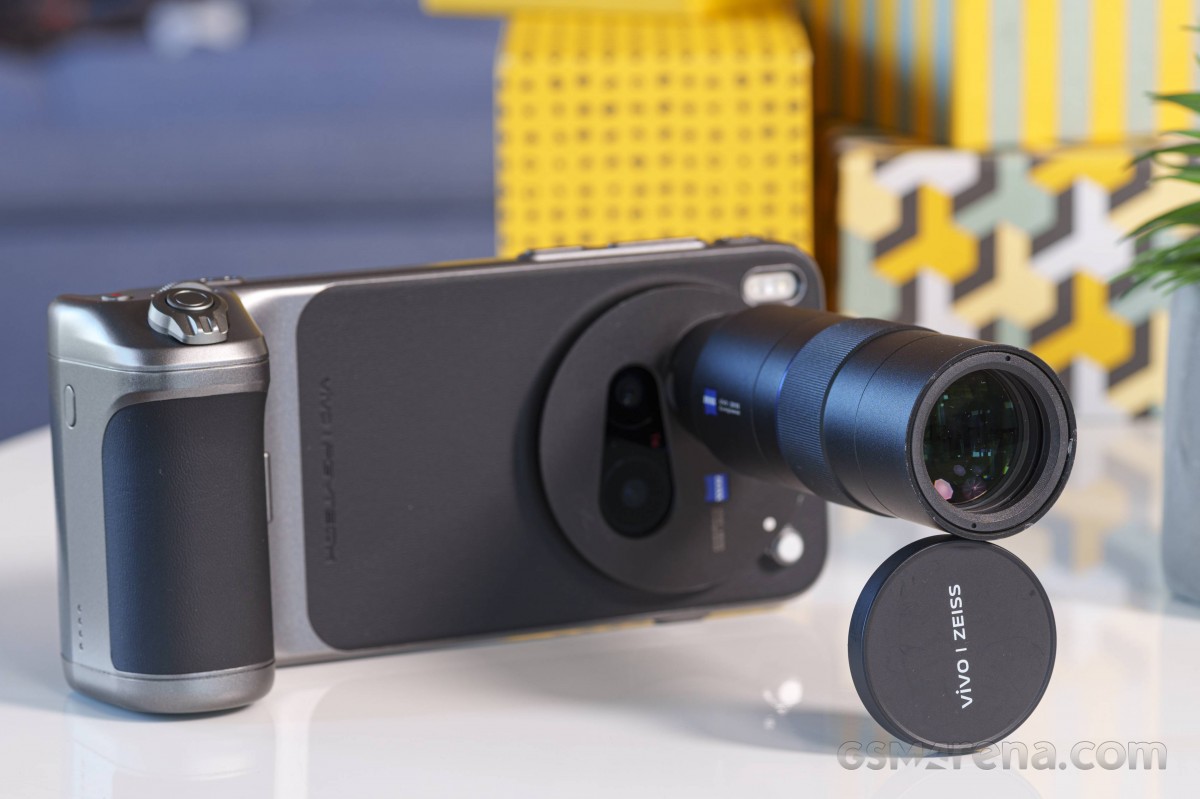
Something that has trickled down from the X200 Ultra to the X300 Pro (and even the X300 non-Pro too) is the capability to attach a telephoto extender. It's a full kit of accessories, including a dedicated case with a bayonet mount for the lens, a battery grip, a neck strap, and a few extra rings. We'll have a closer look at it on the next page.
Daylight photo quality
Main camera
We've come to love vivo's default camera output and the X300 Pro isn't giving us any reasons to feel otherwise. Its main camera's daytime photos look great from afar and up close alike. Dynamic range and wide but there's also excellent development at both ends of the tonal range. The auto white balance is dependable in outdoor and indoor scenarios, and the vivid colors are likeable without being too much. Detail is great too, with even random textures looking more natural than most other phones will give you.










Daylight samples, main camera (1x)
Skin tones are lifelike and easily likeable. Portrait mode adds a touch of extra blur to the already decent optical-level separation. We shot the Portrait mode samples in the Zeiss color style that's slightly less contrasty and a touch warmer than the Photo mode rendition, but you can have the same tonal rendition in both modes if you opt out of the Zeiss profile.




Daylight samples, main camera (1x), Photo mode




Daylight samples, main camera (1x), Portrait mode, 24mm
The full-res 50MP samples are a notable improvement over last year's model - they now do look like they have some extra detail in there as opposed to the X200 Pro's notably soft output.








Daylight samples, main camera (1x), 50MP
The 2x shots are also very nicely detailed - the X200 Pro wasn't as consistent at that level.











Daylight samples, main camera (2x)
The improvement extends to people shots at 2x, where you can now use the more sensible perspective of the 50-ish mm equivalent focal length without significant loss of quality. The 35mm zoom level is also a solid choice.




Daylight samples, main camera (2x), Photo mode




Daylight samples, main camera, Portrait mode, 50mm




Daylight samples, main camera, Portrait mode, 35mm
3.5x telephoto camera
The 85mm telephoto cameras of vivos in recent times have been highly regarded in the office, and the one on the X300 Pro is set to continue on the same path. We're getting detailed shots with great contrast and vibrant colors. There's hardly anything that's not to like here.












Daylight samples, telephoto camera (3.5x)
People shots also look wonderful, taken on this camera. The perspective is flattering, there's a nice level of natural subject separation and detail is excellent. Portrait mode will add its own share of background blur with some additional effects possible. A 135mm Portrait mode option is also available, for tighter framing from afar.




Daylight samples, telephoto camera (3.5x), Photo mode




Daylight samples, telephoto camera, Portrait mode, 85mm




Daylight samples, telephoto camera, Portrait mode, 135mm
Shooting in 50MP on the telephoto you might get a smidge more detail out of a scene in the right conditions (light and subject matter), but it's not something we'd normally do. The 200MP mode, on the other hand, we'd entirely avoid.






Daylight samples, telephoto camera (3.5x), 50MP




Daylight samples, telephoto camera (3.5x), 200MP
On the other hand, shooting in 'normal' resolutions beyond the nominal 85mm focal length makes more sense. Detail is good at 7x - under most conditions it's better than the 50MP 3.5x shots. It remains decent at 10x, albeit with extra sharpening.








Daylight samples, telephoto camera (7x)








Daylight samples, telephoto camera (10x)
Close-ups
Close-ups are one of the main strengths of the X300 Pro's telephoto camera, its minimum focusing distance of around 14cm allowing for good magnification while also leaving you some room to work with. Detail is excellent, the out of focus backgrounds are typically nicely soft (unless grass/foliage, which can be a little busy).











Close-up samples, telephoto camera (3.5x)
The 7x zoom will get you tighter framing and more impressive magnification (or more comfortable subject distance) at the expense of some absolute pixel-level detail, but it can be the right tradeoff for some situations. We do like the 7x results too.








Close-up samples, telephoto camera (7x)
There's the usual vivo Super macro mode which gives you a manual focusing option in the viewfinder, plus it can add some computational blur on top of the optical one.
Ultrawide camera
The X300 Pro's ultrawide is doing a remarkable job outdoors in abundant light, outperforming what you'd expect from its sensor. It's a major step up from the X200 Pro's ultrawide, which is surprising, given that the hardware is unchanged on paper. The previous model was already great in terms of color and dynamic range at 0.6x and so too is the X300 Pro, only now things are noticeably sharper. A meaningful improvement then.










Daylight samples, ultrawide camera (0.6x)
The full-res images are also looking a lot better now than on the previous generation, though once again we're not entirely sure there's much reason to shoot in 50MP.








Daylight samples, ultrawide camera (0.6x), 50MP
Selfies
The front-facing camera is one of the more obvious upgrades this year, the 50MP AF-capable unit replacing the 32MP fixed-focus module of years past. It's a most welcome development that lets you capture close-ups of your face in sharp focus, as well as generally sharper images at arm's length. Skin tones are great, dynamic range is nicely wide, detail is excellent in good light, but it deteriorates in dimmer conditions. Our only issue with these is that the overall color rendition is a bit too subdued, especially compared to the output by the back cameras.








Selfie samples
Low-light photo quality
Main camera
In the dark, the X300 Pro's main camera does a great job too. It exposes well, and has wide dynamic range giving you well developed shadows while keeping highlights in check. Detail is excellent too. We're not entirely sure about the phone's rendition of amber light sources - it's not so much that the white balance isn't accurate, but rather saturation could be dialed down a couple of notches.








Low-light samples, main camera (1x)
At 2x, image quality isn't exactly stellar. There are flashes of goodness (samples, 1, 3, 6), but oftentimes the images are too soft for our liking.








Low-light samples, main camera (2x)
3.5x Telephoto camera
You'll enjoy the 3.5x telephoto results in the dark though, that's for sure. At its native zoom level, it captures sharp images with great detail and dynamic range is once again excellent. The colors are a touch oversaturated here as well, but a little less so than on the main camera.










Low-light samples, telephoto camera (3.5x)
The 7x results aren't as hot - up-close inspection reveals a general softness. They're not unusable, but they're not superb either.










Low-light samples, telephoto camera (7x)
Oddly enough, the 10x zoom level will get you noticeably sharper images across multiple scenarios - we're speculating that there's some sort of a magical AI-based algorithm that kicks in above a certain zoom level and the 10x images benefit from it, unlike the 7x ones. Or maybe the processing is optimized for the 'named' zoom levels you have shortcuts for in the viewfinder, so the 7x 170mm got left behind. Whatever it is, you should shoot predominantly at 3.5x and 10x, and try to avoid in-between zoom settings.










Low-light samples, telephoto camera (10x)
Ultrawide camera
The ultrawide camera's detail levels are okay at night, without being impressive. Dynamic range is great, white balance is accurate and there's only a touch of oversaturation in some scenes.








Low-light samples, ultrawide camera (0.6x)
Video quality
The X300 Pro has wide-ranging video recording capabilities. For starters, you get 4K30 and 4K60 on all four of its cameras - the three on the back, and the front-facing one. The main camera and the telephoto are also capable of 4K120, and the main one can do 8K30 at 1x and 2x. The Pro video mode unlocks numerous other framerates - 24fps, naturally, but also a variety of PAL options (25, 50, and 100fps).
The default codec is h.265 but you can switch to h.264. Dolby Vision capture is available in all quality settings on all cameras, except for 8K. Pro mode allows for Log recording with an optional real-time preview with a single preloaded LUT.
There is 'regular' video stabilization available in all resolutions and frame rate combos (including 4K120), and it can't be disabled (not even in Pro mode). There's also 'Ultra stabilization' which offers added stability but limits your resolution to 2.8K (still, at either 30fps or 60fps), and it works at 1x, 2x and 3.5x zoom levels, plus 10x.
You can check out the playlist below, which includes multiple video samples.
The main camera footage in 4K is very good at 30fps, with solid detail, albeit a little too heavily sharpened. The 60fps and 120fps modes are a touch softer, but still pretty good. Dynamic range and colors are easy to like, no complaints there. 2x clips are on the soft side. The telephoto is very good at 3.5x globally, but lackluster in terms of sharpness. At 10x things are already pretty soft, but the footage is also shaky in a weird jumpy way that makes it almost unusable. The ultrawide footage is what you'd expect - great color and dynamic range, alright detail.
The X300 Pro's low-light videos are a little bit less exciting than what we'd like. The main camera's footage has very good dynamic range and color rendition, but it's softer than what you'd want from a phone at this level. The ultrawide's clips, in turn, are particularly noisy, if otherwise not too bad. The telephoto is perhaps the best of them all, with wide dynamic range and good detail, even if it too is somewhat grainy.
Stabilization on the X300 Pro is superb. 4K30 clips shot handheld from a standing position from all three cameras look almost tripod-like, and pans are smooth too. Walking-induced shake on the main camera is expertly removed as well.
vivo Professional Photography Kit
vivo is no stranger to add-on lenses and we're already familiar with the telephoto extender kit that was launched alongside the X200 Ultra. Largely the same package is now available for the X300 Pro with a model-specific case for it and some fine tuning.
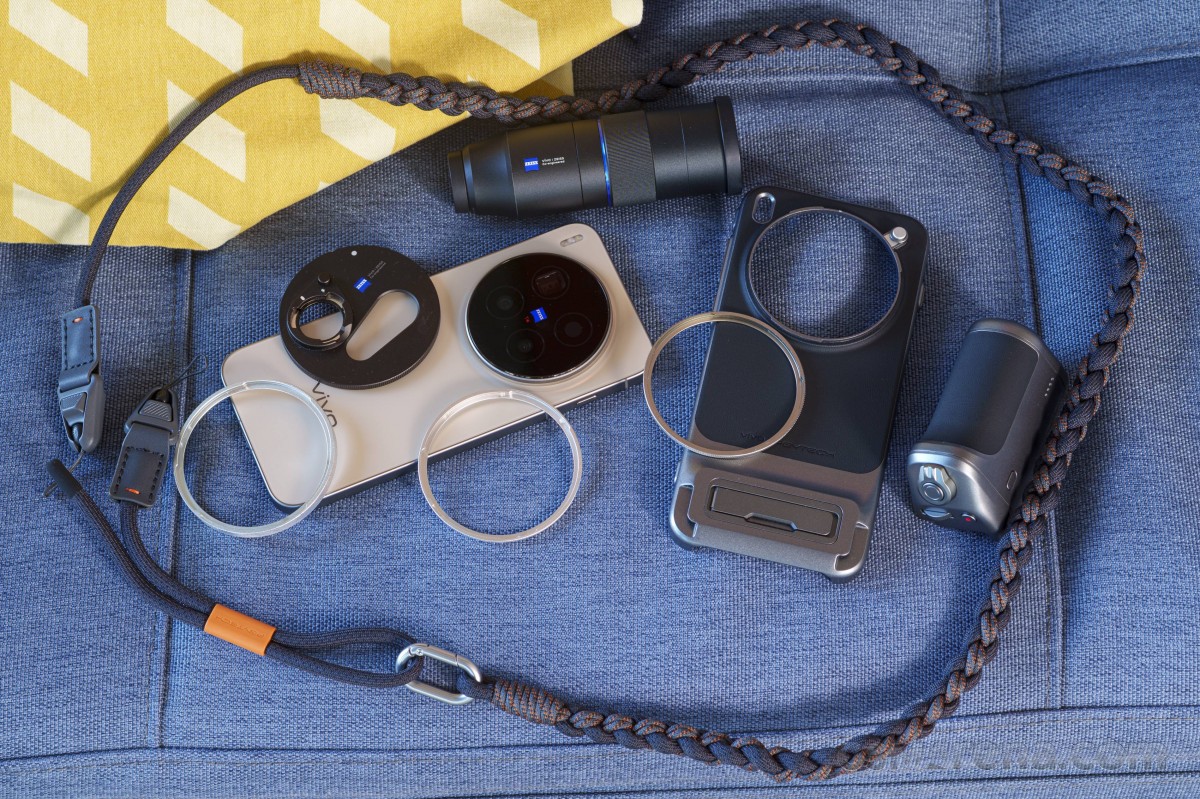
Technically, there are two separate products. The Professional Imaging Grip Kit is the first one and it includes a case, a battery grip, a couple of camera rings and a neck strap, but stops short of adding a lens.
Then there's the Telephoto Extender Kit which features the telephoto lens itself with its own attachment plate to mount to the case. All of these together make up the full Professional Photography Kit. Or we could be messing up the naming, but that's more or less the gist of it, and the point is that you could have the first without second, but if you want the second one, you need to also have the first one. That said, in Europe you'll probably only be able to get the all the bits together.


Unboxing the X300 Pro Photographer Kit
While the detachable lens is by all accounts identical, the case isn't. This one has been made with a slightly improved design of the case itself and tighter tolerances around the area you attach the extra lens, which gives it a bit more stability. They allegedly have a kit for the regular vivo X300, but we haven't seen it ourselves.
We got a sort of a complete package, with all the bits in one box, but that's not necessarily what the retail experience would be.
The case is a sturdy and well-made piece and it snaps on positively to the back of the phone (it can be a bit too fiddly to remove, which is probably a good thing, after all). It has a faux leather backing, a kick-up stand for propping up the phone, and two eyelets for attaching the included strap.
The case comes with two different rings, one is just to cover the bayonet mount if you're not going to be attaching anything of significance, while the other is a 62mm filter adapter ring, so you can attach standard filters. Try and do that on the Oppo Find X9 Pro's telephoto contraption.
The case has two slide-in attachment points for the battery grip, which latches on in a third spot, inside the kickstand. The grip connects to the phone via the USB-C port, which is not only used for communication but also for charging the phone. The grip has a 2300mAh battery of its own - up from 1,500mAh on the X200 Ultra.
Controls-wise, you get a two-stage shutter button, a zoom lever around it, a control dial, and a video record button.
Once you enable the grip in the camera settings, you get a few extra options that you can control. Pressing the shutter button can take a single shot or a burst series, for example. You can have the shutter button's half-press action lock the focus and exposure, or it can run in continuous auto focus mode (AF-C).
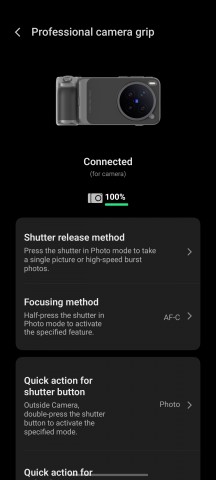
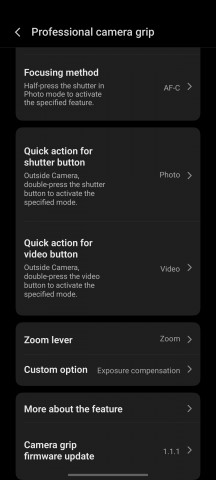
Camera grip options
The zoom rocker around the shutter button moves smoothly between the entire focal range instead of merely jumping between the vivo X300 Pro's optical focal lengths.


The grip
To mount the extra lens, you need to attach its own special adapter plate first to the case's bayonet mount. While it's anything but pretty, the adapter can be left on all the time as it doesn't interfere with the regular operation of any of the cameras. That's another one of the ways in which the vivo solution is better than what the Oppo Find X9 Pro's counterpart offers.
Once you have the telephoto extender bayoneted on, you have to activate it from a shortcut in the camera viewfinder, which is different from the X200 Ultra, where you had to enter a separate camera mode. This way, you can use the various camera modes on the vivo X300 Pro - Portrait Mode, Night Mode, all the video modes, etc, where you couldn't on the vivo X200 Ultra. That's another win for vivo over Oppo, too.

Samples
We shot a bunch of samples with the extender on location in China, and you've probably already seen those earlier. Once we got the X300 Pro to headquarters, we also did some shooting in more familiar settings. Here are a handful of photos taken at the extender's native 200mm equivalent focal length - we reckon you'll agree they're super nice.












Daylight samples, telephoto extender, 200mm
Things do get a little bit softer at 400mm, but if you manage your expectations and you get the right subject matter, you can still enjoy those.








Daylight samples, telephoto extender, 400mm
Zooming in further to 800mm things get questionable as the AI isn't great at reimagining car license plates for example, though distant brick walls are still quite alright. !600mm is too much.








Daylight samples, telephoto extender, 800mm








Daylight samples, telephoto extender, 1600mm
Comparing the extender's results against the phone-only output reveals, unsurprisingly, that optical zoom beats digital zoom (no matter how much AI you slap on top of it).
Daylight comparison: Telephoto extender (200mm) • Phone only (7x, 170mm) • Phone only (10x, 242mm)
In the dark, the extender does an excellent job at its native focal length. Things look acceptable at 400mm but going beyond that isn't really advisable.




Low-light samples, telephoto extender, 200mm




Low-light samples, telephoto extender, 400mm




Low-light samples, telephoto extender, 800mm




Low-light samples, telephoto extender, 1600mm
Here's a quick comparison between the extender's 200mm output and the phone's results without the add-on lens.

Low-light comparison: Telephoto extender (200mm) • Phone only (7x, 170mm) • Phone only (10x, 242mm)
Competition
The X300 Pro's MSRP is €1400 and that's a pretty serious number that pits it against some intimidating competitors. A distant relative-turned-rival, another compatriot's Ultra, a couple of more mainstream offerings, plus some in-house contenders - can the X300 Pro outdo them all?
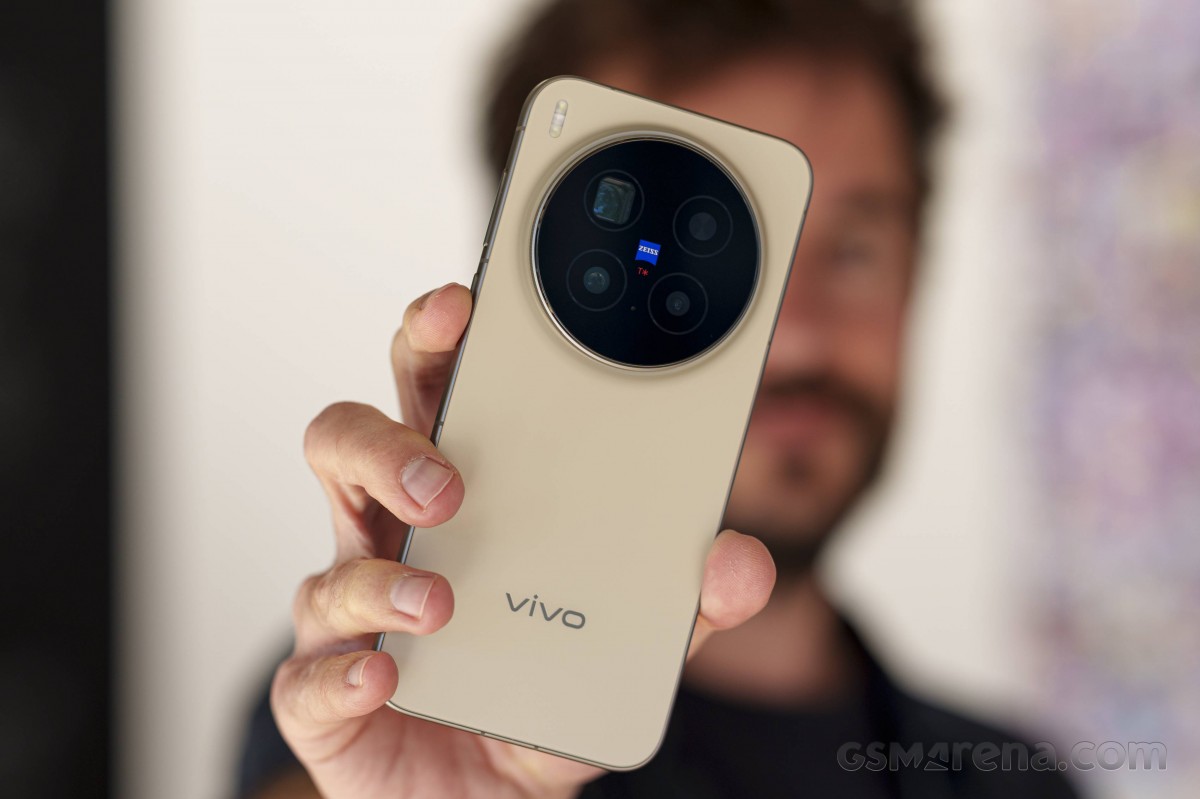
The most obvious battle is against the Oppo Find X9 Pro. Very similar in concept, the Find easily wins an endurance race and is €100 cheaper (in theory, at least). There are tons of nuances between the two in what's probably the most important aspect of both of them - the camera, but we'd give the nod to the vivo overall.
It's a trickier comparison against the Xiaomi 15 Ultra. That one has a higher-class main camera, and a different take on zooming in - two teles are more than one, particularly when one of them is so similar to the vivo's. There's also the fact that the Xiaomi is... mature enough to have been discounted already.
You could entertain a couple of less imaginative options. The Galaxy S25 Ultra is an easy choice for a feature-packed Android first and foremost with solid cameras as a bonus, while the Pixel 10 Pro XL is an Android purist's dream, with more like an alright camera experience.



Oppo Find X9 Pro • Xiaomi 15 Ultra • Samsung Galaxy S25 Ultra • Google Pixel 10 Pro XL
The X300 Pro has a couple of viable alternatives in its own squad, maybe even three depending on how you look at it. The X300 non-Pro scores a lot of points for compactness, while delivering camera results above what its physical size would suggest, plus it should be telephoto extender-compatible too. Last year's X200 Pro is about as good as the X300 Pro, though perhaps the new model's smallish advancements add up. Then there's the X200 Ultra, though with that one you'll have to live with some software limitations because of its China-specific software. All of these will be cheaper, perhaps significantly so.



vivo X300 • vivo X200 Pro • vivo X200 Ultra
Verdict
The X300 Pro is another installment in a beloved series that offers an outstanding camera experience, now made even better by an improved main camera, nicer selfies, and a telephoto extender compatibility until now reserved for the Ultra. It's doing great on other fundamentals too, boasting a wonderful display, excellent charging speed, and top-tier chipset performance. All of that is packed in a great-looking durable body too.
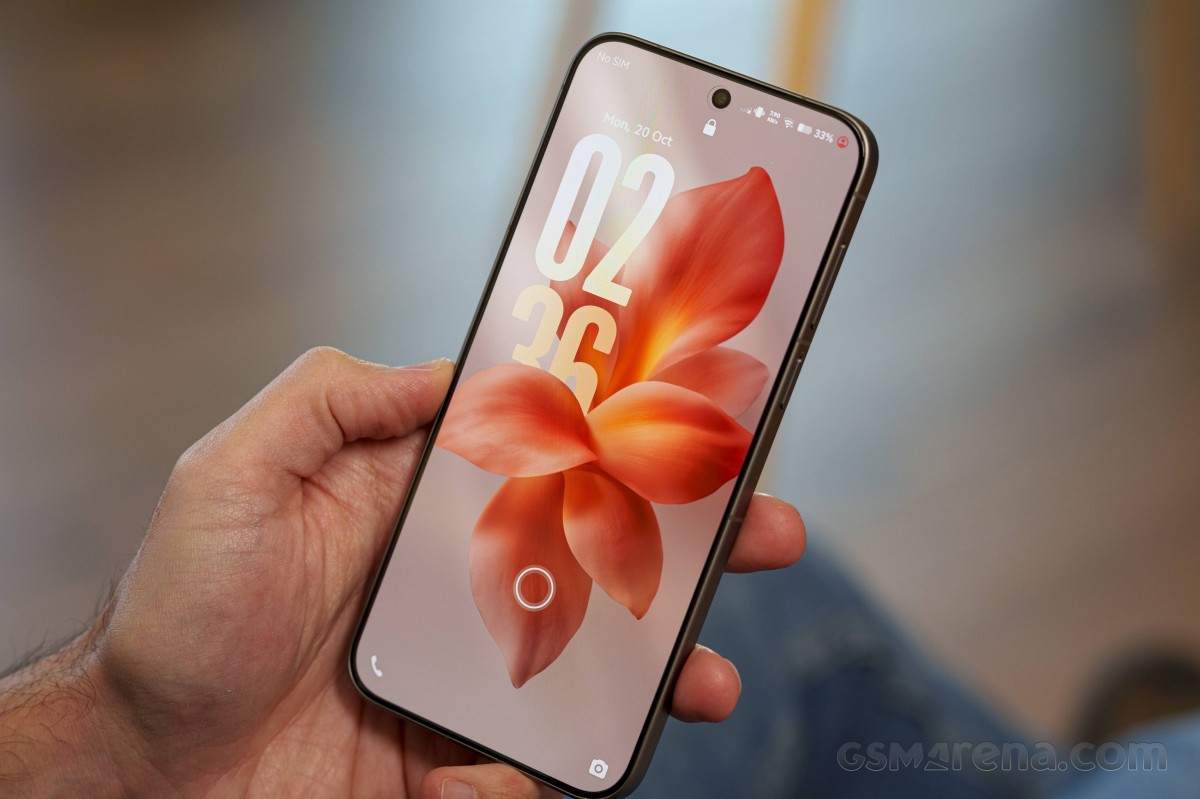
Some things could have been better, of course. We're most annoyed by vivo's decision to limit the handset's battery capacity in some markets instead of doing what was needed to make it happen. Most competitors will get you nicer speakers, low-light video quality could use some improving, and the thermal throttling, while par for the course, is still worth going into the cons list. The added telephoto capabilities come at a significant extra cost too, and it's perhaps too much.
Overall though, we still think the X300 Pro is a winner and should be a top choice for anyone in the market for smartphone camera excellence.
Pros
- Fully flat design, glass protector friendly, IP68/IP69-rated.
- Super-bright display, Dolby Vision capable, excellent overall.
- Class-leading charging speed, with both proprietary and standard chargers.
- Top-class performance, standout GPU results.
- Great camera performance overall. Spectacular telephoto camera, particularly great at night and at close range; nice selfies.
- Telephoto Extender compatibility.
Cons
- Nerfed battery capacity in EU markets (as tested).
- Speakers can be better.
- Heavy throttling - both the CPU and the GPU can be affected.
- Low-light videos not quite up to scratch.
- Telephoto Extender Kit is pretty expensive in the EU.


