Samsung Galaxy A26 Review
The Galaxy A26 arrives a bit late this time around, but it brings a bigger display and a more powerful chipset to the affordable A2x series.
The Exynos 1380 chip from last year's Galaxy A35 has trickled down the lineup. The A26 also gets a bigger 6.7-inch display (up from 6.5") and improved materials. You will find Gorilla Glass Victus+ protective sheets on the front and back.
Additionally, the A26 gets proper IP67 ingress protection, far better than standard splash-proofed phones in the same price bracket.
Samsung Galaxy A26 specs at a glance:
- Body: 164.0x77.5x7.7mm, 200g; Glass front (Gorilla Glass Victus+), plastic frame, glass back (Gorilla Glass Victus+); IP67 dust/water resistant (up to 1m for 30 min).
- Display: 6.70" Super AMOLED, 120Hz, 1080x2340px resolution, 19.5:9 aspect ratio, 385ppi; Always-on display.
- Chipset: Exynos 1380 (5 nm) - Global, Exynos 1280 (5 nm) - LATAM: Octa-core (4x2.4 GHz Cortex-A78 & 4x2.0 GHz Cortex-A55) - Global, Octa-core (2x2.4 GHz Cortex-A78 & 6x2.0 GHz Cortex-A55) - LATAM; Mali-G68 MP5 - Global, Mali-G68 - LATAM.
- Memory: 128GB 4GB RAM, 128GB 6GB RAM, 128GB 8GB RAM, 256GB 8GB RAM; microSDXC (uses shared SIM slot).
- OS/Software: Android 15, up to 6 major Android upgrades, One UI 7.
- Rear camera: Wide (main): 50 MP, f/1.8, 27mm, 1/2.76", 0.64µm, PDAF, OIS; Ultra wide angle: 8 MP, f/2.2, 120˚, 1/4", 1.12µm; Macro: 2 MP, f/2.4.
- Front camera: 13 MP, f/2.2, (wide), 1/3.06", 1.12µm.
- Video capture: Rear camera: 4K@30fps, 1080p@30fps, 720p@480fps, gyro-EIS; Front camera: 1080p@30fps.
- Battery: 5000mAh; 25W wired.
- Connectivity: 5G; Wi-Fi 5; BT 5.3; NFC.
- Misc: Fingerprint reader (side-mounted); Virtual proximity sensing, Circle to Search.
The rest of the hardware is very familiar - 50MP main camera joined by an 8MP ultrawide and 2MP macro, while the front gets a 13MP shooter. The battery capacity remains 5,000 mAh with 25W fast charging support.
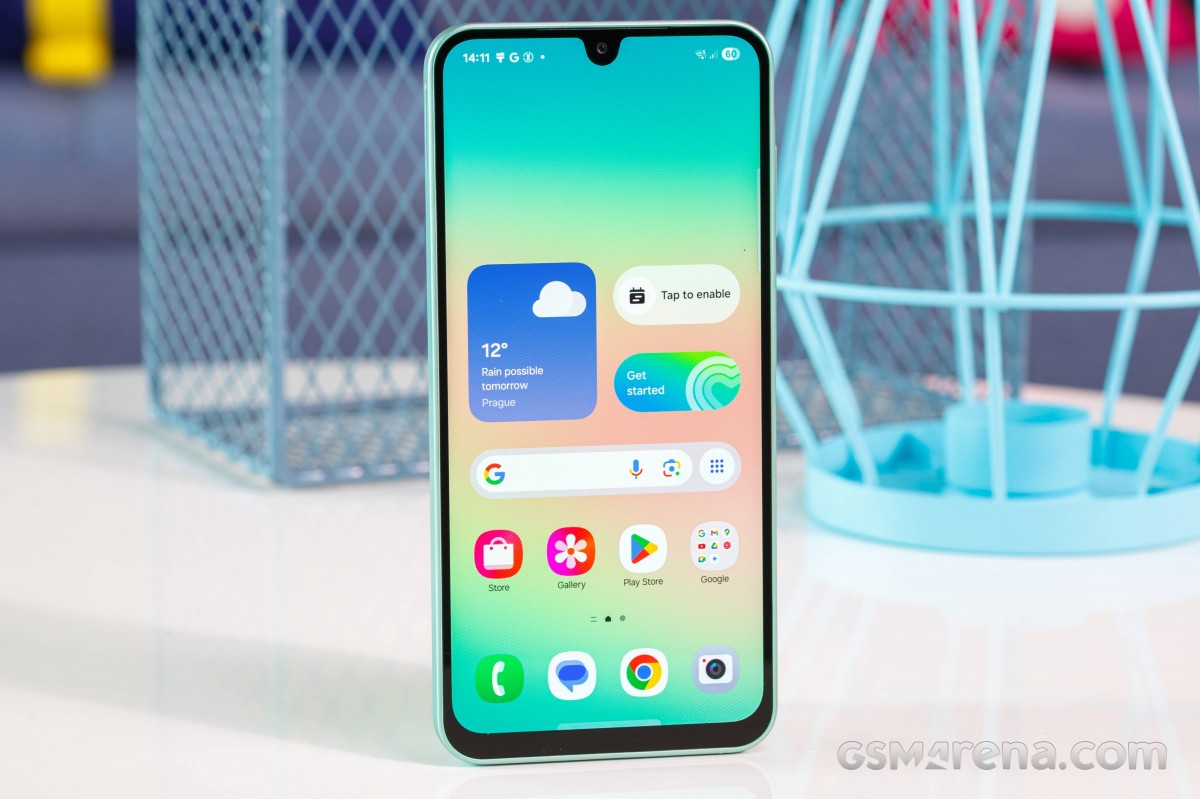
Samsung managed to add a few notable upgrades here and there without increasing the price, making it a sensible budget smartphone in the mid-€200 range.
But what about the competition? Well, first, we would have to run our usual tests before we give our verdict.
Unboxing the Samsung Galaxy A26
The Galaxy A26 comes in a modest retail box containing only the usual user manuals and a USB-C to USB-C cable for data transfer and charging. There are no additional protective cases or anything.
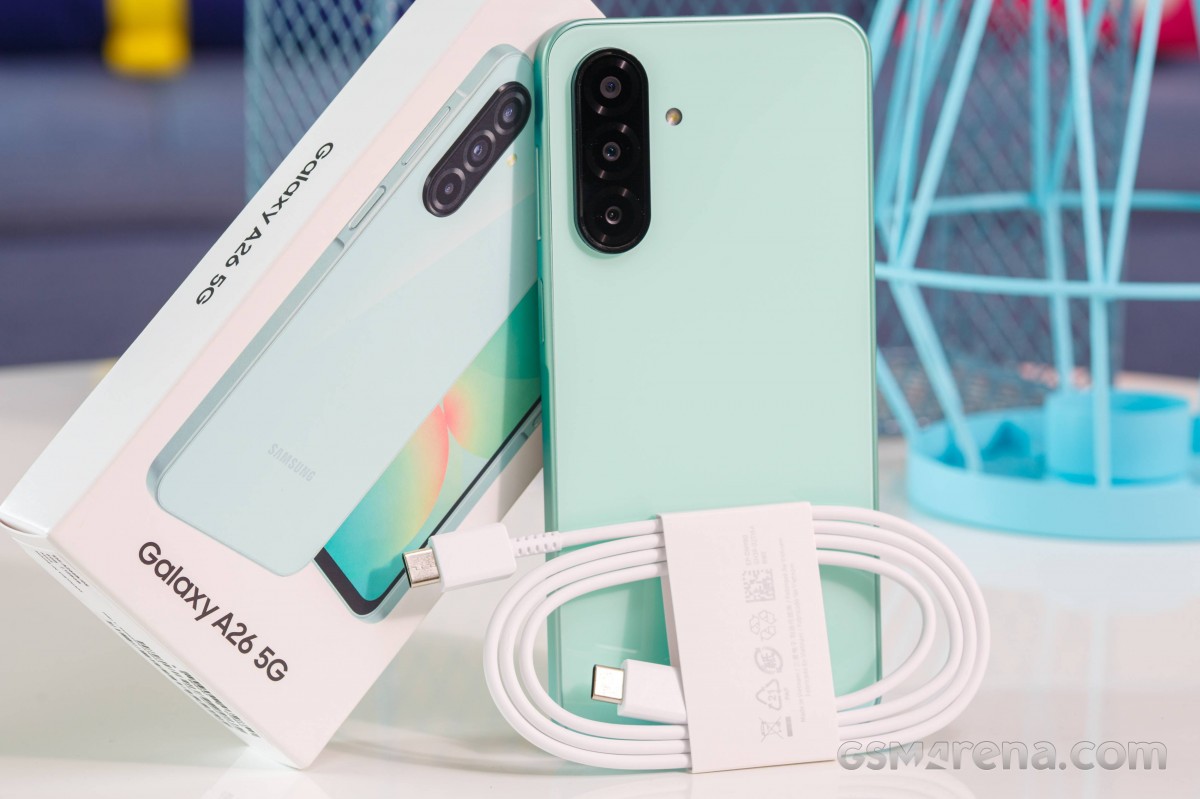
The phone supports up to 25W fast charging over PD using Samsung's PPS, so you will have to buy one separately to take advantage of the fast charging rate.
Design and handling
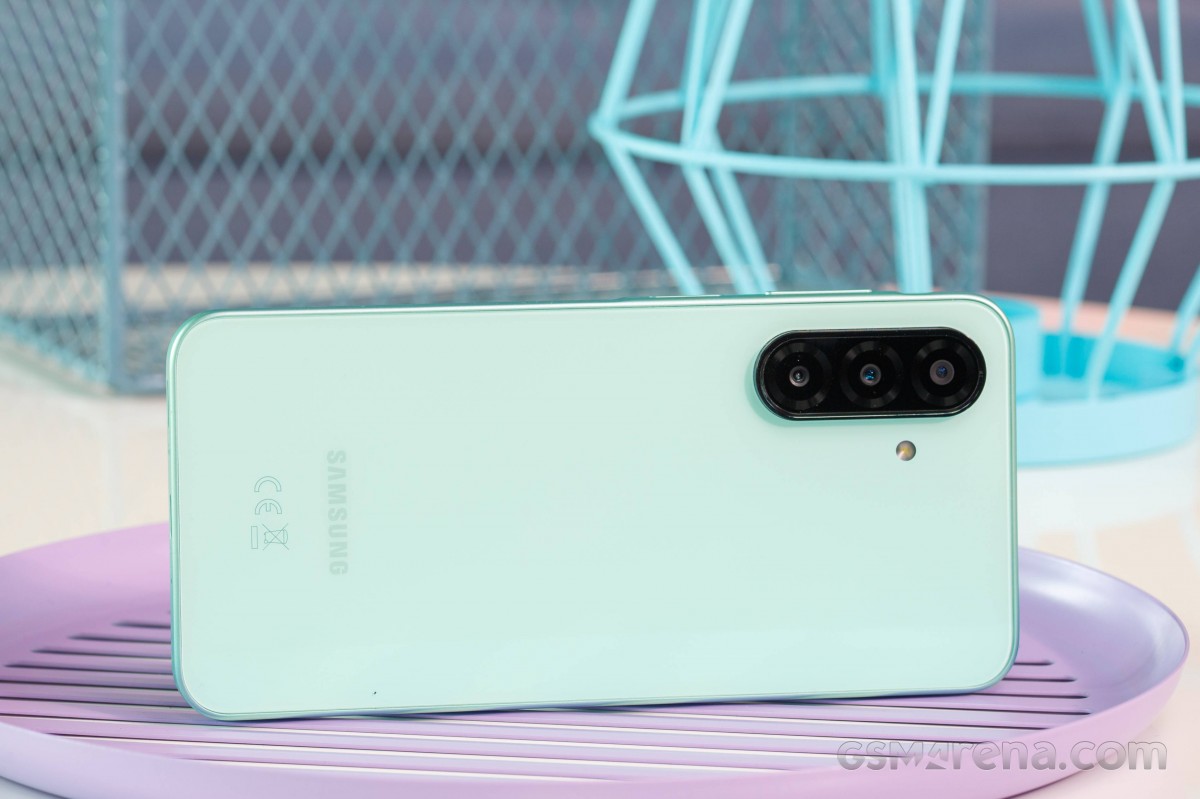
The Galaxy A26's design aligns with the rest of the 2025 Galaxy A series and maybe even with the recent smartphone design trends in general. The device is completely flat with rounded edges and a slightly protruding camera piece on the back.
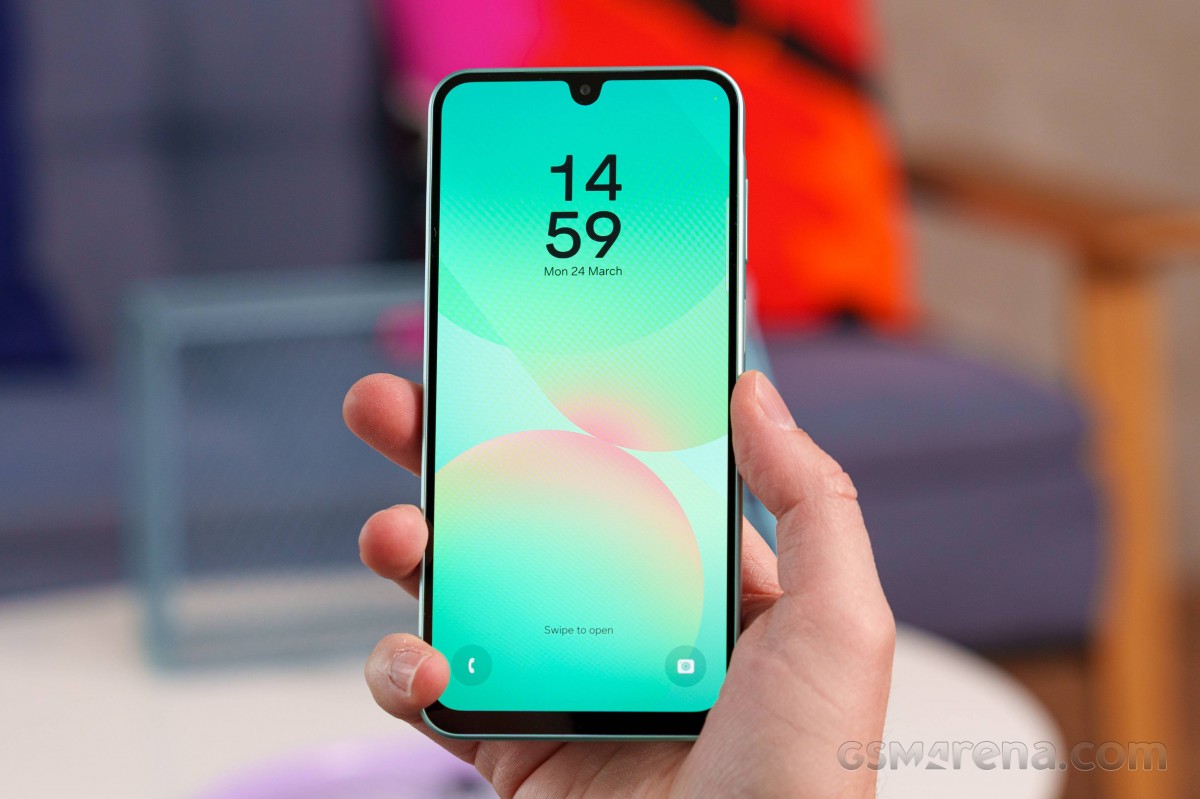
But unlike its more expensive siblings, the A26's frame isn't aluminum; it's plastic. Still, the A26 gets an upgrade - Gorilla Glass Victus+ back panel, not just the front.
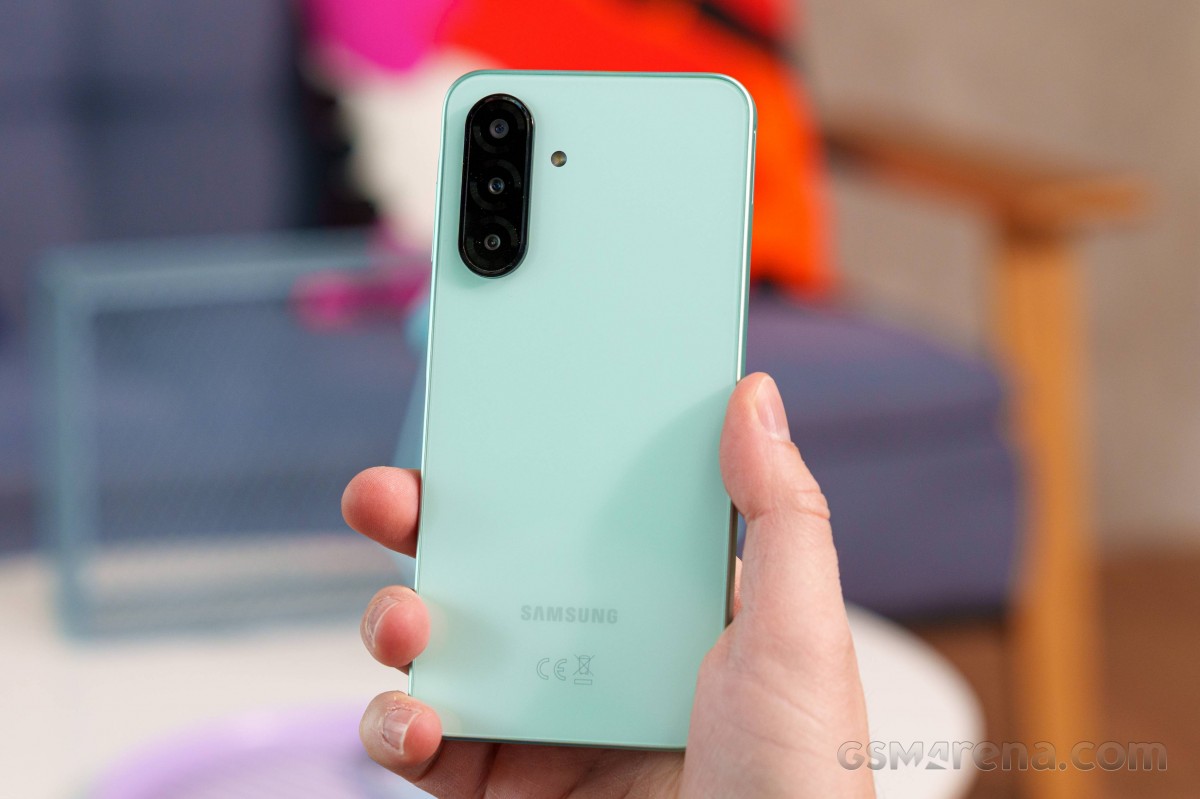
Samsung managed to slim down many of its new devices this year, and the A26 is no exception. It's now considerably thinner, measuring 7.7mm, and makes it particularly secure and comfortable to hold. Surprisingly, it's not as slippery as other glass phones, maybe because the plastic frame offers a nicer grip compared to aluminum ones.
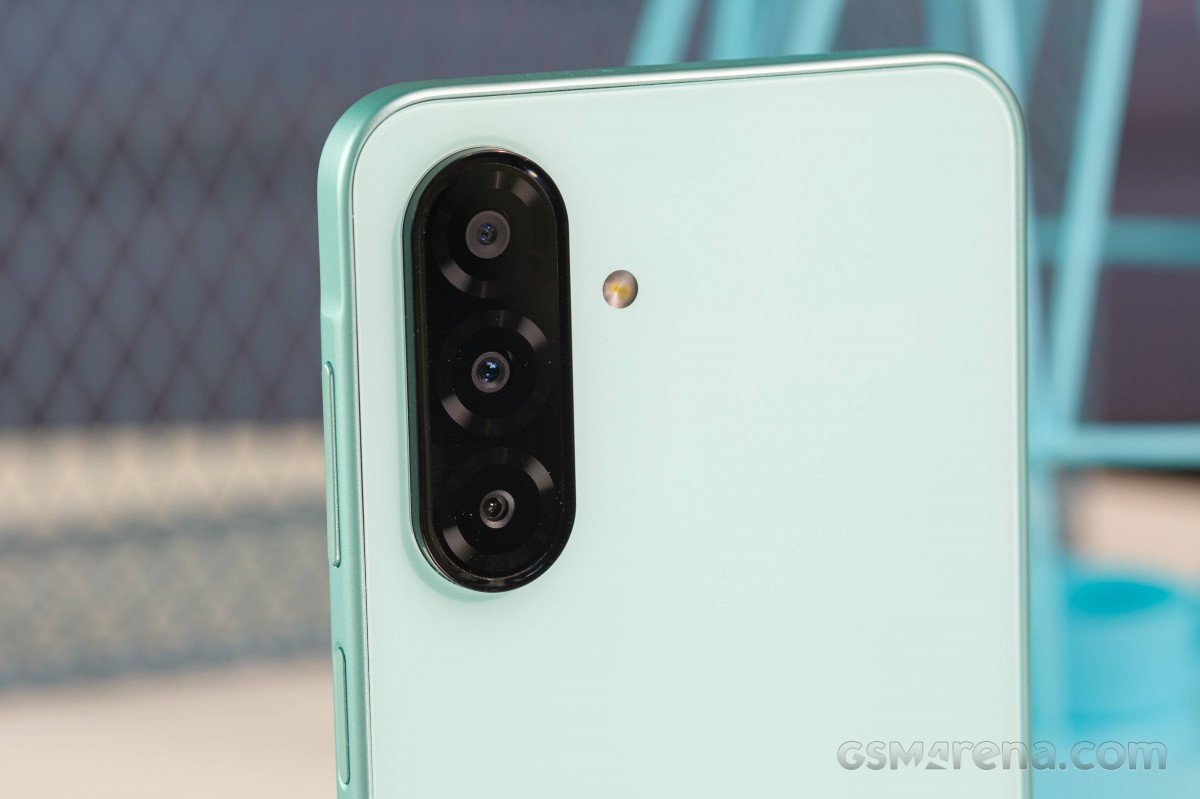
Another upgrade worth noting is the increased ingress protection. Now, the A26 should be able to survive after being submerged in 1 meter for 30 minutes as per the IP67 standard against water and dust.
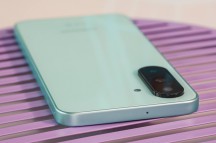
Samsung Galaxy A26
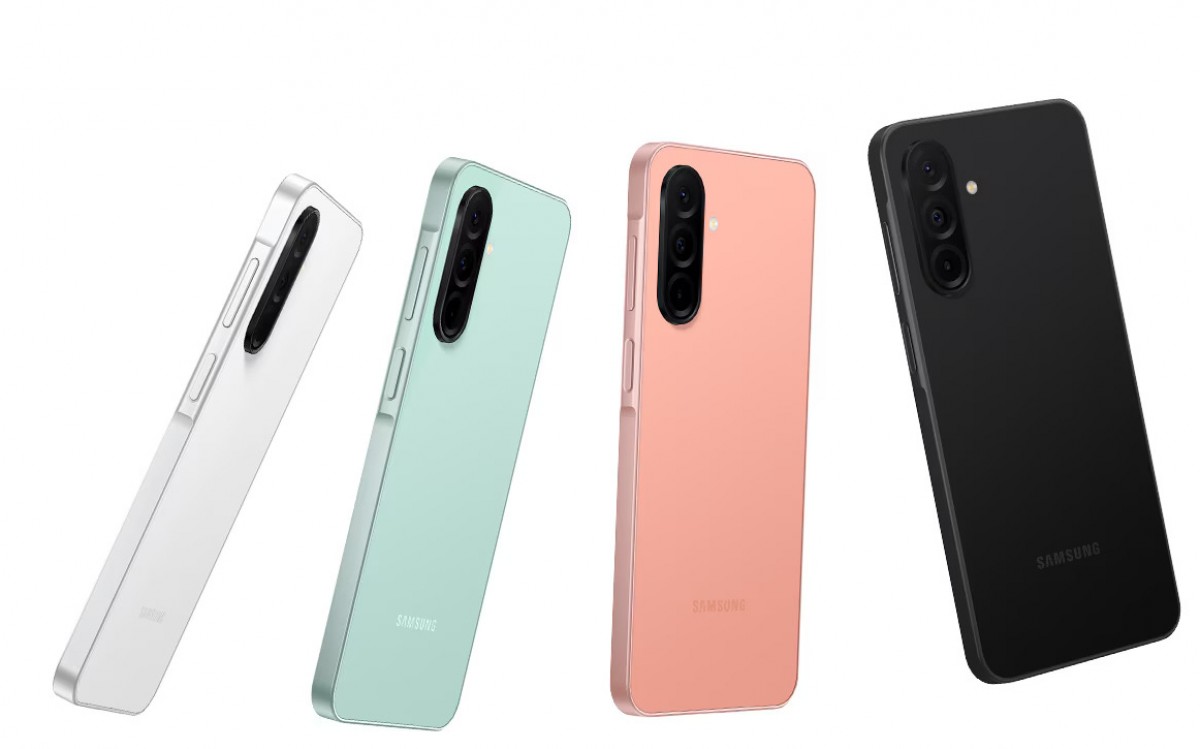
The available colors are Black, White, Mint, Peach and Pink. We've got the Mint in our hands, but keep in mind that some colors aren't available in certain markets.
Contrary to most phones in this price bracket, the Galaxy A26 uses a side-mounted fingerprint reader that doubles as a power button. We tend to like the under-display fingerprint readers better as they are more versatile, meaning you can unlock the phone without picking it up or reaching for the button on the side. The UD readers are more convenient when using the device with your left hand too.
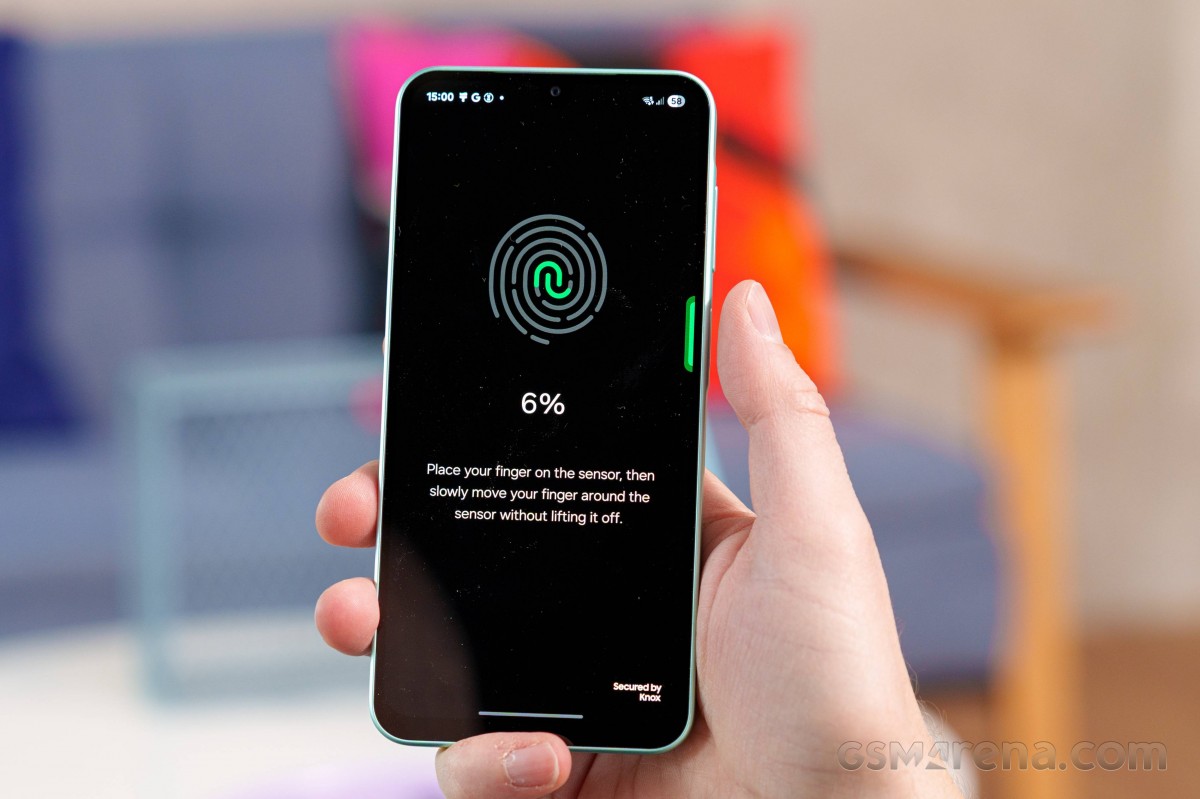
Functionality-wise, we had no issues with the fingerprint scanner. It's fairly reliable and quick to unlock. Maybe even better in some cases compared to the Galaxy A56's under-display reader.
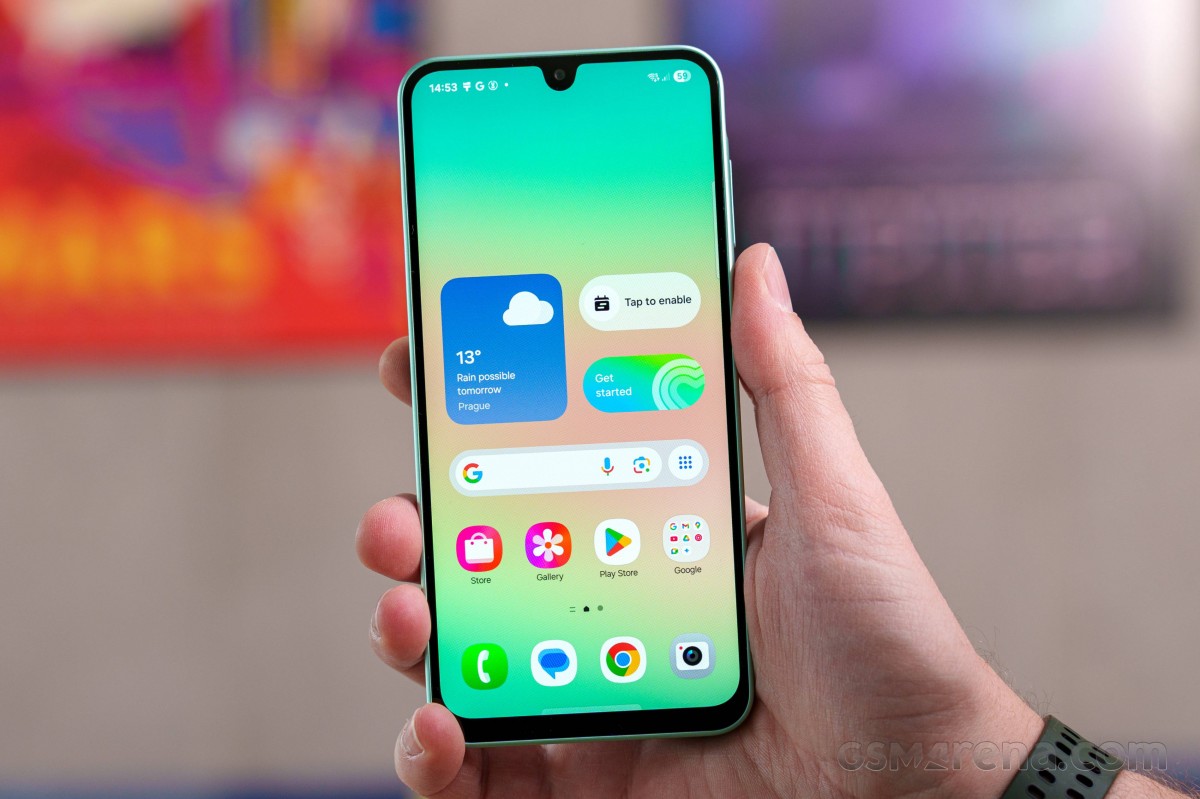
6.7-inch 120Hz OLED display
The Galaxy A26 offers a slightly-bigger-than-before 6.7-inch display with a standard 1080 x 2340px resolution and supports up to 120Hz refresh rate. The screen doesn't support any HDR video, but we don't expect it to, given the handset's price point.
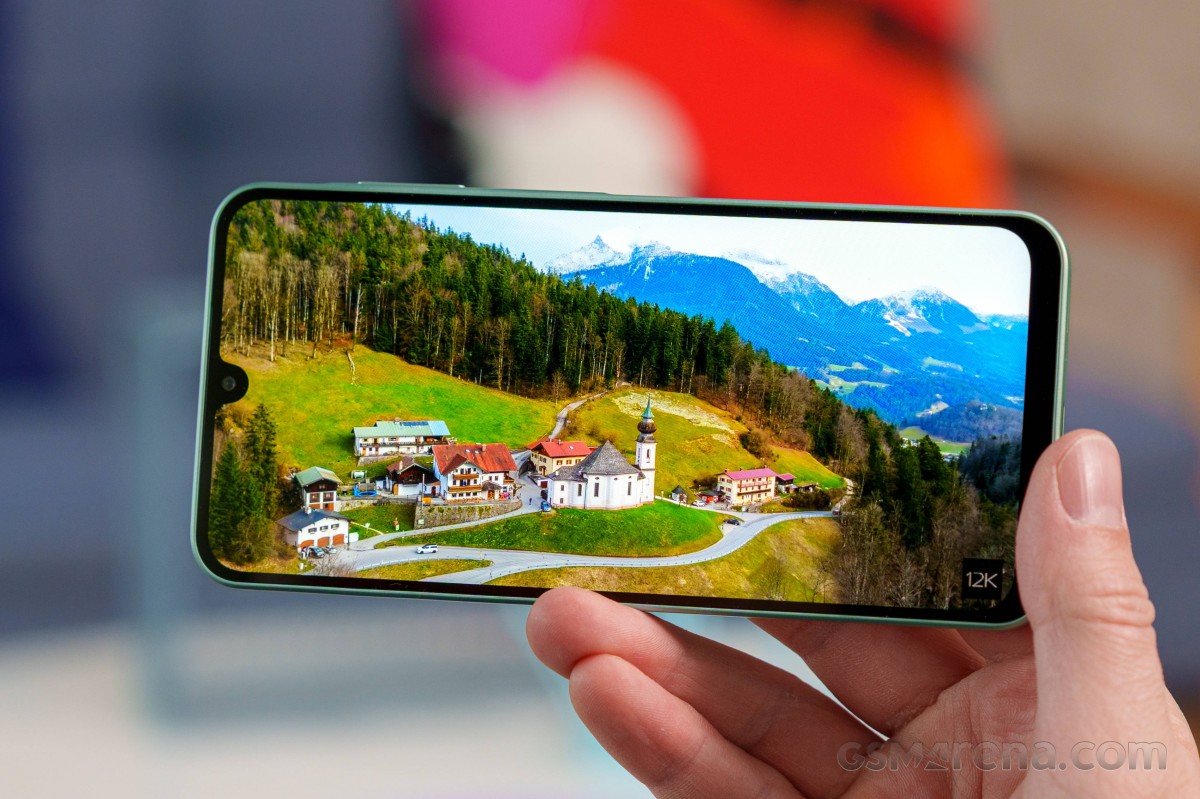
And even though we didn't expect much from the display in terms of max brightness either, we find the maximum brightness in auto and manual modes to be underwhelming. We measured only 365 nits in manual mode and 777 nits in auto mode. This isn't enough for comfortable outdoor use on a bright sunny day. Sure, it will get the job done, but we expected more, especially from an OEM with a solid tradition in display manufacturing.
Refresh rate
Even though there's an automatic mode for refresh rate control in the display settings menu, it's practically a static 120Hz refresh rate mode. The Standard mode, on the other hand, puts the display at a constant 60Hz.
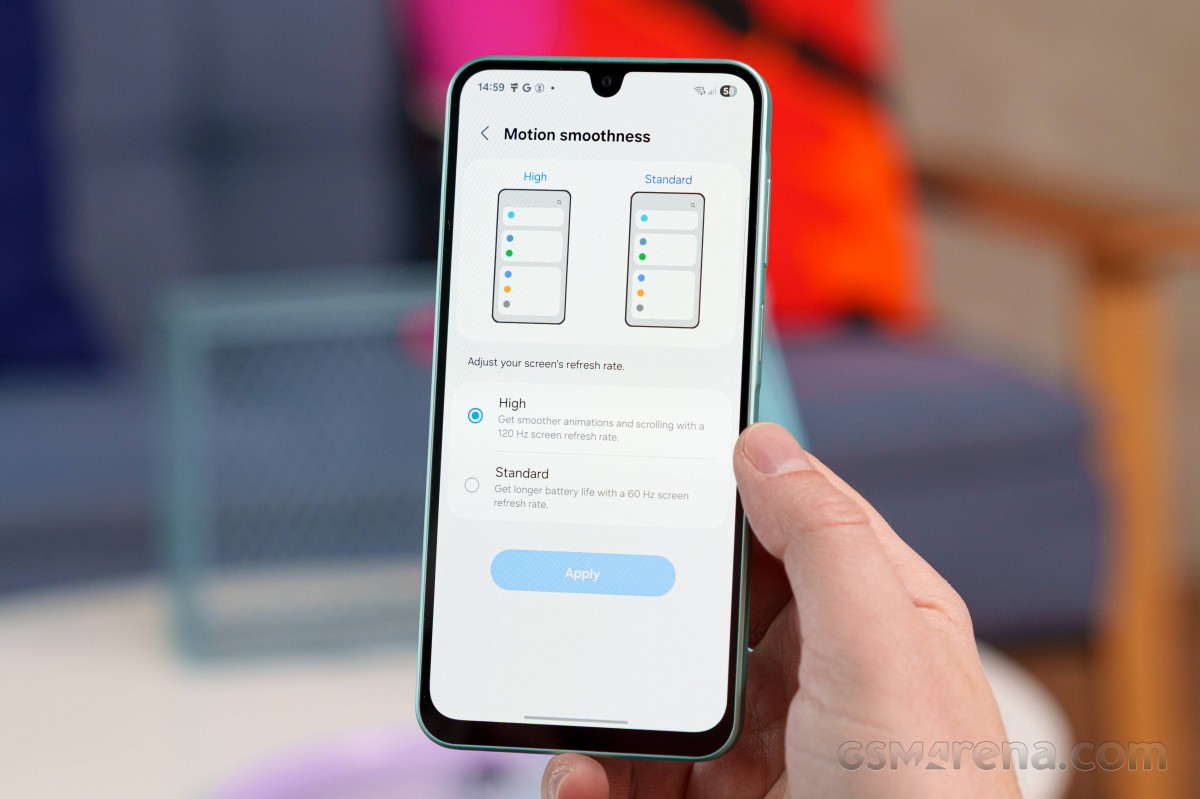
We've tried in several apps and system menus and found the refresh rate to be constantly at 120Hz, which draws more power than real automatic solutions. Interestingly, we've seen this issue in last year's Galaxy A25, and it seems that Samsung still hasn't addressed it.
Battery life
The Galaxy A26 features a standard 5,000 mAh battery and runs on an energy-efficient Exynos 1380 SoC. However, like its predecessor, the A26 falls short of our expectations. The Active Use Score of 10:44h is not nearly enough to call the Galaxy A26 competitive in this regard.
The device posted particularly weak web browsing and video playback results. Pretty much all Galaxy A26 alternatives will provide longer battery life.
Charging speed
The Galaxy A26 features the same 25W fast charging as last year over Power Delivery with Samsung's PPS. But that's not nearly enough to compete with its competitors in this price bracket.
The Galaxy A26 can charge from 0 to 100% in 1 hour and 26 minutes, which is considerably more than most. But more importantly, the A26 is at the bottom of the chart in the first 15 and 30-minute marks.
Even though charging isn't particularly fast, Samsung has included several options to protect the battery's health. You can limit the charging to 80 or 90%, or you can let the system decide when to initiate fast charging based on your behavior.
Speakers
The Galaxy A26 features a single, bottom-firing loudspeaker, a downgrade over last year's Galaxy A25, which had a set of nice-sounding stereo speakers.
As a result, loudness and sound quality have dropped significantly. The A26 still gets a "Good" -27.1 LUFS score, but it's no match for its rivals quality-wise. Music sounds dull, tinny, and with virtually no bass.
Use the Playback controls to listen to the phone sample recordings (best use headphones). We measure the average loudness of the speakers in LUFS. A lower absolute value means a louder sound. A look at the frequency response chart will tell you how far off the ideal "0db" flat line is the reproduction of the bass, treble, and mid frequencies.
One UI 7 and Android 15
The Galaxy A26 ships with the latest Android 15 and One UI 7 pre-installed, and Samsung promises six generational OS upgrades and 6 years of security patches. That's quite the commitment for such a budget device but getting the updates is one thing, but keeping this sort of budget hardware working smoothly after six updates to the OS is another matter entirely.
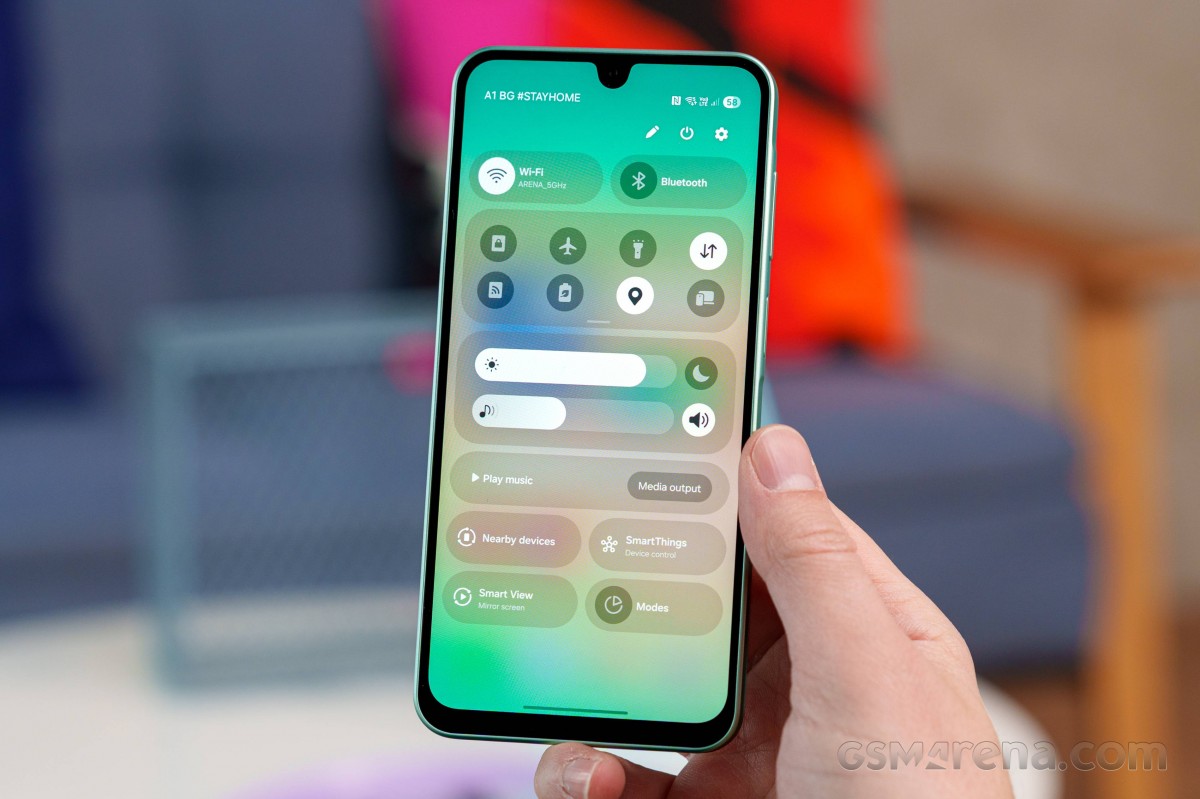
If you've used One UI in the past, you will feel right at home. Although there are quite a few design changes, so make sure to check out the new aesthetics in the video below.
Here's our One UI 7 review in mobile view format - watch it on your phone:
Keep in mind that some of the advanced features and almost all of the AI-related functionalities are unavailable on the A26 due to hardware limitations. Google's Circle to Search, however, is here to stay along with the Object eraser in the native Gallery app. However, the latter is not the amazing feature you see in demos of the S25 series phones.
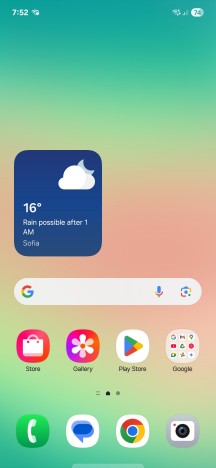
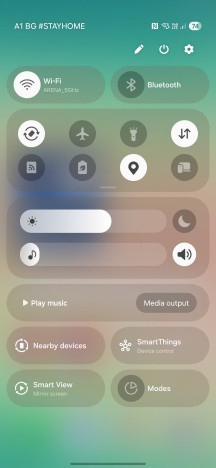
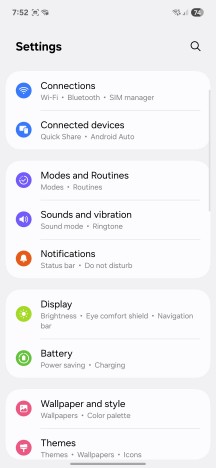
Home screen • quick toggles • settings menu
The A26 also gets AI Select, an updated version of Smart Select, with which you might be familiar. The AI can now analyze the screen's content in more detail and offer actions based on it. It can grab any text appearing in a photo, make a photo clipping, create GIFs from Instagram reels, or make wallpaper using a photo you have open on the screen.
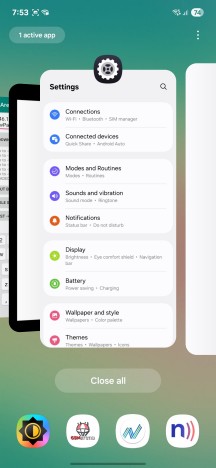
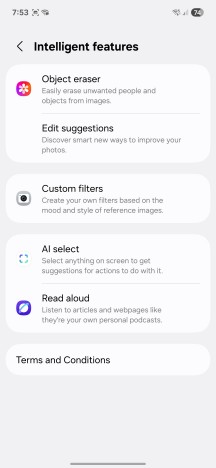
Receant apps • Intelligent features
As far as day-to-day performance goes, it's okay but leaves more to be desired. Navigation could be a tad more responsive.
Benchmark performance
The Galaxy A26 is based on the Samsung Exynos 1380 chip - a familiar piece of silicon that is now effectively trickling further down having been used in the Galaxy A54 first and then the Galaxy A35. It is not a bad chip per se. It offers 5G connectivity and modern connectivity features such as Bluetooth 5.3 and dual-band Wi-Fi 6.
Don't expect too much in the way of raw performance, though. The CPU setup consists of four Cortex-A78 cores, clocked at up to 2.4 GHz, and another four Cortex-A55 cores, working at up to 2.0 GHz. The GPU is a 950 MHz Mali-G68 MP5 unit.
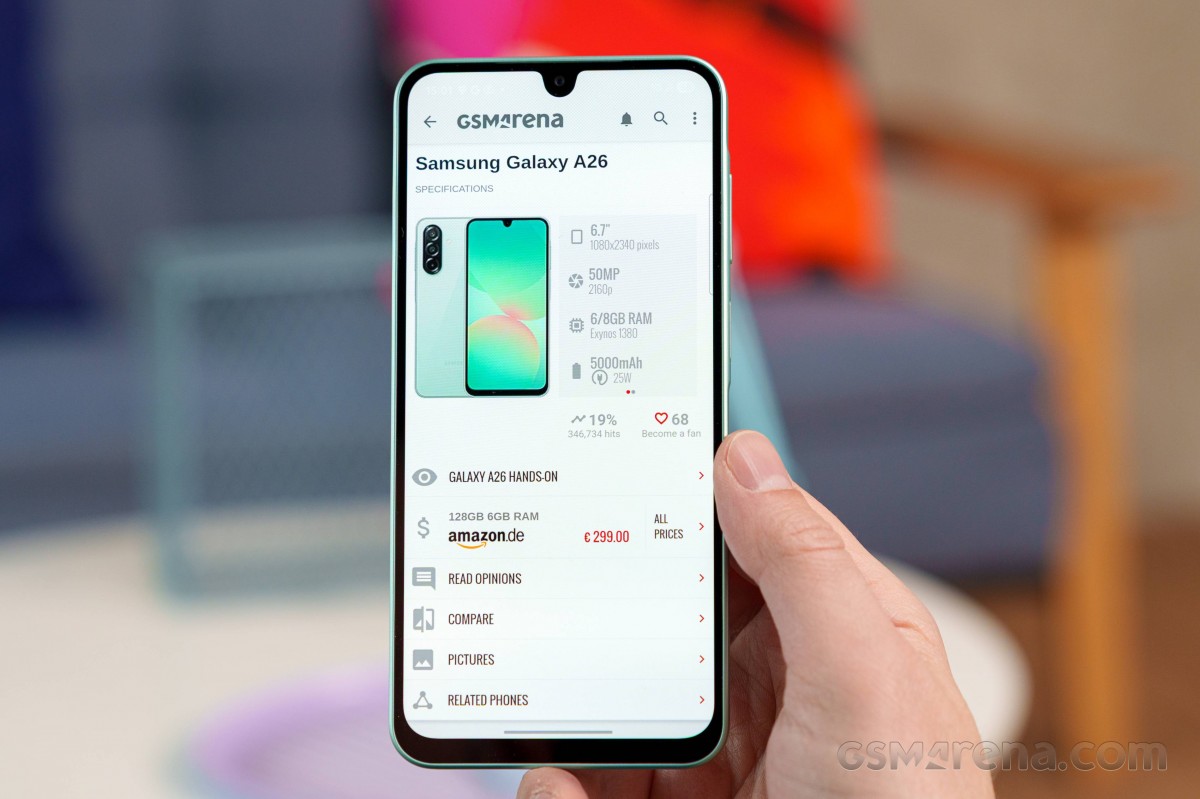
The available memory options are a lot. The base configuration is 6GB/128GB, but you can upgrade to 8GB/256GB, 12GB/256GB, 8GB/512GB or 12GB/512GB. The storage can be expanded via microSD card up to 2TB. And as far as storage speed goes, Samsung used UFS 2.2.
As you can see, there are a handful of smartphones that are more powerful than the Galaxy A26 for roughly the same price. In fact, the only phones that the Galaxy A26 outperforms are the Moto G Power (2025), which is strictly a device for the US market, and last year's Galaxy A25.
Sustained performance
The Galaxy A26 was able to sustain decent CPU clock speeds throughout the CPU stress test, but we expected more, given that the Exynos 1380 SoC isn't very powerful to begin with. The chip throttled down to 71% of its theoretical performance but maintained levels around 80% most of the time.
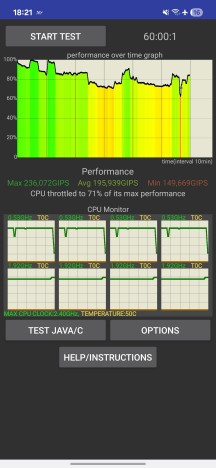
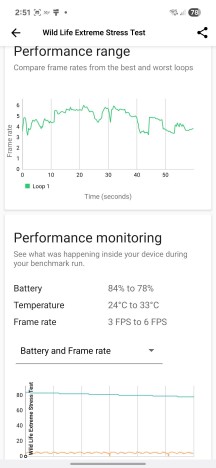
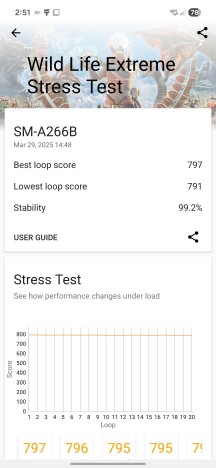
CPU and GPU stress tests
The GPU stress test was excellent with 99% stability reported.
Familiar triple-camera setup
The Galaxy A26 camera hardware remains unchanged from the Galaxy A25 last year - 50MP main camera joined by a small 8MP ultrawide unit and even smaller 2MP dedicated macro shooter. The selfie is also familiar with 13MP resolution.
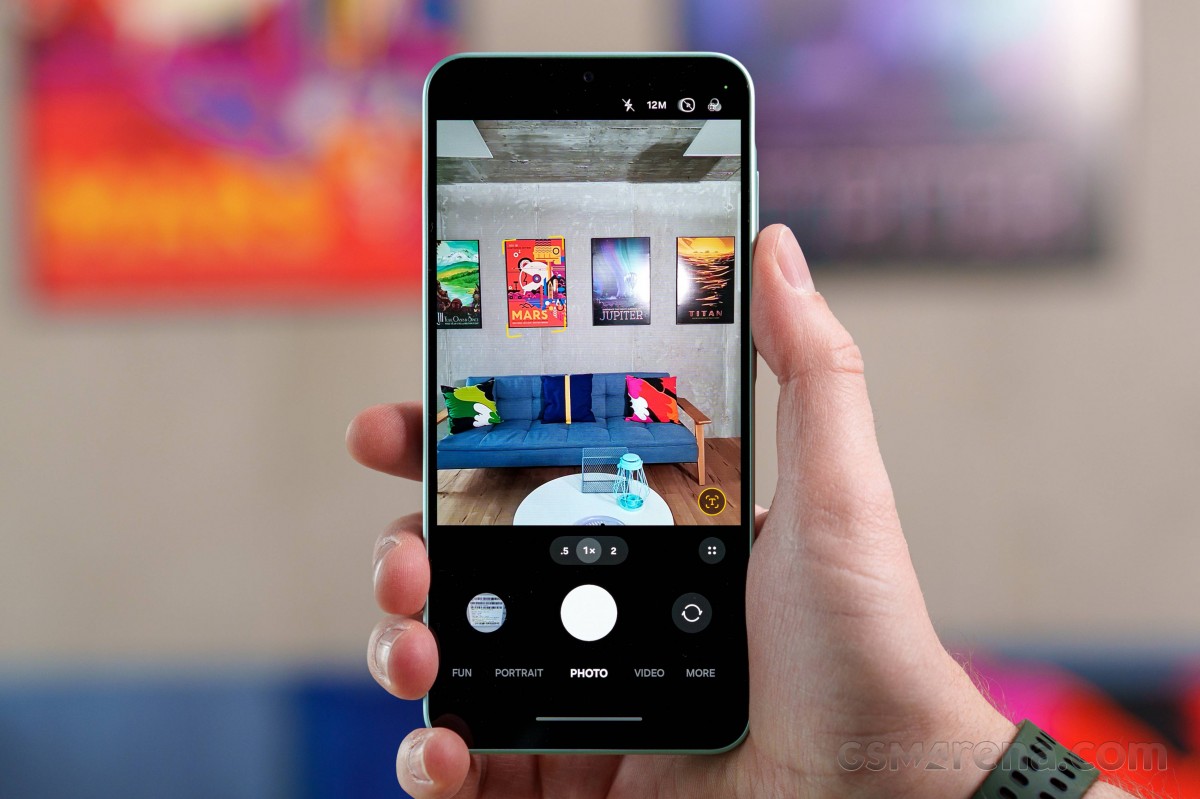
- Wide (main): 50 MP Samsung ISOCELL (S5K)JN1, f/1.8, 27mm, 1/2.76", 0.64µm, PDAF, OIS; 2160p@30fps
- Ultra wide angle: 8 MP Samsung ISOCELL (S5K)4HA, f/2.2, 120-degree, 1/4", 1.12µm, fixed focus; 1080p@30fps
- Macro: 2 MP GalaxyCore GC02M1, f/2.4, fixed focus.
- Front camera: 13 MP Hynix Hi-1339, f/2.2, 1/3.06", 1.12µm, fixed focus; 1080p@30fps
Daylight photos
Main camera
The daylight photos taken with the main camera leave more to be desired. Under perfect lighting conditions, you can get decent-looking shots, but for the most part, we've seen better. Sharpness and detail deteriorate fast when you take the phone indoors, and objects in the shadows look somewhat muddy and grainy. On the other hand, color reproduction is on point and so is HDR.










Main camera photos
We also noticed some focusing issues while going through our shots. On a few occassions, we experienced focus hunting while out in the field as well.
Here are some pictures taken in the dedicated 50MP mode. We can't say they are better overall, but slightly more detailed.





50MP main camera photos
And some portraits too.








Portraits: Photo mode • Portrait mode
2x crop zoom
Unsurprisingly, the 2x zoom shots are considerably softer, noisier, and less detailed. That's expected from a phone in this price bracket with a small sensor.










2x crop zoom photos
Ultrawide camera
The ultrawide photos are par for the course, considering the price tag and the usual ultrawide capabilities in this class. The shots are somewhat soft, but we like the colors, contrast and close objects seem to be decently sharp. Dynamic range isn't wide, but the HDR does a good job in normal daylight conditions.












Ultrawide camera photos
Macro camera
The dedicated macro camera is nothing to write home about. It's a basic 2MP sensor that has been used for years now, and it has plenty of limitations - fixed focus, low resolution, and struggles to deliver decent quality in unfavorable lighting conditions. Don't expect much contrast and fine detail.





Macro camera photos
Selfies
The selfies are excellent. They are pretty colorful, detailed, and sharp. Even in more challenging lighting conditions, the photos turned out pretty well. We can even say that the handset punches above its class in this regard.




Selfies
Low-light photos
Main camera
Unlike some of the Galaxy phones we've tested recently, the Galaxy A26 seems to like using the camera Night mode. The main camera triggers the dedicated Night mode more often than not, brightening the shadows and reducing the noise.












Low-light main camera photos: Auto Night mode • Night mode
Still, we can't say we are happy with the results. The device generally takes soft, noisy photos with completely messed-up colors and color temperature. Sure, it's a budget device, but we've seen much better from competitors.
2x crop zoom
The main camera's drawbacks become even more obvious once you tap the 2x zoom toggle. After the unsatisfactory 2x photos in daylight, we didn't have our hopes high at night.










Low-light 2x crop zoom photos: Auto Night mode • Night mode
Ultrawide camera
With or without Night mode, the ultrawide camera takes extremely grainy photos with not much fine detail. Colors are once again off, but not as much as on the main camera, for some reason.












Low-light ultrawide photos: Auto Night mode • Night mode
Video recording
The Galaxy A26 can record 4K videos at up to 30fps using its main camera, but caps at 1080p@30fps when recording with the ultrawide and selfie cameras. EIS is available only in 1080p mode. Take a look at the last video on the playlist to see how shaky the 4K video gets without EIS.
The main camera footage seems soft for 4K resolution and tends to go for lower exposure as shadows look oddly thick. Colors, contrast and dynamic range, on the other hand, seem on point. Too bad there's no stabilization in 4K resolution.
The nighttime footage with the main cam seems pretty good. There's limited amount of noise, and subjects are decently sharp.
The ultrawide 1080p video isn't amazing, but it's pretty much what we expected. It's rather soft and lacks fine detail, but dynamic range, colors and contrast are good.
Competition
The sub-€300 category is really packed this year and the market offers a handful of solid all-rounders, so the Galaxy A26 will have a hard time competing, even when the price drops around the mid-€200. At the time of writing, it's €299.
The recently released Poco X7 Pro is a great example and beats the Galaxy A26 in pretty much every aspect. It has a brighter display, better performance, longer battery life, can take better photos, charges faster, and offers twice the storage. Xiaomi's contender makes it really hard to recommend the Galaxy A26.
Another sensible and cheaper alternative to the A26 and the X7 Pro is the Motorola Edge 50 Fusion. It's a nice all-rounder with better cameras, speakers, display, charging and battery life.
The Xiaomi Redmi Note 14 Pro 5G is a good choice, but given its proximity to the Poco X7 Pro price-wise, it's definitely not the best pick from Xiaomi's portfolio.
But if you are dead-set on getting a Samsung phone for about the same price, then last year's Galaxy A55 might be a better choice. Sure, it's an older device, especially since we have the Galaxy A56 around, but it brings more value for money. Not to mention, the A55 is entitled to 4 major OS upgrades since its release, so it will be relevant for a few more years.
In case you reside in the US, where the choice is very limited, you have only the Moto G Power (2025) as a direct alternative. In this particular case, the Galaxy A26 wins with its OLED panel and slightly better camera experience. However, the Motorola Edge (2024) has gone down nicely in price and offers an OLED screen too, along with a better camera, a considerably faster chipset and faster charging. And it can now be had for the same price.
Last year's Galaxy A35 may not give you similarly long software support, but it will offer you the same base features plus stereo speakers and possibly better video stabilization. It also has better battery life, a screen that gets brighter and has a punchhole selfie cam instead of a notch.
Verdict
The Galaxy A26 brings a few upgrades to last year's model - you get a 6.7-inch display (up from 6.5"), proper IP67 ingress protection, Gorilla Glass Victus+ glass on the back, and last but not least, the more powerful chipset from last year's Galaxy A35. It also gets to keep its microSD slot too, while it got axed in the new A36 and A56.
However, the list of updates is not enough to make the Galaxy A26 very competitive as it doesn't seem to stand out with anything in particular, except its nice selfies and long software support.
We aren't very happy with the display (not bright enough, no automatic refresh rate control); the main camera's image quality leaves more to be desired; charging is painfully slow; battery life is underwhelming; the stereo speakers from the Galaxy A25 got axed; the chipset is not very competitive, not to mention performance could be more fluid.
So even when the price goes down, the A26 is still going to be a hard sell. Even in the US, with its limited options, potential buyers will have to consider that the A26 lacks stereo speakers and wireless charging, which similarly priced competitors have.
Pros
- Clean, durable design with IP67 rating.
- Android 15, One UI 7 with 6 major OS upgrades promised.
- Excellent selfies.
- microSD card slot.
Cons
- The screen could have been brighter.
- No video stabilization in 4K, only 1080p.
- Battery life is underwhelming.
- The virtual proximity sensor for turning off the screen during calls is not as good as a physical one.
- No stereo speakers.
- No charger in the box.


