Infinix Hot 60 Pro+ review
Infinix continues to push its affordable Hot series forward with the latest addition - the Hot 60 Pro+. Designed to appeal to budget-conscious buyers without compromising on style or essentials, the new model refines the formula laid out by its predecessors while maintaining the spirit of the lineup - accessible smartphones that look and feel more premium than their price tag suggests.
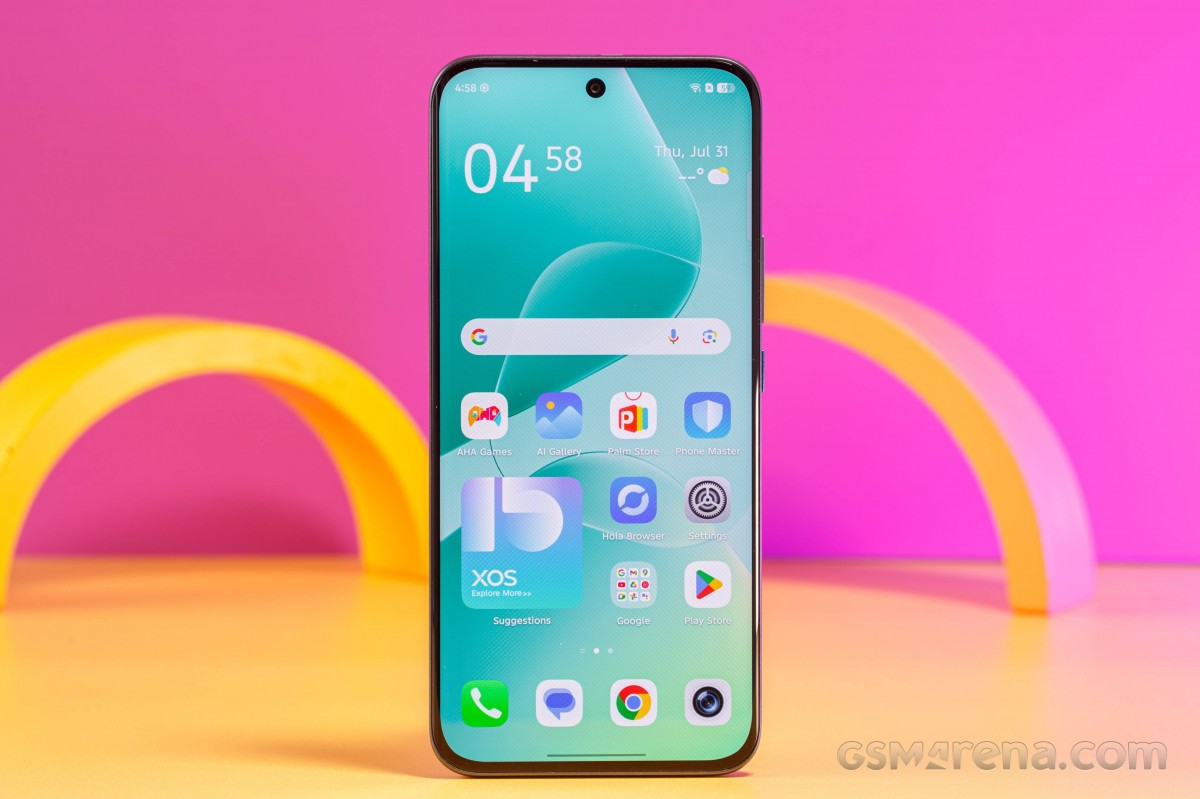
The Hot series has long been Infinix's answer to entry-level smartphone needs, and the Hot 60 Pro+ carries that mission confidently. Priced at $199, it sits comfortably in the lower end of the market, yet its presentation and spec sheet tell a more ambitious story. The phone is impressively thin and lightweight for its class, and the selection of vibrant colorways - some even with a shimmering finish - ensures it won't go unnoticed.
Infinix Hot 60 Pro+ specs at a glance:
- Body: 164.0x75.8x6.0mm, 155g; Glass front (Gorilla Glass 7i), plastic back, plastic frame; IP65 dust tight and water resistant (low pressure water jets), Drop resistant up to 1.5m.
- Display: 6.78" AMOLED, 144Hz, 2304 PWM, 700 nits (typ), 1600 nits (HBM), 4500 nits (peak), 1224x2720px resolution, 20:9 aspect ratio, 440ppi.
- Chipset: Mediatek Helio G200 (6 nm): Octa-core (2x2.2 GHz Cortex-A76 & 6x2.0 GHz Cortex-A55); Mali-G57 MC2 (1.1GHz).
- Memory: 128GB 8GB RAM, 256GB 8GB RAM; UFS 2.2.
- OS/Software: Android 15, XOS 15.1.
- Rear camera: Wide (main): 50 MP, 25mm, 1/1.95", 0.8µm, PDAF; Auxiliary lens.
- Front camera: 13 MP, f/2.0, 22mm (wide).
- Video capture: Rear camera: 1440p@30fps, 1080p@30/60fps; Front camera: 1440p@30fps, 1080p@30/60fps.
- Battery: 5160mAh; 45W wired, 50% in 22 min, 10W reverse wired.
- Connectivity: LTE; Wi-Fi 5; BT 5.4; NFC; FM radio; Infrared port.
- Misc: Fingerprint reader (under display, optical); stereo speakers.
The Hot 60 Pro+ shares much of its hardware DNA with the Tecno Spark 40 Pro+, which is hardly surprising given that both Infinix and Tecno fall under the Transsion Holdings umbrella. This kind of cross-brand overlap is not unusual and often helps deliver solid value at a low price point.
Let's take a closer look at what the Hot 60 Pro+ brings to the table.
Unboxing
The Infinix Hot 60 Pro+ comes in a thick cardboard two-piece box. It is colored in two shades of green and tends to stand out on a shelf. The packaging appears to be entirely made of cardboard, which is eco-friendly. Even so, there is a cradle for the actual phone on the inside, keeping it safe in transit.
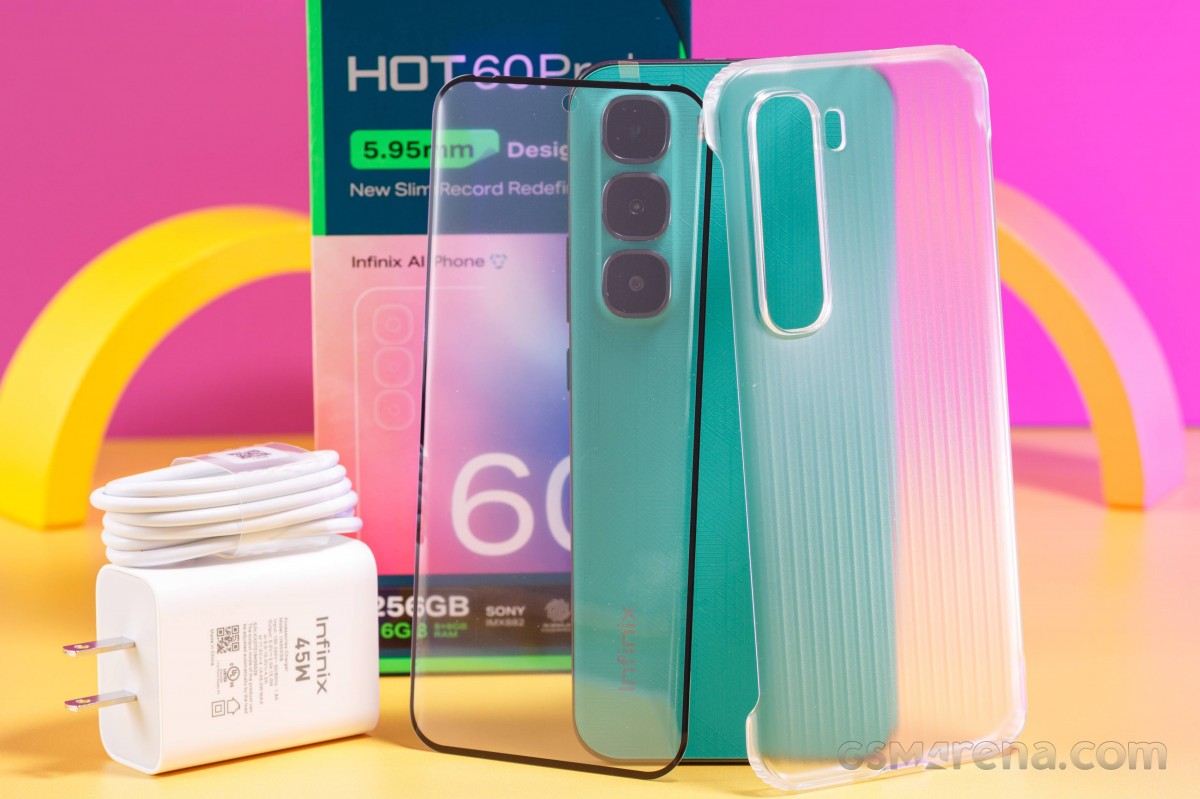
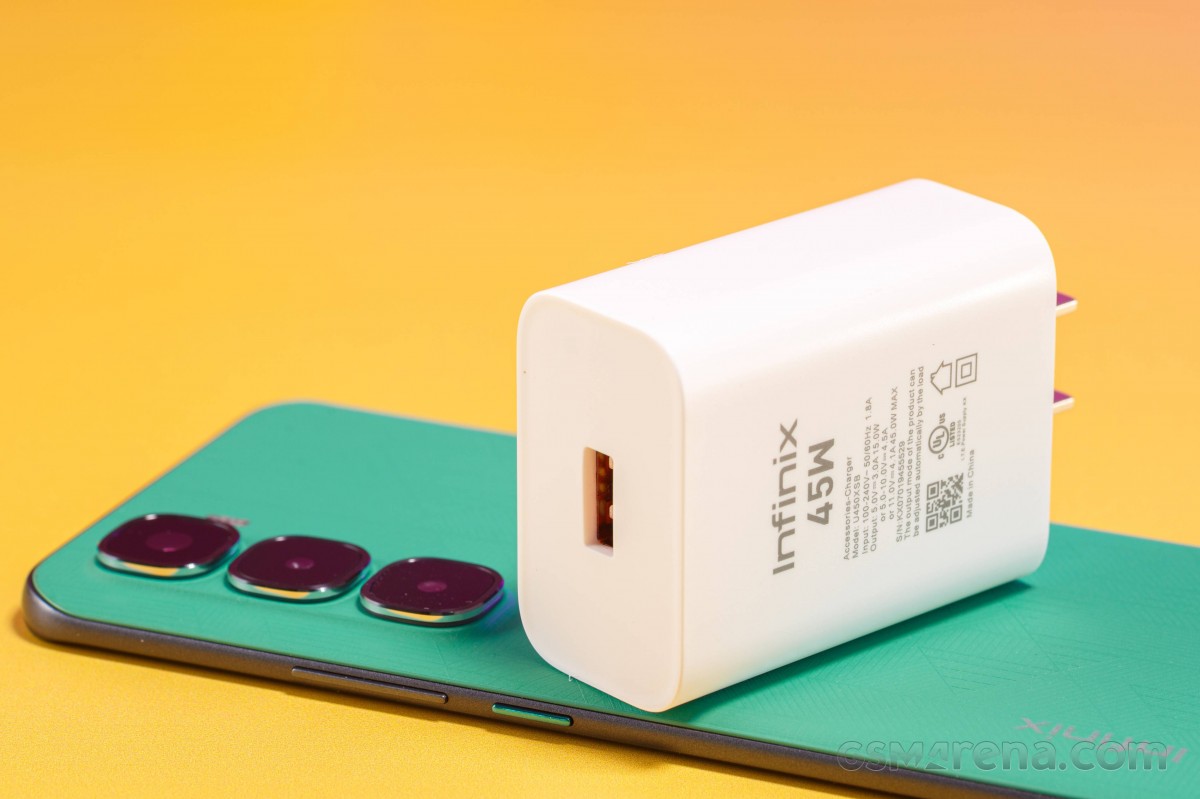
Infinix doesn't skimp when it comes to the accessory package. You get a 45W Infinix-branded USB Type-A fast charger in the box and a nice thick USB Type-A to Type-C cable to go along with it. The cable appears to be standard and not proprietary with extra pins, which is a nice little bonus since you don't necessarily have to worry about keeping it safe.
Beyond that, there is also a transparent hard snap-on shell-style case in the box and a tempered glass screen protector, plus all of the accessories needed to properly install it on the phone.
Design, build quality, handling
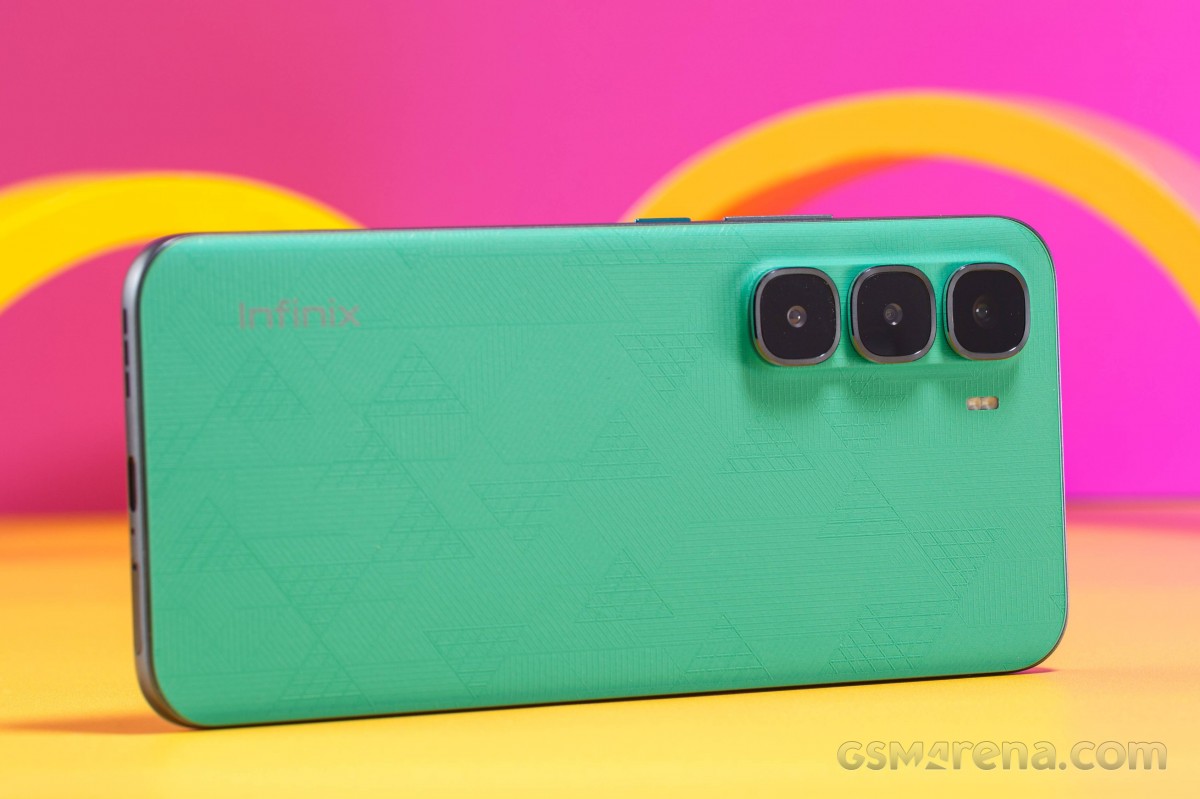
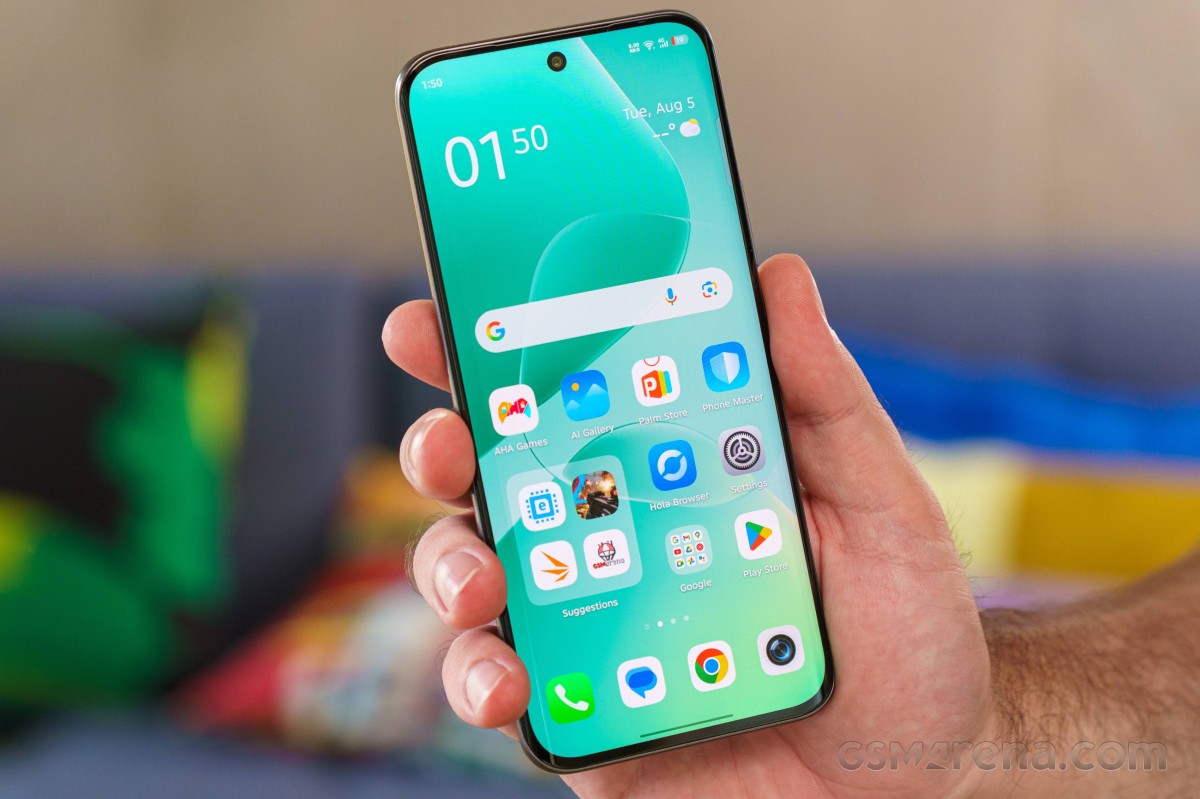
The Infinix Hot 60 Pro+ has a stand-out design. A few years ago, it wouldn't have stood out so much, but phones with a symmetrical curve of both the front and the back are not as common now. Regardless of whether the move to flat screens and flat sides was driven by engineering necessity or consumer preference, we still haven't converted. So in our eyes, the Hot 60 Pro+ looks gorgeous, and everyone can appreciate how the double-sided curve accentuates the razor-thin design.
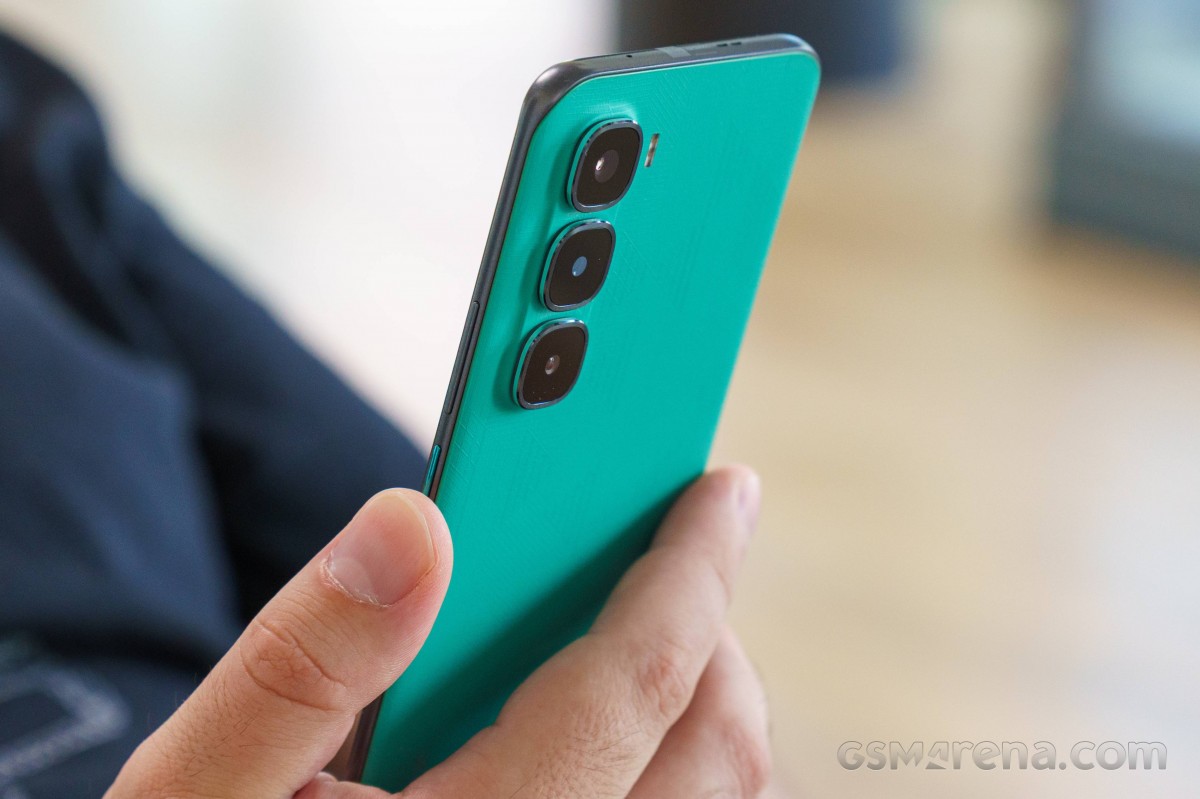
With a profile of merely 6mm, it is hard to overstate just how slender the Hot 60 Pro+ looks and feels in person. The mere 155-gram weight of the device further aids this feeling. Somehow, it is both thinner and lighter still than the already very impressive Tecno Spark 40 Pro+, which we recently reviewed. As mentioned, the two phones share a lot of specs, but not really in terms of the exterior.
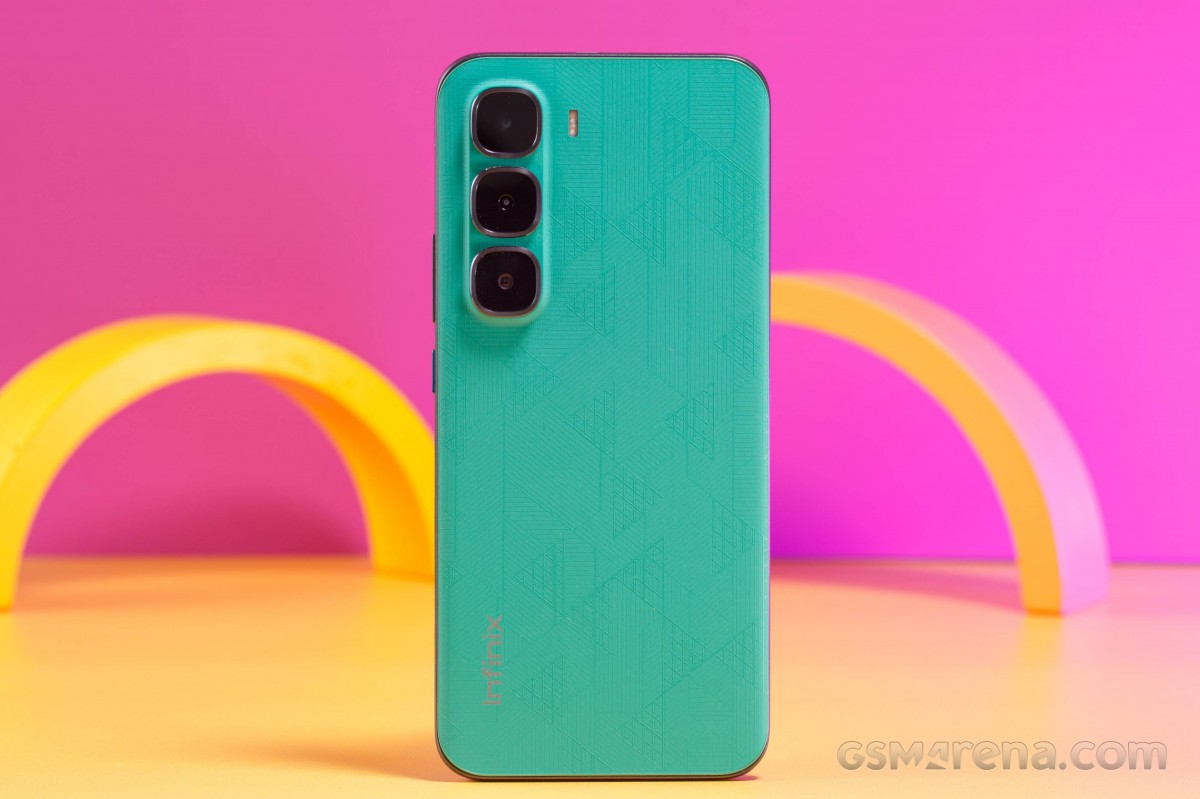
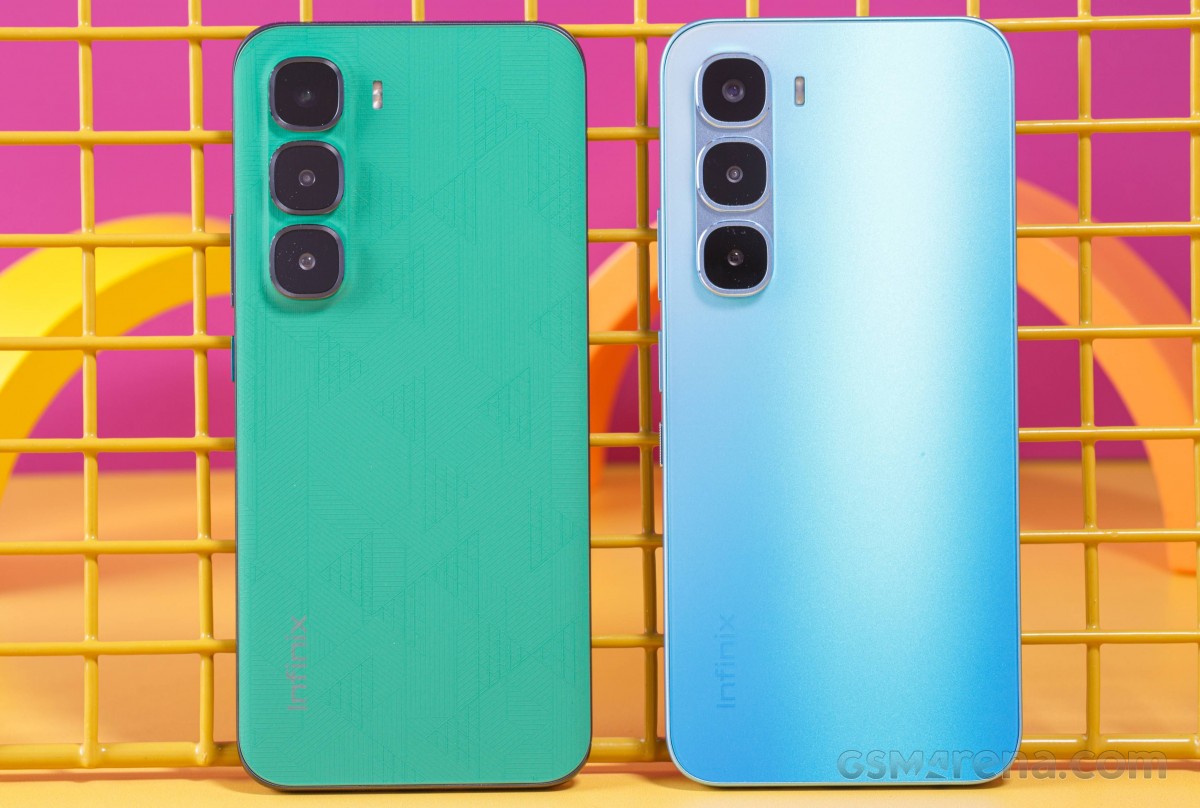
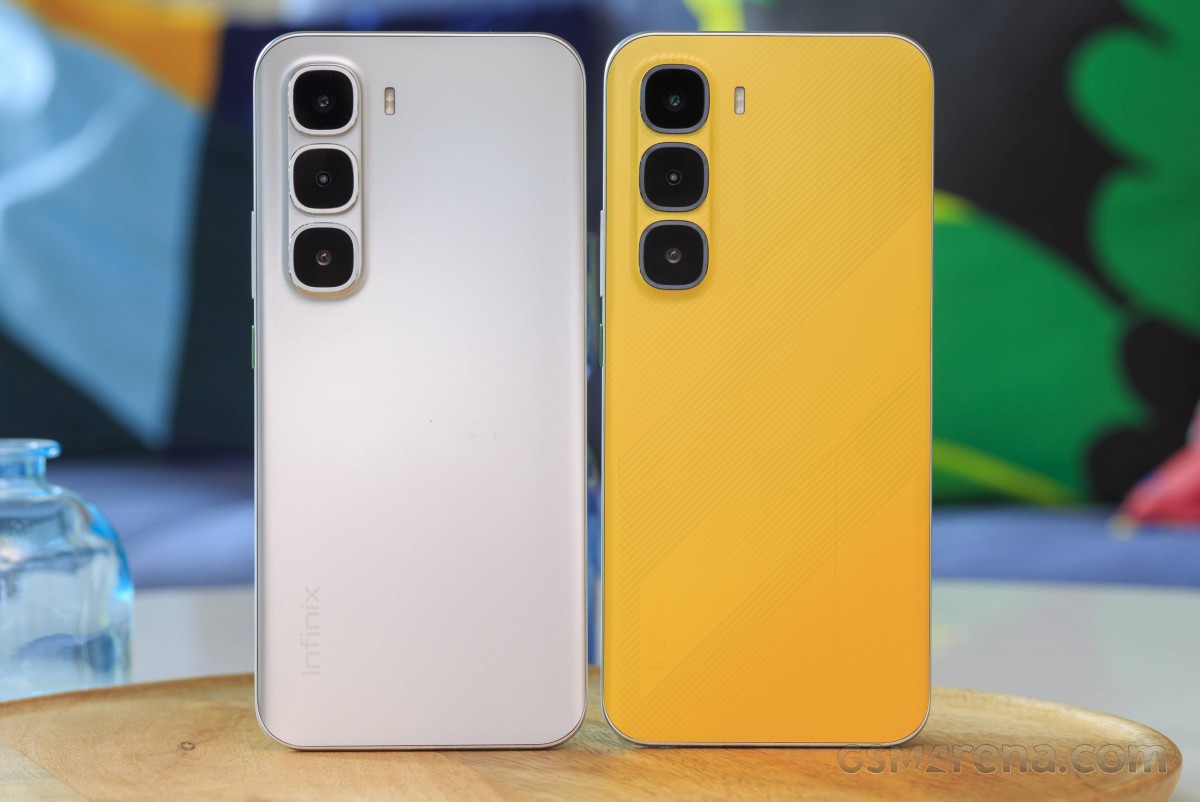
Where the Spark 40 Pro+ is mostly subdued and understated in its color choices, the Infinix Hot 60 Pro+ is anything but. It is very bold in its looks. You can probably tell simply by reading through the quite extensive, we might add, list of color options: Sleek Black, Titanium Silver, Coral Tides, Misty Violet, Sonic Yellow and Moco Cyber Green.
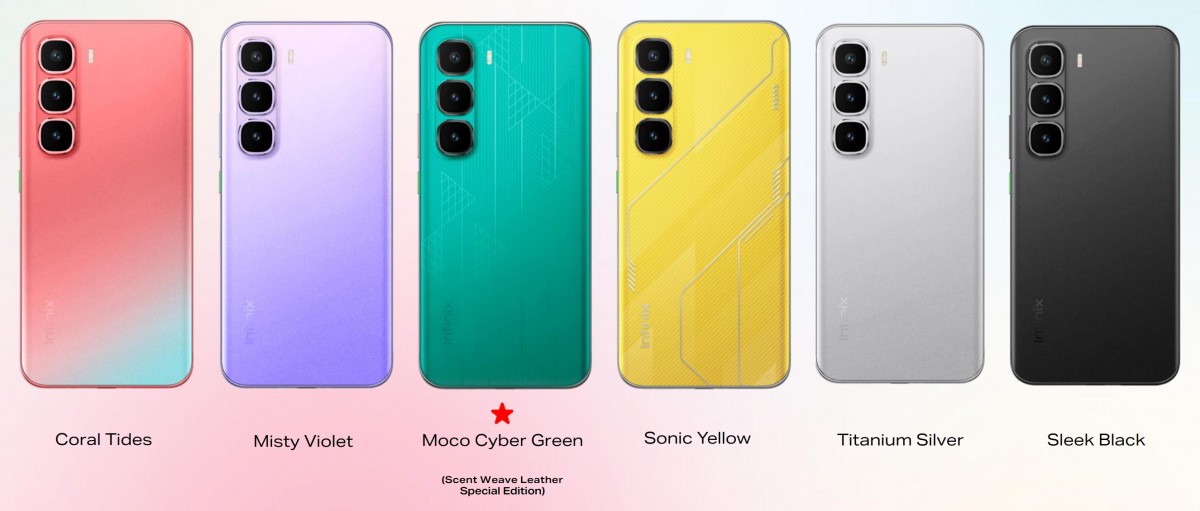
Titanium Silver and Sleek Black are definitely the tamest of the bunch. They feature a solid color, monotone finish with a silky smooth texture. However, we haven't seen these two in person. The Coral Tides and Misty Violet options both have a playful gradient in their color.
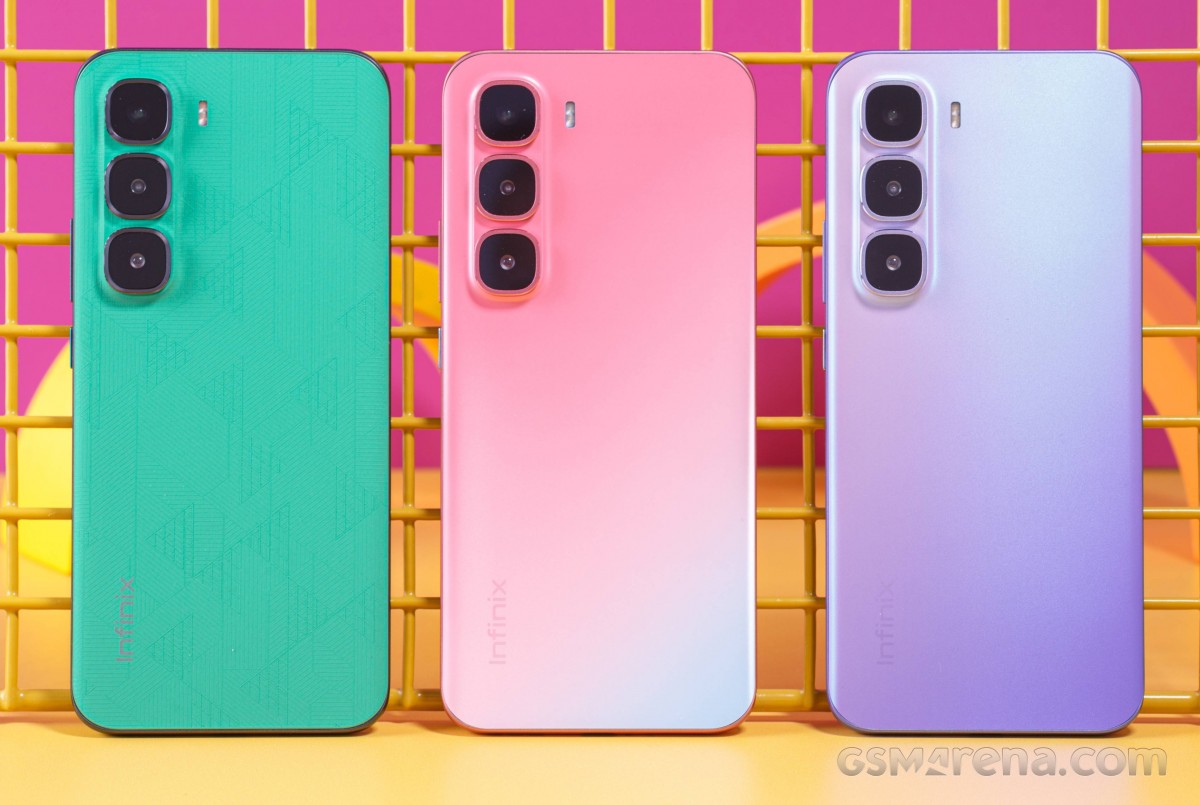
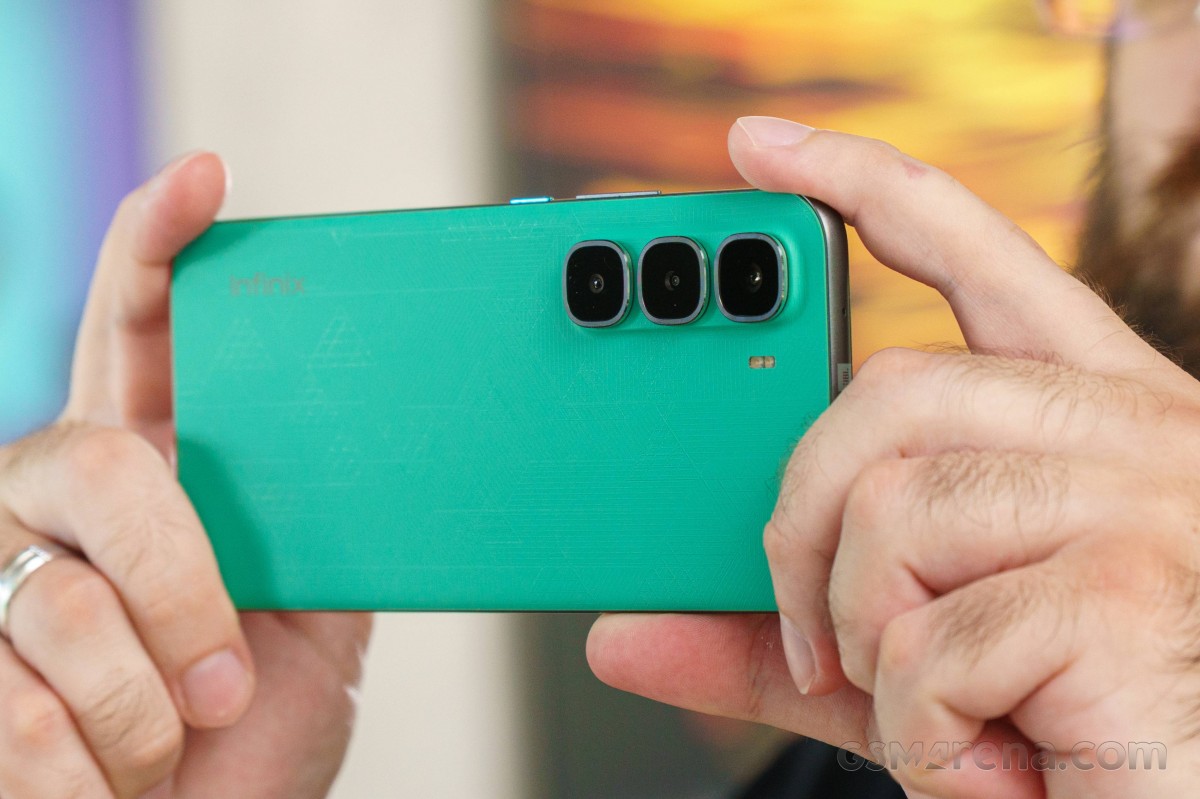
Then there are Sonic Yellow and Moco Cyber Green. Both of these have a subtle embossed pattern on the back. You can feel it with a finger, and it is done against a very interesting rubbery kind of soft base surface. The Sonic Yellow is allegedly made of some sort of eco leather. It's unlike anything we've seen lately, to be honest and looks quite extravagant. We do have to worry about dirt accumulation in the grooves, though, if you intend to use the phone without a case.
It is worth mentioning that the middle frame is color-matched with the back, which is a nice touch. The effect is the most obvious on the Coral Tides and Misty Violet options. The Sleek Black and Titanium Silver gets a silver or black middle frame. Sonic Yellow gets silver, Moco Cyber Green gets black.
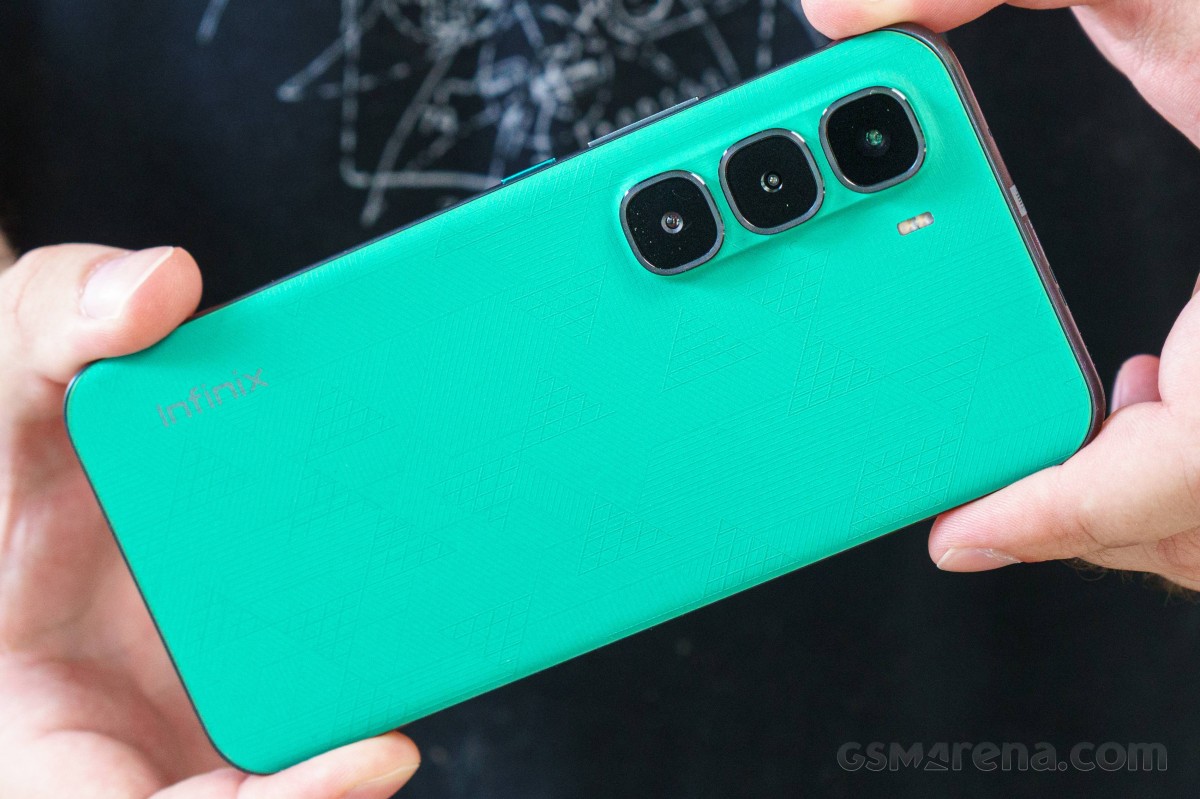
This is a good place to talk about materials. Infinix says on its website that the middle frame is made of aerospace-grade aluminium - the same kind of high-strength alloy found on modern flagships. The official specs page elaborates further that the material used offers a 37.5% increase in yield strength, 18.3% increase in tensile strength and a 1.5m drop resistance.
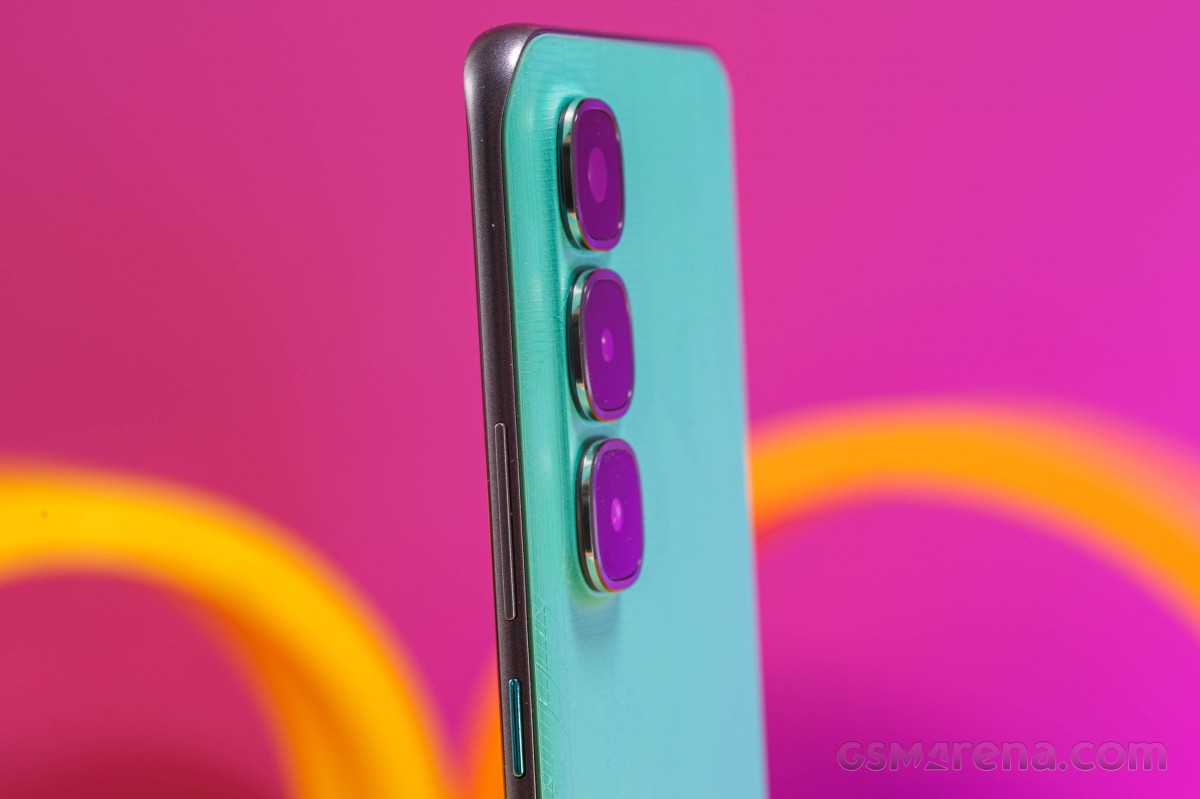
Honestly, these claims about the frame being aluminum have us kind of confused. On the one hand, we definitely believe the official specs and the material looks and feels convincingly metal in person. On the other hand, there are no antenna lines anywhere on it. Perhaps, the phone is thin enough not to require the lines. We just can can't say for sure.
Moving on to the rest of the bill of materials, the back side is made of 0.36mm glass-fiber composite. Infinix says that it offers 4x impact resistance. We aren't sure what they are comparing to, but it sounds reassuring.
The front is covered with Corning Gorilla Glass 7i, which is pretty good, especially on such a budget device. In fact, the entire build quality and list of materials are impressive for such an affordable phone. Despite its thinness, there is practically no flex to the chassis and no hollowness either.
The phone has an IP65 ingress protection rating, which means that it is dust-tight and should be able to survive low-pressure water jets. Pretty great for a budget device.
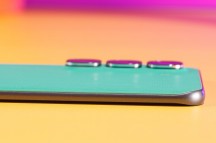
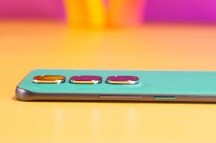
There is nothing particularly interesting about the controls on the Infinix Hot 60 Pro+ and their layout. Well, perhaps other than the fact that the design is masquerading as having a triple rear camera setup. In reality, there is only one "actual" camera here - the 50MP shooter, which is the top of the three. The middle module, right below it, is some sort of auxiliary/supplementary sensor, probably a depth one and not an actual camera. And the third most-bottom module is actually an IR blaster.
Speaking of this final bottom module, it is worth noting that it features "Active Halo Lighting". It is a subtle, while LED light that emits from underneath the module and its sides. It supports six intelligent lighting effects for different scenarios.

Infinix Hot 60 Pro+
Beyond that, you get the standard splattering of buttons - volume rocker and power button on the right side and nothing on the left side. In terms of speakers, you get one on the bottom and another grill on the top for the amplified earpiece to fire upwards. This is great for sound balance. There are two microphones as well - the main one on the bottom and the secondary noise-cancelling one on top. Finally, the Type-C port and dual SIM tray are on the rather busy bottom side. No 3.5mm audio jack.
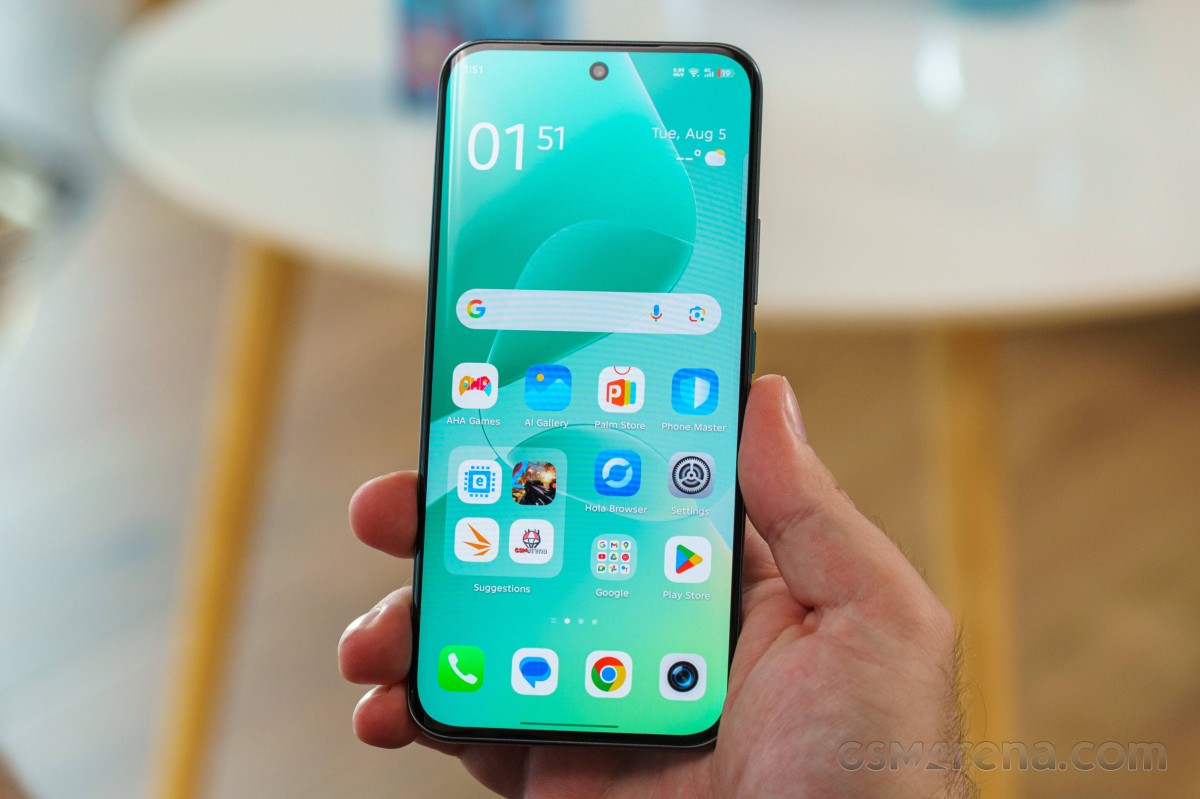
The phone's front side is pretty clean. The display bezels are on the bigger side, but nothing too outrageous.
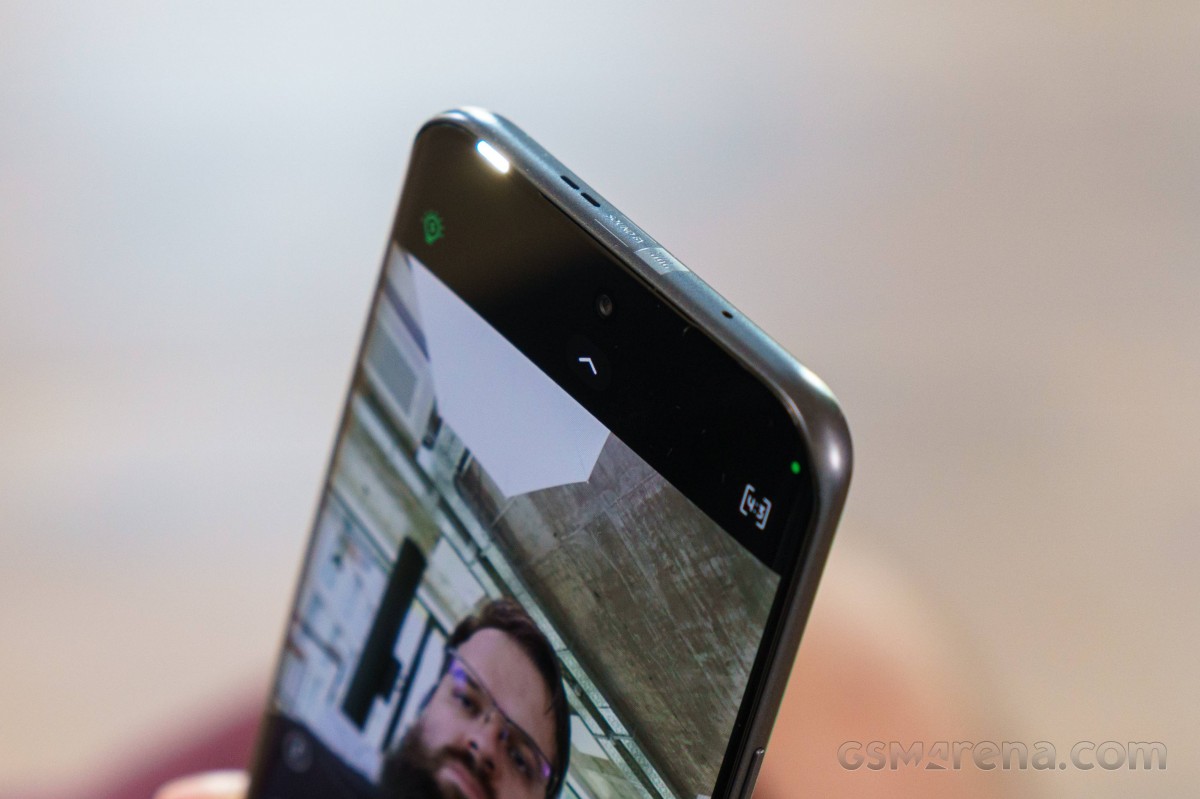
There is enough space to hide away the light and proximity sensors above the display and even fit a dual LED selfie flash. The selfie punch hole is also a bit on the bigger end, but again, perfectly reasonable.
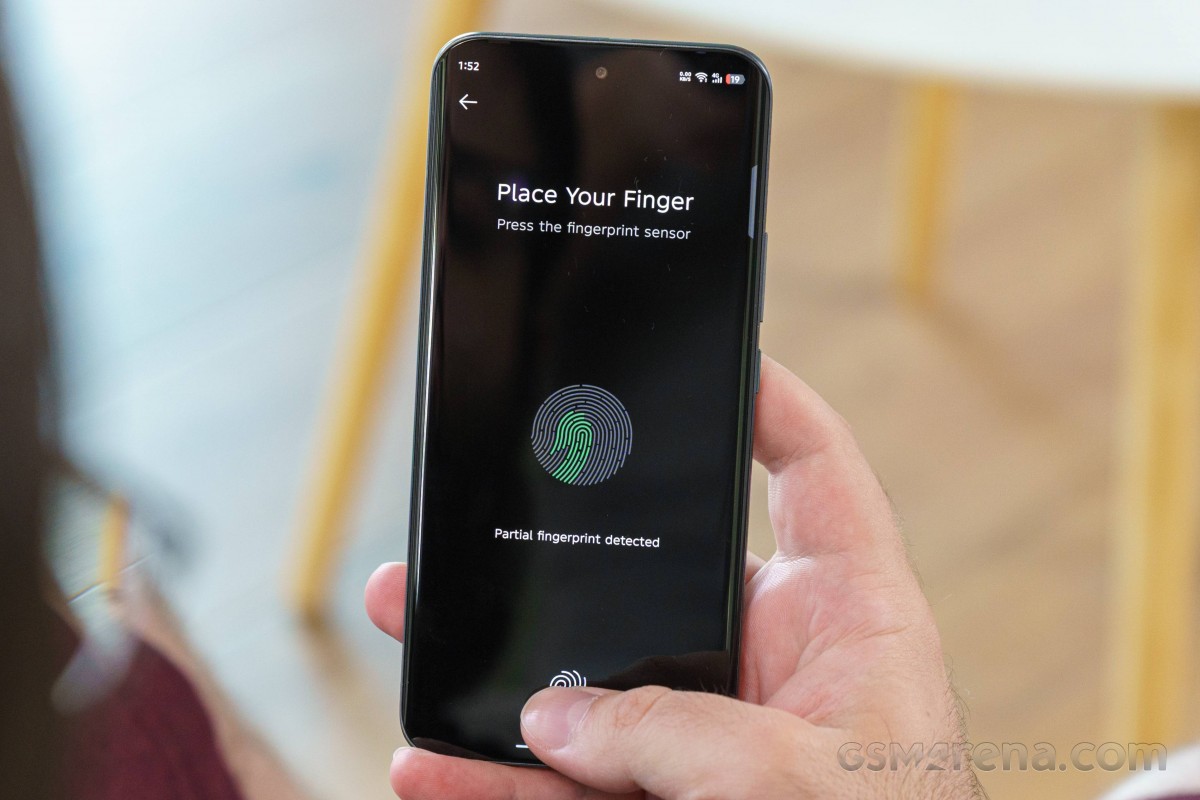
Despite its modest price tag, the Infinix Hot 60 Pro+ has an under-display fingerprint reader. It is of the optical variety. It sits a bit low vertically, but we still found it comfortable enough to use. It is speedy and accurate, so no complaints there.
Display
The 6.78-inch display is a real highlight on the Hot 60 Pro+. Making advanced display technology more accessible is a trend we fully support, and Infinix appears to be pushing those boundaries even further with the Hot 60 Pro+.
The phone boasts a large 6.78-inch AMOLED display with a 144Hz refresh rate, and a crisp 1224 x 2720 pixel resolution, which translates to an impressive pixel density of around 440 ppi.
That said, there's a noteworthy limitation: the Helio G200 chipset officially supports a maximum output of 1080p at 120Hz. This means Infinix's claimed resolution and refresh rate can't be achieved natively. Sure enough, further inspection reveals that the UI renders at 1080 x 2400 pixels. According to Infinix's somewhat vague website, an internal upscaling chip is responsible for boosting the output to the stated 1224 x 2720 resolution.
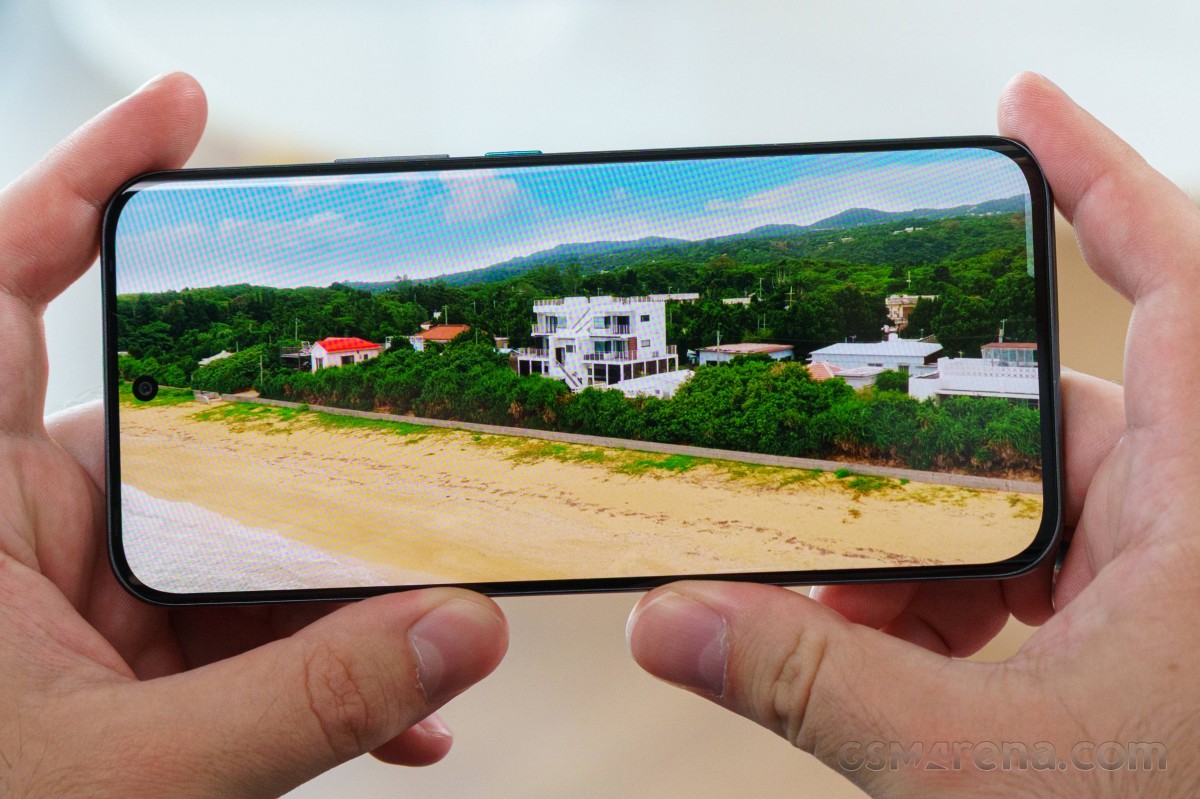
We performed our standardized brightness testing, and sure enough, the Hot 60 Pro+ is a chart-topper within its price range. It even manages to slightly outpace the Tecno Spark 40 Pro+, even though by all accounts the two phones seem to use the exact same panel.
Max display brightness test
White test pattern, 75% fill (nits)
The Hot 60 Pro+ offers four selectable refresh rate tiers: 60Hz, 90Hz, 120Hz, and 144Hz. As for refresh rate settings, you get three options: Auto-Switch, Standard, and High. The Standard mode simply locks the display at 60Hz. Both Auto-Switch and High modes feature dynamic switching, with the refresh rate adjusting primarily based on user interaction.
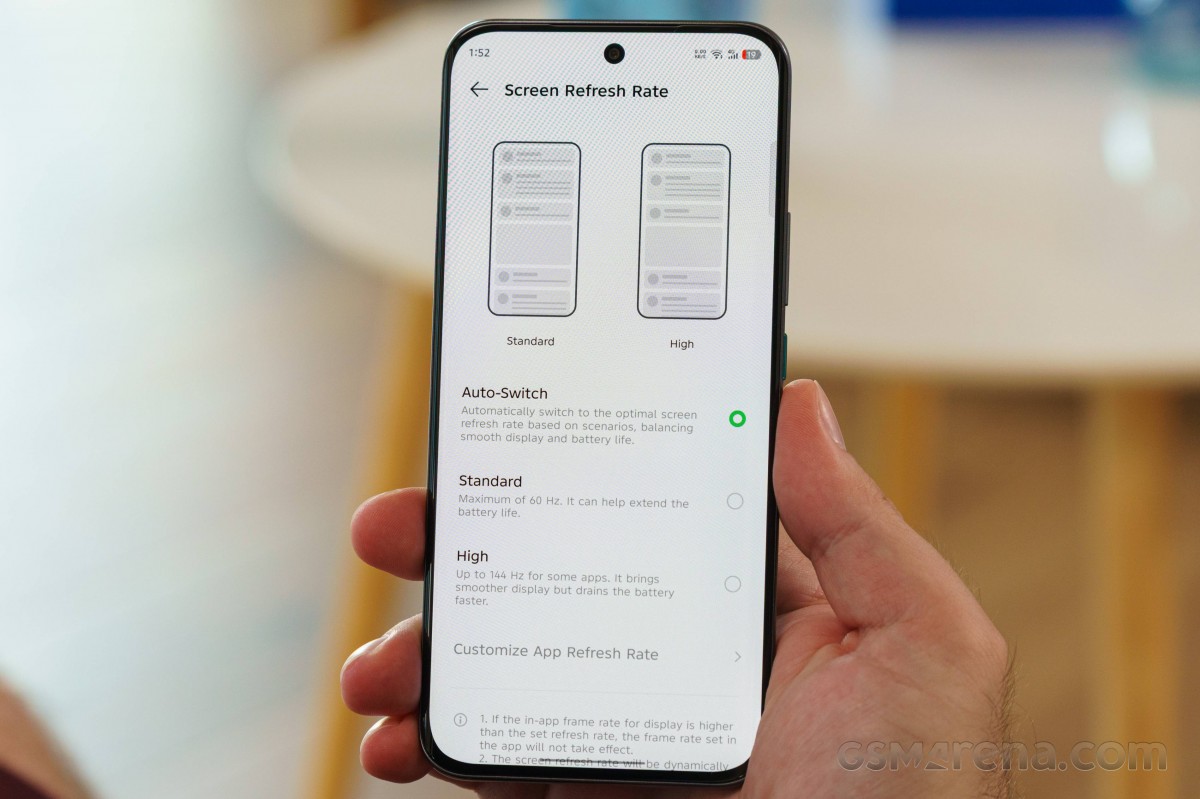
The key distinction is that Auto-Switch mode toggles between 60Hz and 90Hz, while High mode is more flexible, reaching up to 120Hz and occasionally dropping to 90Hz when needed.
High mode also includes a handy per-app refresh rate configuration tool - a genuinely useful feature. That said, it only allows you to choose between 60Hz, 90Hz, and 120Hz for individual apps and games.
As for the advertised 144Hz support, its scope is very limited. Once you select High refresh rate mode, you can enable 144Hz in the per-app settings menu, but only for some "supported" apps. On our phone, these include the Settings app, the Messages app, and the Phone app. We really don't see why we would want to have 144Hz in any of these particular apps. Still, the per-app setting reliably delivered 120Hz gameplay, which we consider a strong positive.
On the downside, the Hot 60 Pro+ lacks HDR video capabilities. However, it does come with Google's highest Widevine L1 DRM certification, enabling FullHD streaming from services like Netflix.
Battery life
The Infinix Hot 60 Pro+ has a fairly large 5,160 mAh battery, which is essentially identical to that of the Tecno Spark 40 Pro+. Seeing how the two have practically identical displays and chipsets, as well as OS, it isn't surprising that their battery endurance is similar as well.
With an Active Use Score of just over 11 hours, the Infinix Hot 60 Pro+ has fairly decent battery life, but far from impressive. It should get you through a full day of use, but don't expect much more.
Charging speed
The Infinix Hot 60 Pro+ supports 45W fast charging. It is a proprietary charging standard. Thankfully, the phone comes with the charger right in the box. The phone has a 5160 mAh battery. On both fronts, the Hot 60 Pro+ seems very similar to the Tecno Spark 40 Pro+ we recently reviewed, and hence, we expect similar charging performance. Well, that is not exactly the case. The Hot 60 Pro+ is a slightly slower-charging device. The charging rate is still decent enough, though, especially for a budget phone.
Unlike the Tecno Spark 40 Pro+, the Infinix Hot 60 Pro+ lacks wireless charging. That's probably one way the manufacturer keeps costs down. On the plus side, there is 10W reverse wired charging support.
The Hot 60 Pro+ even supports Bypass charging, so you can avoid heating up from the charging process during, say, prolonged gaming or multimedia sessions while the phone sits plugged in.
Tecno also offers Charging Protection. You can set a custom upper charging limit yourself or use the AI option, which promises to monitor your usage patterns and charge the phone to 100% only when you need it and otherwise keep it charged to 80%.
Speakers - loudness and quality
The Infinix Hot 60 Pro+ has a stereo speaker setup. It is of the hybrid variety with an amplified earpiece acting as the second channel. As already mentioned, there is a speaker hole on the top bezel, which greatly helps with output balance, symmetry and stereo separation.
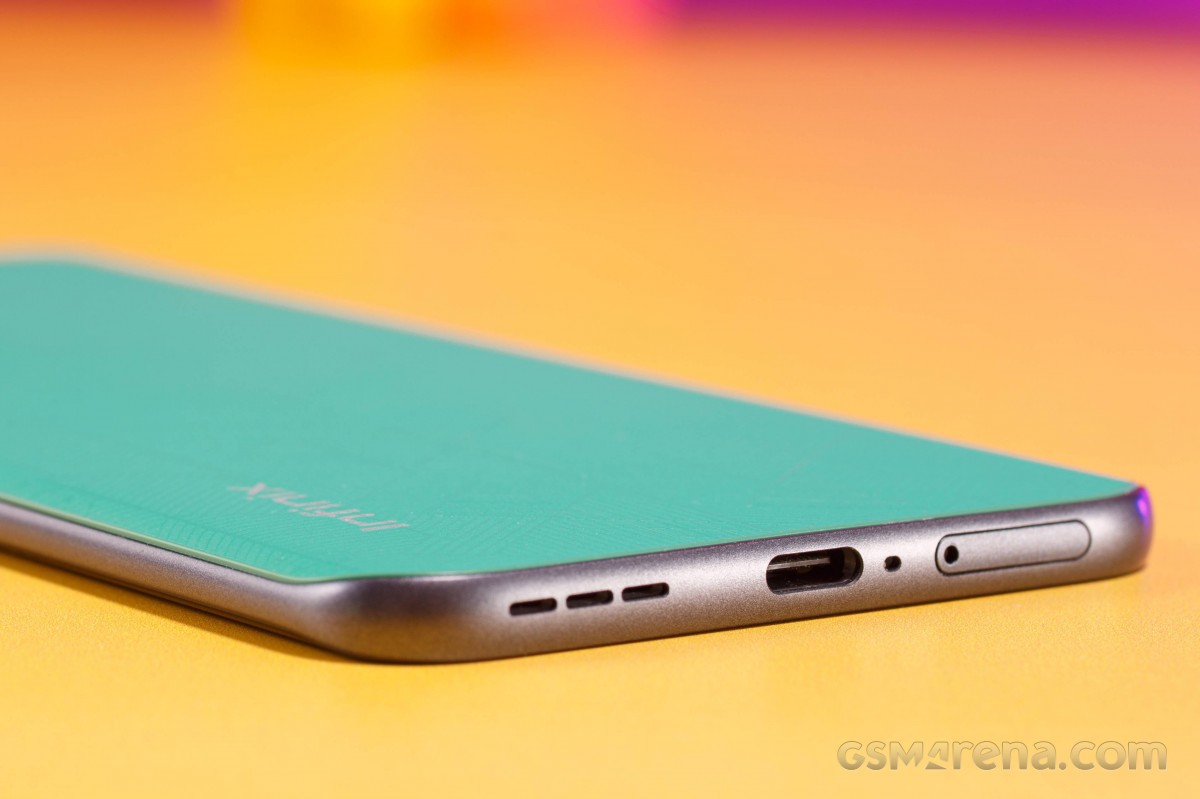
Interestingly enough, even though the Infinix Hot 60 Pro+ is even thinner than the Tecno Spark 40 Pro+, it is somehow notably louder, earning itself a Very Good rating in our standardized test.
The quality isn't particularly impressive. Voices come through clear enough, though a bit muffled. There is a clear lack of definition, and the sound stage is narrow. Bass is practically non-existent.
The phone has DTS support, including an equalizer with presets and manual controls.
Use the Playback controls to listen to the phone sample recordings (best use headphones). We measure the average loudness of the speakers in LUFS. A lower absolute value means a louder sound. A look at the frequency response chart will tell you how far off the ideal "0db" flat line is the reproduction of the bass, treble, and mid frequencies. You can add more phones to compare how they differ. The scores and ratings are not comparable with our older loudspeaker test. Learn more about how we test here.
Connectivity
The Infinix Hot 60 Pro+ is a 4G-only device, offering simultaneous LTE connectivity on both of its Nano-SIM slots. Unfortunately, it doesn't support eSIM functionality.
As expected, GPS is available for location services. For local connectivity, the phone includes dual-band Wi-Fi ac and Bluetooth 5.4 with Low Energy support. Additional features include an NFC module for data transfer only and not payments (availability may vary by region), an IR blaster, and an FM radio receiver. However, there's no 3.5mm headphone jack or microSD card slot.
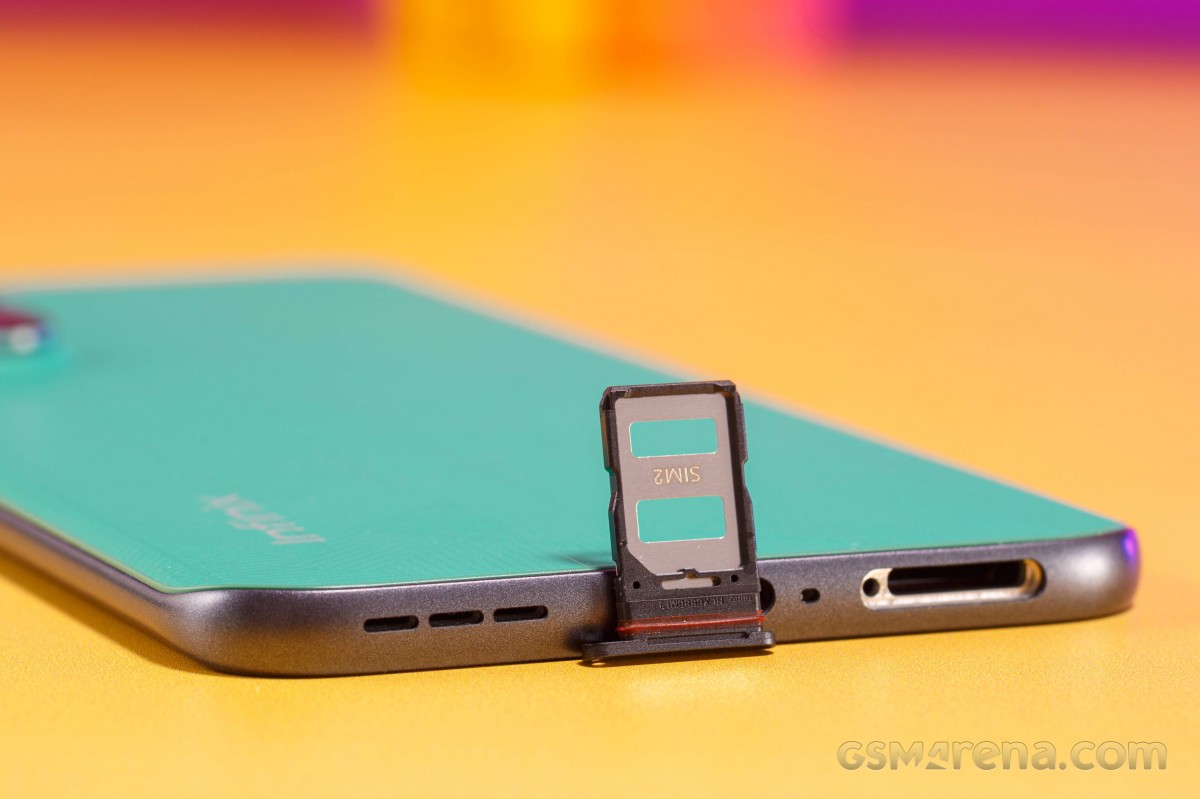
The Type-C port is backed up by a simple USB 2.0 data connection, offering a theoretical maximum data transfer speed of 480 Mbps. It does support OTG/Host functionality, but lacks advanced features such as video output via Alt Mode.
Despite its budget-friendly price, the Hot 60 Pro+ comes equipped with a solid array of sensors. These include an ST LSM6DSO accelerometer and gyroscope combo, a QST QMC6308 magnetometer and compass, and an EMINENT MN79911 module that handles both ambient light and proximity sensing. Impressively, the phone uses a real hardware proximity sensor rather than a virtual one - a rare find in this price range. However, there's no barometer on board.
XOS 15 on top of Android 15
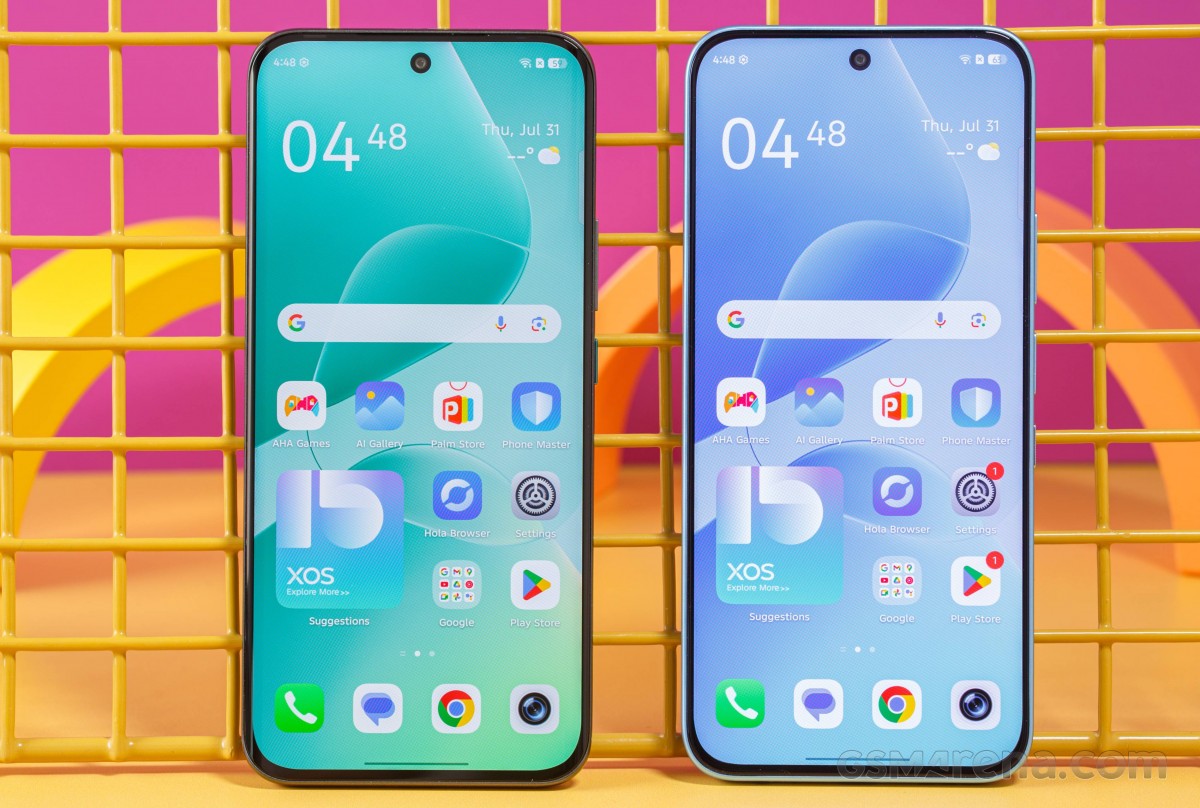
The Infinix Hot 60 Pro+ runs a highly customized XOS skin on top of Android 15. In our particular case, the review unit is running XOS 15.1.1.
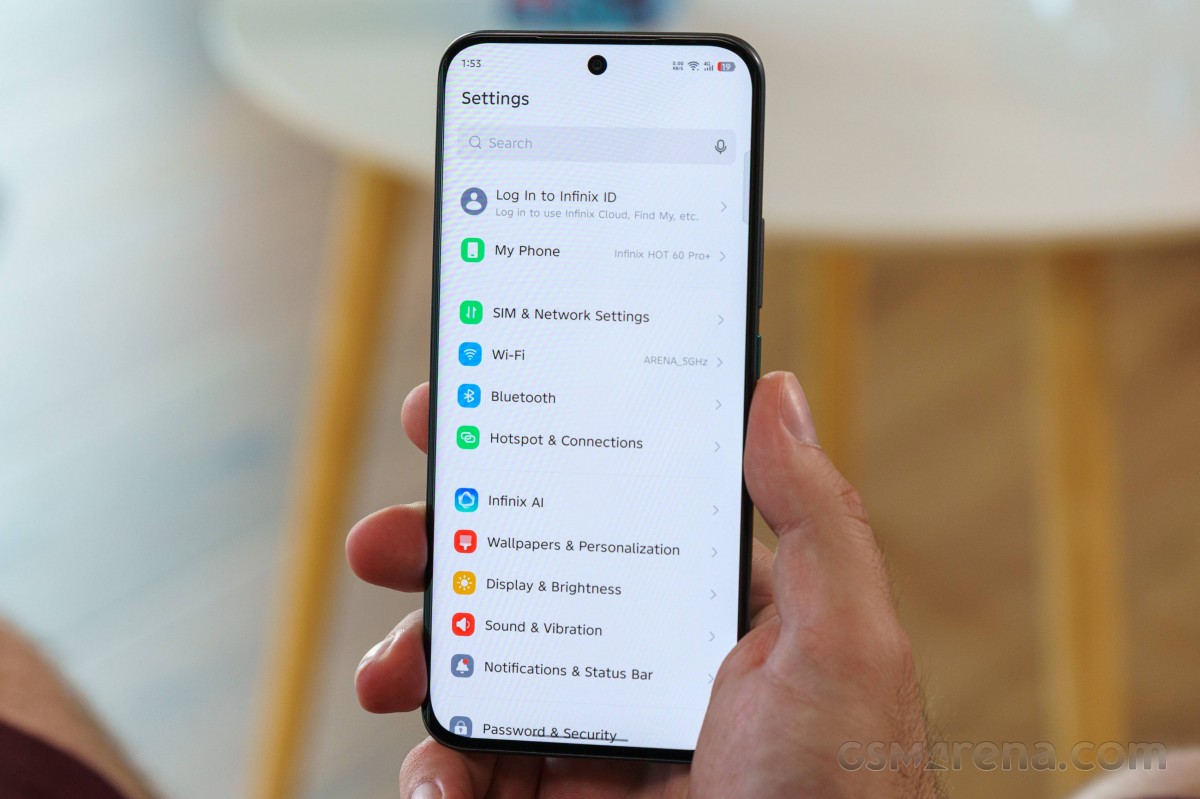
As you will see, XOS and HiOS, which we recently checked out on the Tecno Spark 40 Pro+, are very similar and basically the same skin with different names. However, in an interesting twist, software support on the Infinix Hot 60 Pro+ is far, far superior to the essentially absent one on the Tecno. Infinix promises up to three major OS updates for the Hot 60 Pro+ and five years of security patches. That's not bad at all for a budget device.
The Android OS, even with the Infinix skin, is pretty straightforward.
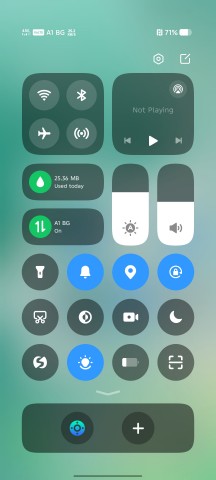
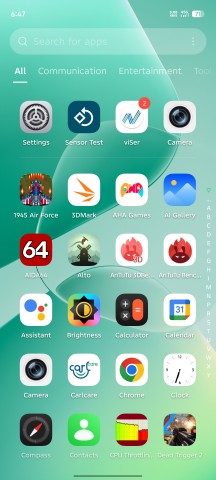
XOS 15
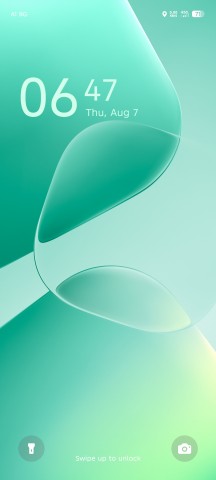
There is an always-on screen, which is everything but always-on (it lights up for 15s). It supports landscape mode when charging to act as a night clock.
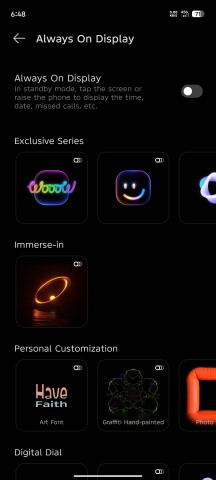
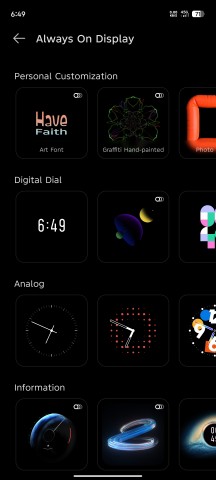
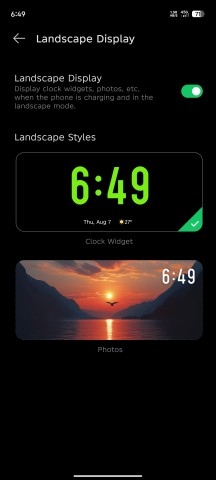
The not-so-AOD
The lockscreen has a couple of shortcuts on the bottom - one for the camera, and the other for the flashlight.
Multitasking features include split-screen and pop-up window modes for supported apps - nothing out of the ordinary.
There are some pre-installed apps and utilities, but overall, it's a clean enough package. Still, there is plenty of what might be considered bloat here, like Aha Games and Palm Store, which are two separate third-party app stores, XClub, Visha Player and XTheme. There is also the Hola Browser.
By default, the Hot 60 Pro+ uses Gemini as its AI assistant. It is your standard text-based assistant, and it does not offer any interactivity with the on-screen content, which is unfortunate.


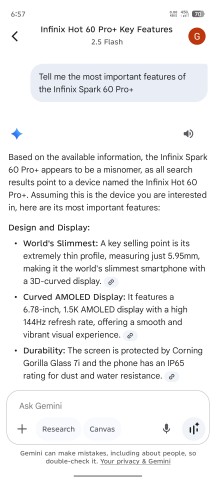
Gemini AI assistant
Luckily, you can switch to Infinix's own Folax voice assistant, which is based on the DeepSeek R1 model.


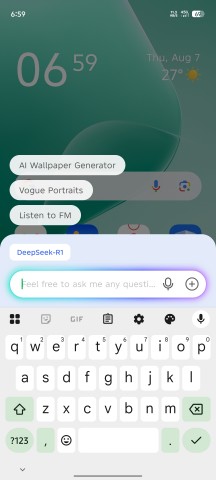
Folax AI assistant
Holding the Quick button summons Infinix's Folax voice assistant, and it's chock-full of useful features and offers voice wake-up and voice responses. It can also interact with on-screen content. Most of the data for the AI model requires an internet connection to fetch; however, commands for phone settings and tasks can also work offline.


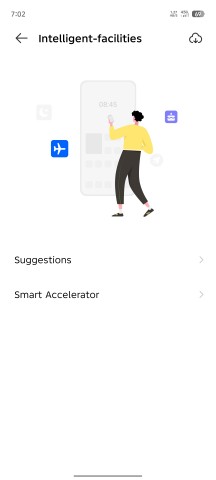
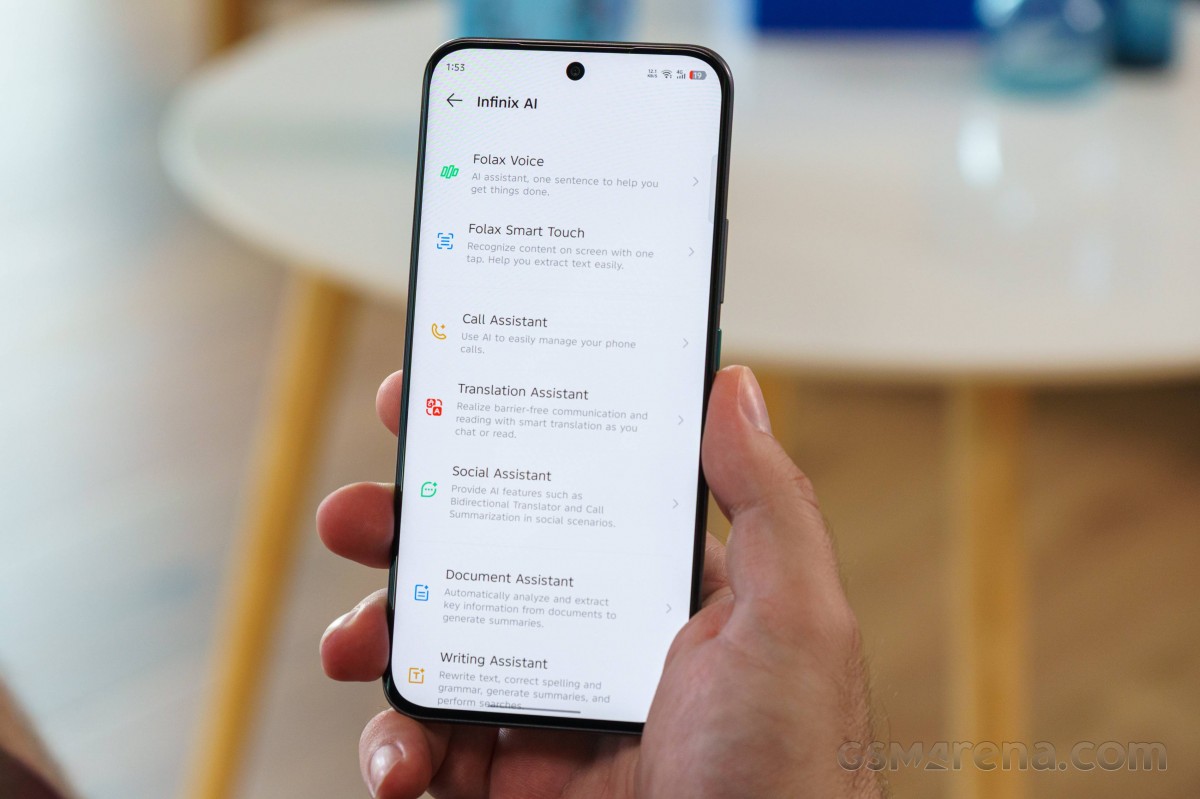
Infinix AI menus
infinix's AI functions include real-time translations, document and writing assistance, sketch conversion to pictures in notes, wallpaper generation, picture editing (expand, remove objects), and more.
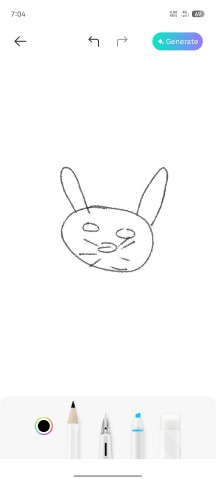





Image AI
Google's Circle to Search is also included out of the box.
Benchmarks and performance
The Spark 40 Pro+ runs on the pretty new MediaTek Helio G200 mobile platform. It is a 6nm chip from 2025, which, despite its big jump in name, is quite similar to the popular Helio G100.
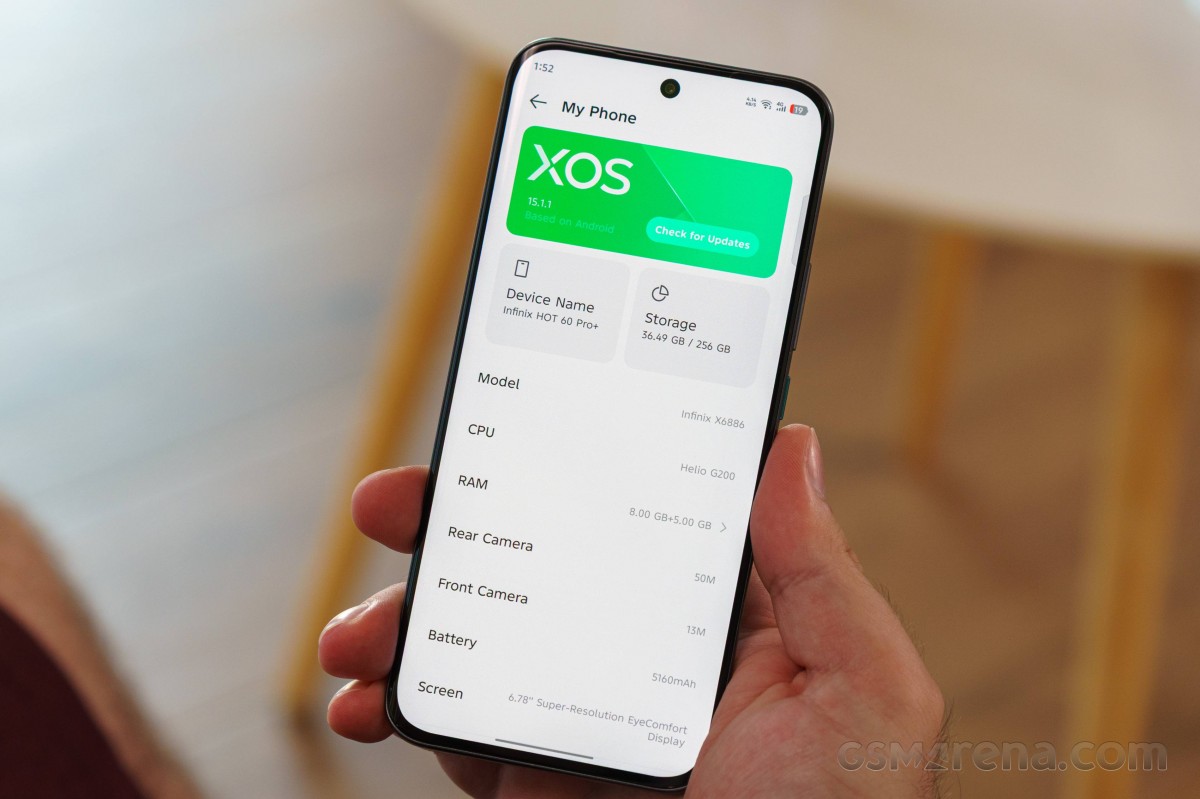
This resemblance is particularly evident in the CPU setup, where the Helio G200 features the same configuration as the G100: two ARM Cortex-A76 performance cores clocked up to 2.2 GHz and six Cortex-A55 efficiency cores running at up to 2.0 GHz. The GPU is a Mali-G57 MC2, operating at a slightly higher 1.1 GHz compared to the G100's 1.0 GHz.
On the memory front, the Hot 60 Pro+ comes with 8GB of dual-channel LPDDR4X RAM and either 128GB or 256GB of internal storage, which is not expandable. The storage chips are UFS 2.2. Our unit is the 256GB version.
When it comes to benchmarks, the Hot 60 Pro+ doesn't aim for raw power - though that's expected in this price bracket, where few devices offer significant performance leaps. CPU performance from the Helio G200 is on par with the well-established G100 and G99, while GPU performance is slightly improved. We were pleased to see the device score well on AnTuTu, suggesting a generally fluid user experience. It's also worth noting that the GPU is effectively driving a 1080x2400 resolution, which helps reduce workload and improve responsiveness.
In real-world use, we experienced occasional slowdowns, but nothing disruptive. Day-to-day performance and UI navigation remained mostly smooth and responsive.
Thermal-throttling
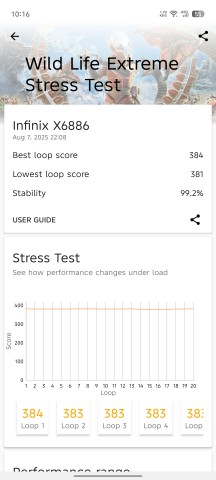
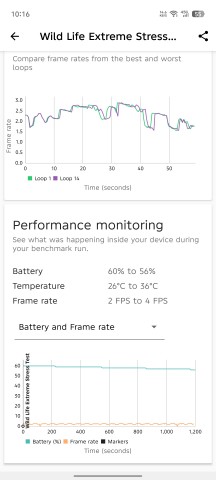
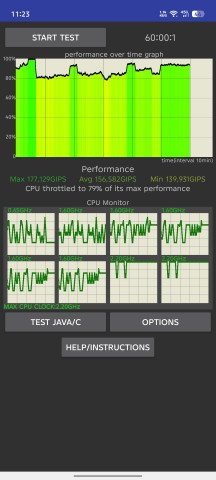
The Helio G200 chipset does not put out a lot of heat, and the Infinix Hot 60 Pro+ seems to keep it well at bay.
Thermal-throttling
The phone holds up well under extended stress testing, managing to retain a significant portion of its performance with impressive stability. Even during heavy workloads, the device's surface remains cool - at most, it feels mildly warm but always comfortable to the touch.
A single 50MP rear camera
Infinix clearly wanted the Hot 60 Pro+ to look like it has a triple rear camera setup. In reality, the phone has just a single proper rear camera - a 50MP unit. There is an additional auxiliary sensor of some kind, but it can't be considered a full-fledged camera in any way. It's most likely a depth sensor - in our experience, it served no purpose. The third bottom-most module, as mentioned, is the IR blaster.
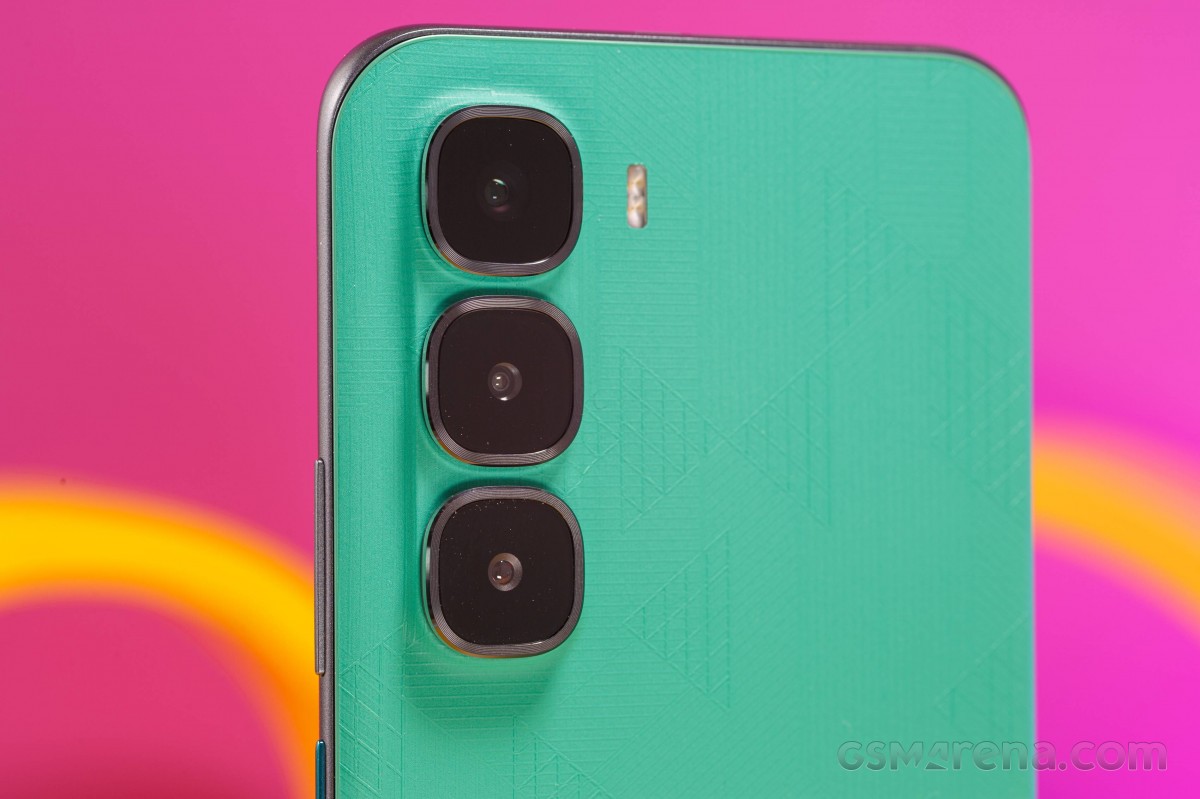
The main camera on the Hot 60 Pro+ is based on the 50MP Sony IMX882. It is a large 1/1.95" sensor with 0.8µm individual pixels and four-way pixel binning. It sits behind a 26mm lens with an f/1.8 aperture. Compared to the previous generation Sony JN1 sensor, the IMX882 has a 56.25% larger sensor area and 65.56% increased light intake. There is phase detection autofocus (PDAF), but unfortunately, no OIS.
On the selfie side, the Hot 60 Pro+ has a 13MP camera. It is based on the GalaxyCore GC13A0 sensor. It is a 1/3.1" sensor with 1.12µm pixels. The camera has fixed focus and an f/2.2 aperture. One interesting curiosity is the addition of two front-facing LEDs meant to help with lighting up selfie subjects in low light.
- Wide (main): 50 MP Sony IMX882, f/1.8, 1/1.95", 0.8µm, PDAF, 1440p@30fps
- Front camera: 13 MP GalaxyCore GC13A0, f/2.2, 1/3.1", 1.12µm; 1080p@30fps; Dual LED front-facing selfie flash
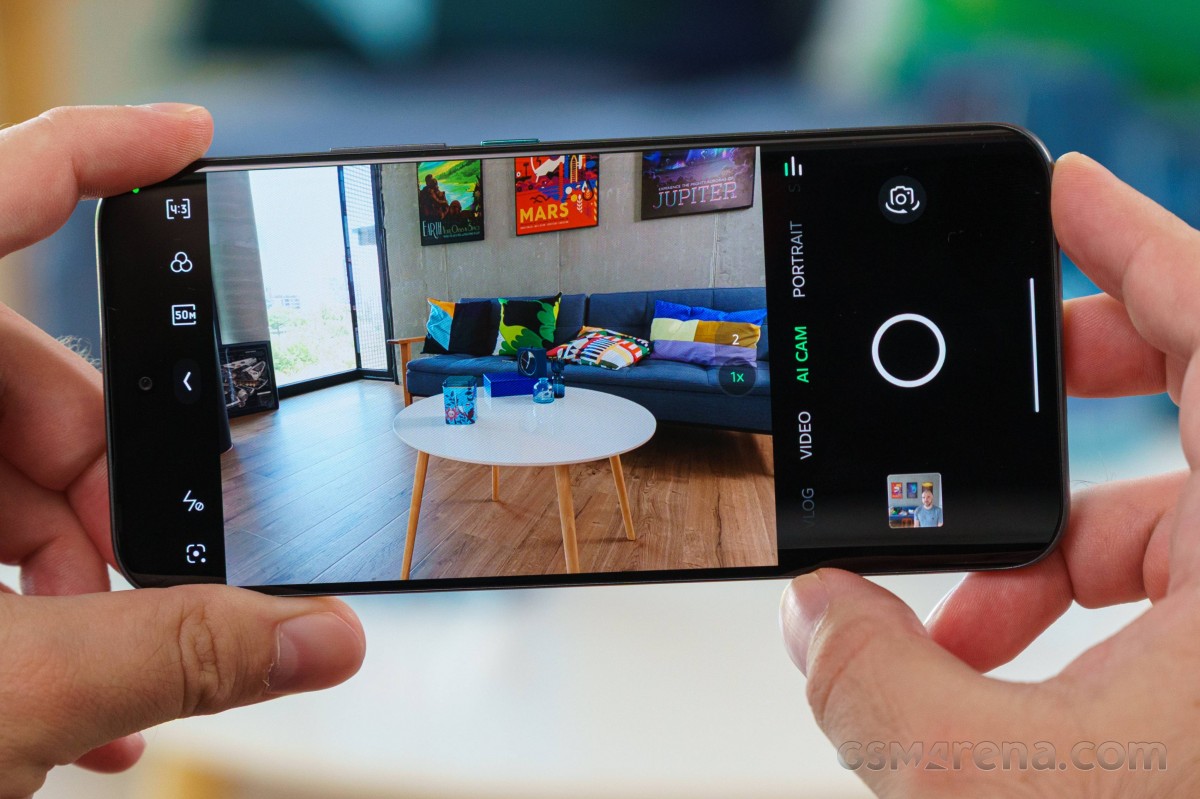
There is nothing particularly special about the camera UI. Everything is laid out logically and is easy to find. The camera app is a bit light on extras and advanced and Pro modes, but that's to be expected on a budget device.
Daylight photo quality
Main camera
Despite its otherwise similar hardware setup, the Infinix Hot 60 Pro+ has a different and arguably better main camera than the Tecno Spark 40 Pro+. The sensor is larger and with bigger pixels, though it is positioned behind a slightly darker lens.
The detail on the main camera is decent for the class. Colors are a bit muted but not too far off. Contrast could definitely be better, and the same goes for the dynamic range. Detail is crushed in the shadows, in particular, and the camera tends to underexpose. With enough tries, you can get the exposure just right, though and mitigate the crushed shadows most of the time.

















Infinix Hot 60 Pro+: 12.5MP main camera samples
You can force the main camera to capture in its full 50MP resolution. Whether or not it is worth it to do so is questionable, though. The 50MP photos are definitely less processed with less sharpening applied on a pixel level. However, you don't really get more actual detail.













Infinix Hot 60 Pro+: 50MP main camera samples
2x digital zoom crops from the main camera look pretty decent and quite similar to the 1x shots. They are just a bit noisy, which is expected.

















Infinix Hot 60 Pro+: 12.5MP main camera 2x zoom samples
Interestingly enough, you can capture 50MP shots at 2x zoom as well, but again, you probably don't want to bother. There are no real practical benefits, and you will have to deal with bigger file sizes.













Infinix Hot 60 Pro+: 50MP main camera 2x zoom samples
Portrait shots actually look pretty great. Facial features come through quite detailed, with plenty of visible skin texture. Skin tones are mostly accurate. Subject detection and separation are good, and the quality of the background blur is excellent.








Infinix Hot 60 Pro+: 12.5MP main camera portrait samples
Selfie camera
The Infinix Hot 60 Pro+ uses the same selfie sensor as the Tecno Spark 40 Pro+ but with a brighter f/2.0 lens. Hence, it only makes sense that its 13MP selfies would be even better. These look great. There is a lot of skin texture coming through. Skin tones look nice and natural, too. They definitely punch above their class.






Infinix Hot 60 Pro+: 13MP selfie camera samples
While the selfie lacks autofocus, its focal plane is nice and wide and hence quite forgiving to your particular arm's length.
Low-light camera quality
The main camera captures decent-enough low-light photos, but nothing to phone home about. The detail is generally good, and the noise is low and well suppressed. The colors look good too. However, the dynamic range is far from ideal. Especially in more complex scenes, both shadows are crushed and highlights are clipped. Light sources are blown out more often than not.




Infinix Hot 60 Pro+: 12.5MP main camera low-light samples
At 2x digital zoom, photos naturally look a bit softer and slightly noisier. Other than that, the quality remains decent.




Infinix Hot 60 Pro+: 12.5MP main camera 2x zoom low-light samples
The Infinix Hot 60 Pro+ has an automatic Night mode that triggers quite reliably in practice. Beyond that, there is a manual SUPER NIGHT mode. Depending on the scene, the manual SUPER NIGHT mode can either make no difference or offer small improvements here and there, particularly to dynamic range, highlights, and light source handling. However, that frequently comes at the expense of a darker overall exposure and crushed shadows.




Infinix Hot 60 Pro+: 12.5MP main camera SUPER NIGHT samples




Infinix Hot 60 Pro+: 12.5MP main camera 2x zoom SUPER NIGHT samples
Selfies remain solid even in low-light conditions. Skin texture looks very good, and so do skin tones. The selfie dual-LED lights definitely help to light up the subject.




Infinix Hot 60 Pro+: 13MP selfie camera low-light samples
Video capture quality
The Hot 60 Pro+ captures video in a standard H.264/AVC video stream (around 20 Mbps at FullHD and around 50 Mbps at QHD) plus a stereo AAC stream, packaged inside an MP4 container. H.265/HEVC capture is available as an alternative to save on space at the same quality level. There is no 4K recording.
You can check out the playlist below, which includes multiple video samples.
Videos recorded in QHD resolution look quite good overall - the level of detail is impressive, noise is minimal, and colors appear fairly accurate. The main drawback is the lack of stabilization at this resolution. To get stabilized footage, you'll need to switch to FullHD, which greatly improves usability and viewing comfort. However, this comes at the cost of noticeably reduced detail, which is a less-than-ideal trade-off.
Low-light video performance is underwhelming across the board. QHD footage suffers from noticeable noise, limited dynamic range, and lackluster contrast. Detail is already modest, and enabling stabilization further degrades it. All in all, there's nothing particularly noteworthy here.
The competition
At the time of writing, an 8GB/256GB Infinix Hot 60 Pro+ will set you back $199. That's not a lot of money for the hardware on offer, but there are some interesting viable competitors to consider on the current market.
The Samsung Galaxy A26 brings 5G connectivity and excellent build quality, featuring Gorilla Glass Victus+ on both the front and back, along with an IP67 rating that allows it to withstand full submersion - unlike the Hot, which only handles low-pressure water jets. It also offers expandable storage, which could come in handy given the base model's 6GB/128GB configuration, and an outstanding software support promise with six major Android updates. However, the Galaxy's display doesn't match the Infinix's in terms of brightness or overall quality. It also lacks stereo speakers, reverse charging, and its wired charging is notably slower. Additionally, it's priced around 20% higher in markets where both devices are sold side by side.
On Xiaomi's side, we have the ever-popular Redmi Note 14 series. While the Redmi Note 14 Pro 5G may fall outside the budget we're working with, the Redmi Note 14 4G is well within reach - even the top-tier 8GB/256GB model. Alternatively, you could opt for a lower storage variant and take advantage of the microSD slot for expansion. The phone offers a solid display, though it doesn't quite match Infinix's in quality. You do get stereo speakers, a generous 5,500 mAh battery, and the promise of four major Android updates. The 108MP main camera on the Redmi is also arguably a step up. That said, there are some trade-offs, such as the more modest IP54 rating for dust and splash resistance.
Over in Motorola's lineup, the Moto G96 stands out as a strong alternative. It boasts an IP68 rating, meaning it can withstand full submersion in water. Its camera setup is more versatile too, offering an ultrawide lens and 4K video recording - made possible by the more powerful Snapdragon 7s Gen 2 chipset. The phone also packs a sizable 5,500 mAh battery. However, it only comes with a single promised OS update.
If you are already looking into a Transsion device, why not consider the slightly different yet still quite similar Infinix Note 50 Pro 4G? It has a similar build and a very similar, though lower-resolution display. Charging is much better on the Note with 90W wired and 30W wireless charging support. You also get an arguably more versatile camera setup with an 8MP ultrawide on the back.
Our verdict
The Infinix Hot 60 Pro+ proves that you can still get a capable, well-rounded smartphone at a budget-friendly ~$190 price point. It delivers a lightweight and slim build, a bright and vivid display that is a real highlight, stereo speakers, and cameras that perform reliably for its class. Battery life is pretty good, and the overall user experience is enhanced by Infinix's promise of extended software support - something rarely seen at this end of the market.
When put side by side with the nearly identical Tecno Spark 40 Pro+, the Infinix does lose out on a few extras like wireless charging. However, the longer update commitment and slightly more consistent camera performance make it a better value in our eyes.
There are still a few caveats - while the stereo speakers are loud, audio quality remains only average, charging speeds are modest, and there's no eSIM option. Even so, the Infinix Hot 60 Pro+ strikes an excellent balance between features, performance, and price, making it a compelling choice in the budget segment.
Pros
- Thin, light, and stylish design with attractive color options and IP65 ingress protection.
- Bright and vivid display.
- Stereo speakers with high loudness rating.
- Solid camera performance with consistent results for the class.
- Good battery life.
- Excellent software support promise for the price range.
Cons
- Average audio quality despite stereo setup.
- Modest charging speeds.
- No eSIM support.


